The Business Verdict on Burnham
Business leaders assess opportunities and risks under Andy Burnham’s new premiership agenda.
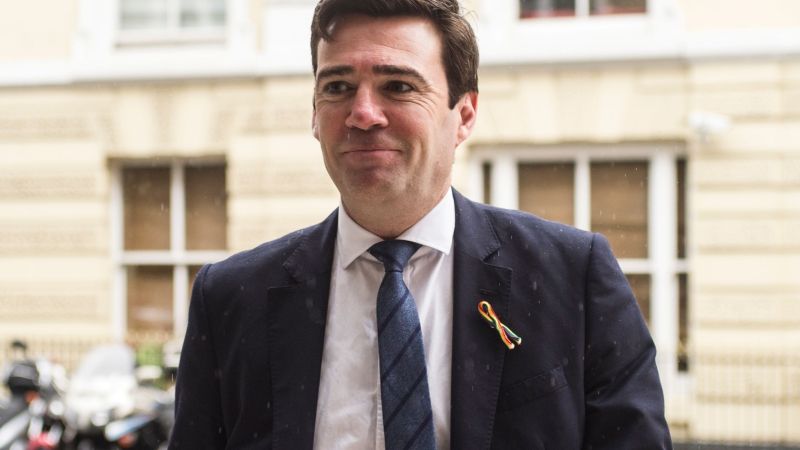
Shutterstock
Opinions expressed by Entrepreneur contributors are their own.
You're reading Entrepreneur United Kingdom, an international franchise of Entrepreneur Media.
Business leaders from across property, technology, manufacturing, organisational transformation and branding share their views on the opportunities and challenges facing the UK’s new Prime Minister.
Andy Burnham has entered Downing Street promising one of the most ambitious programmes of reform Britain has seen in decades. From nationalisation and housing reform to regional investment and changes to employment rights, his government has set out an agenda that could reshape the relationship between the state and business.
For some, the proposals represent an opportunity to unlock investment and long-term growth. For others, they raise questions around confidence, taxation, and the practical challenge of delivering such wide-ranging reforms.
We asked business leaders from a range of sectors what Andy Burnham’s premiership could mean for the UK economy.
Leadership & Organisational Transformation
Change Rebellion
Mark Green, Founder and CEO
Change Rebellion is a consultancy specialising in organisational change, helping businesses successfully deliver transformation programmes by combining behavioural science, communications and leadership expertise.
Mark believes Burnham’s agenda could create significant demand for organisations capable of managing large-scale transformation.
“If Andy Burnham were to become Prime Minister, I suspect the biggest impact on Change Rebellion wouldn’t come from politics itself, but from the wave of transformation that would inevitably follow.
“His emphasis on devolution, regional growth, housing and infrastructure could create significant opportunities, particularly across the public sector, local government and organisations adapting to new funding models, governance and ways of working. More investment almost always means more change, and more change means a greater need to help people adopt it successfully.
“That said, there are potential downsides. The lack of detail around fiscal policy and wider economic reforms could lead organisations to delay major investment while waiting for clarity. Any changes to property taxation or greater state involvement in key sectors may also create uncertainty, slowing transformation programmes as businesses reassess priorities.
“For us, the opportunity is clear, but so is the challenge. Governments can change strategy overnight. Organisations can rewrite operating models in months. The difficult part has always been the same: helping people navigate uncertainty. That’s where we add value, regardless of who’s in Downing Street.”
Manufacturing & Industry
Juice
Jolyon Bennett, Chief Executive Officer & Founder
Juice designs and manufactures premium hydration products in Britain, supplying retailers and consumers while championing UK manufacturing and innovation.
Jolyon believes government policy must encourage businesses to invest, innovate and create jobs.
“I’m concerned that a Burnham government could increase the cost of doing business at a time when many manufacturers and technology companies are already under pressure. Britain has some of the world’s most innovative businesses, but they need an environment that rewards investment, supports growth and gives employers the confidence to recruit, develop new products and manufacture here in the UK.
“If businesses face higher taxes and greater uncertainty, investment decisions inevitably become harder. Companies become more cautious about hiring, expanding and bringing new products to market. That doesn’t just affect individual businesses, it impacts productivity, innovation and long-term economic growth.
“If a Burnham government wants to strengthen British manufacturing and technology, it has to create the conditions for businesses to invest with confidence. Stable policy, competitive taxation and support for innovation will do far more to drive sustainable growth than placing additional financial pressure on the private sector.”
Finance & Business Growth
Serge Santos, Founder
Funding Alternative is a UK fintech lending platform that helps SMEs access fast, flexible funding solutions outside traditional banking channels.
Serge believes reducing the cost and risk of employment would encourage SMEs to invest and recruit.
“The pro-business signal is welcome. Reversing or reducing the employers’ national insurance increase would make a real difference to SMEs trying to hire. Every additional cost on headcount is a brake on growth, and small businesses feel it first.
“I would also urge the new government to reconsider the changes to the qualifying period for unfair dismissal. Shortening that period has made hiring a risky decision for SMEs. When taking on a new employee feels like a legal liability rather than an investment, something is wrong. That is not healthy for the economy.
“More broadly, this country needs a clear and coherent path to reindustrialisation. A strategy that does not neglect manufacturing is essential for the future of the UK. We have the talent and the infrastructure. What we need is a government that backs the businesses doing the building.”
Property & Investment
Hunter Jones Group
Reece Mennie, Managing Director
Hunter Jones Group is a specialist investment introducer connecting sophisticated investors with carefully selected alternative investment opportunities, including property-backed investments and private markets.
Reece believes investor confidence will be critical if Burnham’s housing ambitions are to succeed.
“Andy Burnham has been clear about the direction he wants to take the housing market, with more social housing, stronger tenant protections and changes to property taxation. Those policies won’t just shape the housing market, they’ll influence where investors choose to put their money.
“The reality is that capital goes where it feels welcome. If traditional buy to let becomes less attractive because of higher taxes or more regulation, investors won’t just sit back and accept lower returns. Some will look at alternative property investments, while others may decide to invest elsewhere altogether. That’s important because private investment doesn’t just benefit landlords. It helps fund new developments, supports jobs across construction and the wider property sector, and brings investment into local communities.
“If a Burnham government is to deliver on its housing ambitions, investors and the SME housebuilders that rely on private capital have to be part of the solution. Projects on that scale won’t be delivered by public money alone. They’ll need billions of pounds of private investment as well. The challenge is giving investors the confidence to back those projects, because if confidence falls, so does the investment needed to turn those ambitions into reality.”
Branding & Consumer Markets
WK360
Lawrence Palmer, Managing Director
WK360 is a creative production and brand implementation agency, which helps brands optimise their digital shelf presence through product imagery, packaging content and e-commerce creative.
Lawrence believes Britain needs a clear long-term vision that gives businesses the confidence to invest.
“WK360 is in the business of keeping brands from drifting off course. Since the Brexit vote, and some would argue since 2008, the UK has done nothing but drift politically. My hope with Andy Burnham is that he understands leading a country is about setting a direction that successive governments can stick to. Business needs vision to succeed, and I believe passionately that countries do too. If you don’t understand what you stand for, what your purpose is, then you drift aimlessly, and in my view, this is what the UK has been doing for years.
“We design and produce brand creative work in Luton, and when a country can’t hold a direction, the first thing companies freeze is discretionary spend. The divisive politics of the past decade has made the UK hard for business and hard to invest in. Burnham’s chance is to ignore the noise from the extremes and focus on the vision: to supercharge the regions outside London and steer us back on course for decades to come. If he can make us feel better about where we live, build a brand for Britain on the international stage that subsequent politicians clearly understand and protect, and create the conditions for people to afford more than the mortgage and the rent, then business benefits and sustainable growth begins in earnest.”
Technology & Digital Transformation
Helen Crisostomo, Vice President of Business Development
de Novo Solutions is a UK digital transformation consultancy specialising in Oracle Cloud applications. The company helps public and private sector organisations modernise legacy systems, improve data sharing and use technology to increase efficiency and productivity.
Helen believes successful public sector reform will depend on modernising the technology that underpins it.
“Local authorities looking to improve efficiency and make better use of resources must have the right technology in place. That will become even more important if Andy Burnham continues to prioritise the devolution of powers to regional public sector bodies. As more decisions are made locally, organisations will need reliable data, greater automation and the ability to share information quickly and effectively.
“Andy Burnham has already indicated he wants to reform local government structures, but that will be much harder to achieve while many organisations continue to rely on legacy technology. The Government’s own research suggests these older systems cost around 40% more to maintain, while also slowing productivity. That’s a significant challenge if local authorities are expected to take on greater responsibilities.
“The future of the Department for Science, Innovation and Technology should also be considered through a local government lens. Its role extends well beyond AI. Through the Government Digital Service and the wider digital centre of government, it plays a vital role in modernising public services, improving data sharing, strengthening interoperability and helping public bodies move away from outdated technology.
“As a nation, we need to get the digital foundations right before we can fully realise the benefits of AI and wider public sector reform. Modern, connected systems are essential to delivering better services and creating the conditions for future innovation. We can’t expect decades-old technology to keep pace with today’s ambitions.”
Business leaders from across property, technology, manufacturing, organisational transformation and branding share their views on the opportunities and challenges facing the UK’s new Prime Minister.
Andy Burnham has entered Downing Street promising one of the most ambitious programmes of reform Britain has seen in decades. From nationalisation and housing reform to regional investment and changes to employment rights, his government has set out an agenda that could reshape the relationship between the state and business.
For some, the proposals represent an opportunity to unlock investment and long-term growth. For others, they raise questions around confidence, taxation, and the practical challenge of delivering such wide-ranging reforms.
We asked business leaders from a range of sectors what Andy Burnham’s premiership could mean for the UK economy.
Leadership & Organisational Transformation
Change Rebellion
Mark Green, Founder and CEO