Beyond the pledge: what COP31 should mean for business leaders’ sustainability strategies
COP31 challenges business leaders to turn sustainability pledges into lasting action.

Kaleidoscope
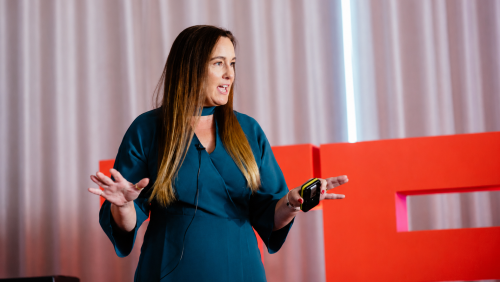
Sandhya Sabapathy is the founder of Kaleidoscope and the author of international bestseller Burn Bright, Build Slow: How to Build a Just Climate Future.
Opinions expressed by Entrepreneur contributors are their own.
You're reading Entrepreneur United Kingdom, an international franchise of Entrepreneur Media.
In November, the world’s climate negotiators meet in Antalya. Before a single line of text has been agreed, COP31 has already told you something useful about how institutions behave under pressure. Australia and Türkiye both bid to host it. Neither withdrew. Rather than let the dispute run and risk the conference defaulting to Bonn, the parties built a workaround. Türkiye hosts and holds the presidency. Australia leads the negotiations. Two presidencies, one summit, one very carefully worded partnership agreement. I want to be fair about this. It is a pragmatic fix and it probably saved a year of drift. But it is also diagnostic. When an institution cannot resolve a structural conflict, it produces a procedural arrangement and presents it as consensus. Most companies did exactly the same thing to their sustainability strategy years ago. They just did not have to publish the modalities.
Your organisation has a split presidency too
Here is the uncomfortable part. In 2025 the Weinreb Group surveyed a record 215 Chief Sustainability Officers, the largest sample in the study’s fourteen-year history. Nearly 90 percent reported spending more time on regulatory compliance than two years earlier. In a growing number of organisations the reporting line has drifted from strategy toward legal. The function is more professionalised than it has ever been, and further from the decisions that determine whether any of it holds. Kearney’s 2025 survey of 500 CFOs across the UK, US, UAE and India found that 93 percent recognise the business case and 65 percent already measure the cost of inaction. And 61 percent still treat sustainability primarily as a cost rather than a long-term value driver. These are self-reported surveys, so read the direction rather than the decimal point. The direction is consistent: the argument has been won and the behaviour has not changed.
That is not irrationality. Barton and Wiseman found 79 percent of board members and senior executives felt pressured to demonstrate financial performance over two years or less. Resilience compounds over a much longer horizon than that. The CFO who understands the case and still cuts the budget when Q3 misses is behaving correctly inside the structure they are managing. Sumantra Ghoshal’s argument, twenty years old and still the sharpest thing written on this, was that bad management theory does not simply describe how managers behave. It shapes that behaviour over decades, at the level of what people understand their job to be. The leaders now receiving sustainability strategies were formed by a curriculum which taught that resource deployed toward any end other than shareholder value is a misallocation. They are not failing to act for want of information or conviction. They are acting rationally inside a design.
Then the partial dismantling of the CSRD in 2025, before most companies had filed a single report under it, showed everyone watching how durable the accountability layer really was. Split presidency, split company. The pledge sits in one place, the delivery sits in another, and nobody holds both.
The pledge is no longer the scarce thing
In late 2024, several of the people who built the modern climate process, among them Christiana Figueres, Ban Ki-moon, Mary Robinson and Johan Rockström, wrote to UNFCCC member states to say that after 28 COPs, time was up on negotiations that do not produce implementation. When the architects tell you the building is not fit for purpose, it is worth asking what that means for everyone still working inside it.
What has grown to fill the gap is private. The First Movers Coalition, launched at COP26, now counts 101 member companies and 14 government partners, with more than $19bn of pledged demand for low-carbon products by 2030 and over 130 offtake agreements across seven hard-to-abate sectors. That is not nothing. Aggregated purchasing power genuinely does de-risk early markets, and the companies involved are taking real commercial positions with real money.
It is also entirely voluntary, and the headline figure is pledged demand rather than delivered tonnes. Both things are true at once, and holding them together changes what you should be doing between now and Antalya. If the binding layer is thin and the voluntary layer is thick, the pledge has stopped being scarce. Anyone can make one. What is scarce is an operating model that would still deliver the pledge if the person who announced it left the company.
What to do before Antalya
Not draft a statement. Run a diagnostic. At Kaleidoscope our methodology Impact Prism® assesses organisational resilience through three lenses and places each on a spectrum from fragile to leading.
Commercial. Countries are submitting their next round of national climate plans, and the synthesis of those plans is what Antalya will argue over. Read the ones covering the markets you sell into, manufacture in and hire from. That document is not climate literature. It is a five-year signal about your input prices, your cost base and your licence to operate.
Reputational. Take every public claim your organisation has made in the past three years and ask which ones you could defend line by line to an auditor, a journalist or an acquirer. Not which ones are true. Which ones are evidenced.
Regulatory. Ask whether your organisation received the last regulatory change as a compliance burden or as direction. Both responses were available. They produce very different companies. One builds a reporting function. The other changes what gets funded.
One rule separates this from an ESG scorecard: your maturity is set by your weakest lens, not the average of the three. Leading on reporting and fragile on governance is not a good overall score. It is partial integration performing as complete integration, and it fails at precisely the moment pressure arrives. A caveat worth stating plainly. No COP determines any single company’s cost base. Regulation arrives nationally, on national timetables. The multilateral process tells you about direction and speed. It does not give you the date.
The only question that matters
Allbirds listed in 2021 at a $4bn valuation, on a proposition that a product could be commercially successful and materially better for the world. By March 2026 the brand and intellectual property had sold for $39m, roughly one percent of peak valuation. The public benefit purpose was removed from the corporate charter. The remaining company pivoted to AI computing infrastructure and confirmed in an SEC filing that it would be less focused on environmental conservation. The mission did not survive the growth model. It could be removed in a single filing because it had been attached to the company rather than built into it. That is the test. Not whether you have a target. Whether removing it would break the product. Antalya will produce declarations, and some of them will matter. None of them will do this part for you.
In November, the world’s climate negotiators meet in Antalya. Before a single line of text has been agreed, COP31 has already told you something useful about how institutions behave under pressure. Australia and Türkiye both bid to host it. Neither withdrew. Rather than let the dispute run and risk the conference defaulting to Bonn, the parties built a workaround. Türkiye hosts and holds the presidency. Australia leads the negotiations. Two presidencies, one summit, one very carefully worded partnership agreement. I want to be fair about this. It is a pragmatic fix and it probably saved a year of drift. But it is also diagnostic. When an institution cannot resolve a structural conflict, it produces a procedural arrangement and presents it as consensus. Most companies did exactly the same thing to their sustainability strategy years ago. They just did not have to publish the modalities.
Your organisation has a split presidency too
Here is the uncomfortable part. In 2025 the Weinreb Group surveyed a record 215 Chief Sustainability Officers, the largest sample in the study’s fourteen-year history. Nearly 90 percent reported spending more time on regulatory compliance than two years earlier. In a growing number of organisations the reporting line has drifted from strategy toward legal. The function is more professionalised than it has ever been, and further from the decisions that determine whether any of it holds. Kearney’s 2025 survey of 500 CFOs across the UK, US, UAE and India found that 93 percent recognise the business case and 65 percent already measure the cost of inaction. And 61 percent still treat sustainability primarily as a cost rather than a long-term value driver. These are self-reported surveys, so read the direction rather than the decimal point. The direction is consistent: the argument has been won and the behaviour has not changed.
That is not irrationality. Barton and Wiseman found 79 percent of board members and senior executives felt pressured to demonstrate financial performance over two years or less. Resilience compounds over a much longer horizon than that. The CFO who understands the case and still cuts the budget when Q3 misses is behaving correctly inside the structure they are managing. Sumantra Ghoshal’s argument, twenty years old and still the sharpest thing written on this, was that bad management theory does not simply describe how managers behave. It shapes that behaviour over decades, at the level of what people understand their job to be. The leaders now receiving sustainability strategies were formed by a curriculum which taught that resource deployed toward any end other than shareholder value is a misallocation. They are not failing to act for want of information or conviction. They are acting rationally inside a design.

Sandhya Sabapathy • Founder of Kaleidoscope
Sandhya Sabapathy is the founder of Kaleidoscope and the author of international bestseller Burn Bright,... Read more