House Rules: Lord Leong on Britain’s Future
Lord Leong shares his vision for Britain’s entrepreneurs and businesses.

DBT
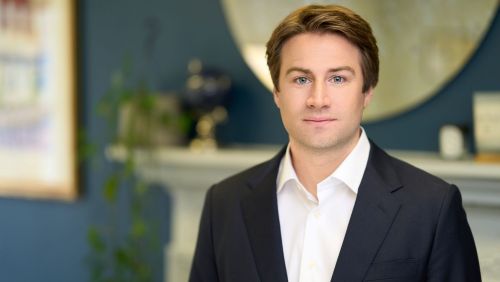
Lord Leong, Minister for Small Business and Enterprise
Opinions expressed by Entrepreneur contributors are their own.
You're reading Entrepreneur United Kingdom, an international franchise of Entrepreneur Media.
Long before entering public life, Lord Leong was an entrepreneur. As co-founder of Cavendish Publishing, he built an independent business from the ground up – an experience that continues to shape his perspective as Minister for Small Business and Enterprise. In this Entrepreneur UK interview, he reflects on the realities facing entrepreneurs, from finance and late payments to AI and regulation, where the UK can improve, and his vision for business – and his own legacy – by 2030.
You co-founded and built Cavendish Publishing into a successful independent business. What did that experience teach you about building and growing a company, and how has it shaped your approach to policymaking?
Building Cavendish Publishing taught me that a successful company is never built on a good idea alone. It takes courage, resilience and relentless execution – and, above all, it takes good people. We had to understand our customers, manage cash flow carefully, invest before the returns were certain and constantly adapt as the market changed. It also taught me that culture matters. My guiding principle has always been: “Happy staff equal healthy profits.” If people feel trusted, valued and connected to a shared purpose, they will do extraordinary things. That experience profoundly shapes how I approach policymaking today. I try to look at every policy through the eyes of the person running a business: Does it solve a real problem? Is it practical? Is the cost proportionate? Will it help them invest, recruit and grow – or simply give them another form to complete? Government cannot – and should not – run businesses. But it can create the conditions in which enterprise succeeds: fair markets, reliable infrastructure, access to opportunity and a stable environment that rewards ambition. My experience at Cavendish taught me that behind every business is a founder who took a risk, employees whose livelihoods depend upon it and families who made sacrifices. That is the human reality I bring to policymaking – and why I believe Britain cannot succeed unless its entrepreneurs and small businesses succeed.
What do you believe the UK needs to do now to become one of the world’s best places to start, scale and build a globally successful business?
The UK is already a great place to start and grow a business. We have a strong entrepreneurial culture, world-class universities, a determination to innovate, and are seen around the world as open for trade. Building on these strengths, we now need to create the conditions that turn ambition into sustainable growth that is felt in every postcode of this country. That means making it easier to access finance; business advice and support; helping firms adopt new technologies to improve productivity; whilst reducing unnecessary barriers whether through regulation or tackling late payments. By creating the right conditions for growth, we can help more UK businesses become more globally successful.
AI is giving small businesses capabilities once available only to large corporations. Could it level the playing field for entrepreneurs, and what must the government do to make that happen?
I believe AI can play a role in providing SMEs with more resources and capabilities that once required huge teams and significant investment. This can free up entrepreneurs from routine administrative tasks and instead help them focus on innovating, competing, and ultimately growing their companies. Our ambition is for the UK to be the fastest adopter of AI in the G7, helping to unlock growth and productivity across the economy, and generate new opportunities for workers. With AI Minister, Kanishka Narayan and the Prime Minister’s new AI Taskforce leading this agenda, we are focused on harnessing the opportunities of AI to drive productivity and growth across the UK economy. So, my role is to work with industry to help remove the barriers that hold entrepreneurs and smaller firms back: by helping businesses with practical support, whether that be AI skills, guidance, and access to expertise on how to use AI to boost productivity. We’ve already committed over £200m to help UK businesses adopt AI so they can realise this opportunity – and my department wants to work with industry to equip 10m workers with essential AI skills by 2030 through the AI Skills Boost initiative.
The UK has no shortage of entrepreneurial talent, but we have often struggled to turn promising start-ups into global scale-ups. Where, in your view, are we still falling short?
You are absolutely right to praise the amount of talent we have on offer in this country. It’s a concern to me that far too many promising businesses have to relocate abroad to countries such as the United States to get the investment they need to grow. One of our biggest focuses in Government is how we make the most of that and ensuring scale-ups have the funding and business environment they need to stay and grow in the UK is central to that. Over the summer we announced that major pension funds were coming together to explore setting up a dedicated UK Scale-up Fund worth around £1bn. This would provide substantial investment to British scale ups that are desperately needed, keeping them here along with any jobs and supply chain boosts that come with that. Through the Industrial Strategy and Plan for Small Businesses, we’re also unlocking capital, expanded tax incentives, overhauled public procurement and strengthened our public finance institutions, all to give scale-ups every opportunity to grow into global leaders.
Late payments can be existential for a small business. Do you believe enough is being done to tackle the culture of late payment, and what more needs to change to give entrepreneurs greater financial security?
I am determined to tackle late payments between businesses. It is such a significant problem, causing the closure of 38 businesses a day and costing our economy £11bn per year. This is personal to me. I spent 45 years in business before entering Government. I know cash flow is the lifeblood of every enterprise. In my own business, we paid suppliers on time because it was the right thing to do – and it was good business. Suppliers remember those who treat them fairly and provide their best service to customers they trust. I am currently leading the Commercial Payments Bill through the House of Lords. This is the most significant legislation to tackle late payments in over 25 years and will give the UK the strongest laws on late payment in the G7. It will impose strict maximum payment terms of 60 days and mandate the payment of interest on all late payments. It will also give the Small Business Commissioner new powers to adjudicate payment disputes, to investigate companies with poor payment practices, and to fine persistent late payers. Beyond our late payments legislation, we are continuing to improve access to finance, through programmes such as Start Up loans, Growth Guarantee Scheme and support for under-served founders.
Entrepreneurs increasingly have to navigate geopolitics, supply-chain disruption, regulation and rapidly changing global markets. What do you see as the biggest opportunities – and the biggest challenges – for entrepreneurs over the next five years?
Entrepreneurs are operating in an increasingly complex world. From geopolitical uncertainty, to supply chain disruption, emerging technologies, businesses face a wide range of challenges that can affect their confidence, resilience and ability to grow. Our focus is on helping businesses navigate that complexity by reducing regulatory barriers, improving access to support and finance, and ensuring the voice of small business is central to policy making. Through our SME Regulatory Taskforce, we are reducing regulatory burdens by 25% and the Business Growth Service is making it easier for businesses to access support and advice they need. We recently launched the Supply Chain Centre to bolster the UK’s supply chains and growth ambitions, as well as safeguard the us against disruption. We established a dedicated response team to the Middle East crisis and recently released guidance for businesses on how they could manage challenges arising from the conflict. We will continue to work in partnership with industries and business leaders to get ahead of any future disruption. If any business needs advice and support around supply chain issues, our new Economic Security Advisory Service is more than happy to help.
If you had £1bn to invest in the UK’s entrepreneurial future, where would you put it – access to finance, skills, technology, infrastructure, exports or something else – and why?
If I had £1bn to invest in Britain’s entrepreneurial future, I would invest it in turning potential into productivity – particularly among small businesses outside the usual centres of opportunity. Access to finance would be central, but finance alone is not enough. Giving a business capital without the skills, technology or market access to use it effectively risks treating the symptom rather than unlocking its full potential. I would therefore create an Entrepreneurial Growth Fund combining patient finance with practical management support, digital and AI adoption, and help to export. A significant share would be delivered through trusted local partners – business groups, universities, further education colleges and regional finance institutions – because entrepreneurs need support that understands their sector and community. I would particularly focus on founders who have historically struggled to access capital, including women, ethnic-minority entrepreneurs and businesses in regions often overlooked by traditional investors. The goal would not be to subsidise businesses indefinitely. It would be to give ambitious firms the tools to become more productive, win new customers, enter international markets and create good jobs. Every pound of public investment should be designed to attract additional private capital and generate a lasting economic return. Britain does not lack ideas or ambition. What we too often lack is the bridge between starting a business and scaling it successfully. I would use that £1bn to build that bridge.
Looking back from 2030, what would you like UK-based entrepreneurs to say this Government changed for the better – and what would you like your legacy as Minister for Small Business and Enterprise to be?
When we look back from 2030, I would like entrepreneurs to say that 2026 was the year the Government began making Britain the best place in the world to start, build and grow a business – not simply through warm words, but through practical change. I want them to say that we listened to the realities of running a business: the pressure on cash flow, the struggle to secure finance, the time lost navigating regulation, the challenge of adopting new technology and the difficulty of breaking into new markets. I want them to feel that the government became a partner in enterprise – opening doors rather than placing obstacles in their way. Success would mean more small firms being paid on time; more founders able to access the finance they need to scale; more businesses adopting digital technology and AI; and more British companies exporting with confidence. It would also mean entrepreneurs in every region and from every background believing that opportunity is genuinely open to them. My own legacy as Minister for Small Business and Enterprise is not for me to declare- it will be judged by the businesses we serve. But I would be proud to be remembered as a Minister who listened, understood and then acted; who brought the voice of the entrepreneur into the heart of government; and who never forgot that behind every business statistic is a human story – a founder taking a risk, a family making sacrifices and employees depending upon that business to succeed. Above all, I would like entrepreneurs in 2030 to be able to say: “The Government gave us the confidence and the conditions to grow – and then trusted us to get on with it.” Because when small businesses succeed, communities prosper, opportunity spreads and Britain succeeds.
Long before entering public life, Lord Leong was an entrepreneur. As co-founder of Cavendish Publishing, he built an independent business from the ground up – an experience that continues to shape his perspective as Minister for Small Business and Enterprise. In this Entrepreneur UK interview, he reflects on the realities facing entrepreneurs, from finance and late payments to AI and regulation, where the UK can improve, and his vision for business – and his own legacy – by 2030.
You co-founded and built Cavendish Publishing into a successful independent business. What did that experience teach you about building and growing a company, and how has it shaped your approach to policymaking?
Building Cavendish Publishing taught me that a successful company is never built on a good idea alone. It takes courage, resilience and relentless execution – and, above all, it takes good people. We had to understand our customers, manage cash flow carefully, invest before the returns were certain and constantly adapt as the market changed. It also taught me that culture matters. My guiding principle has always been: “Happy staff equal healthy profits.” If people feel trusted, valued and connected to a shared purpose, they will do extraordinary things. That experience profoundly shapes how I approach policymaking today. I try to look at every policy through the eyes of the person running a business: Does it solve a real problem? Is it practical? Is the cost proportionate? Will it help them invest, recruit and grow – or simply give them another form to complete? Government cannot – and should not – run businesses. But it can create the conditions in which enterprise succeeds: fair markets, reliable infrastructure, access to opportunity and a stable environment that rewards ambition. My experience at Cavendish taught me that behind every business is a founder who took a risk, employees whose livelihoods depend upon it and families who made sacrifices. That is the human reality I bring to policymaking – and why I believe Britain cannot succeed unless its entrepreneurs and small businesses succeed.
What do you believe the UK needs to do now to become one of the world’s best places to start, scale and build a globally successful business?
The UK is already a great place to start and grow a business. We have a strong entrepreneurial culture, world-class universities, a determination to innovate, and are seen around the world as open for trade. Building on these strengths, we now need to create the conditions that turn ambition into sustainable growth that is felt in every postcode of this country. That means making it easier to access finance; business advice and support; helping firms adopt new technologies to improve productivity; whilst reducing unnecessary barriers whether through regulation or tackling late payments. By creating the right conditions for growth, we can help more UK businesses become more globally successful.

Patricia Cullen • Features Writer
Entrepreneur Staff