How DJ Lucas Duplan Built a Booking Business Out of a Bedroom Studio
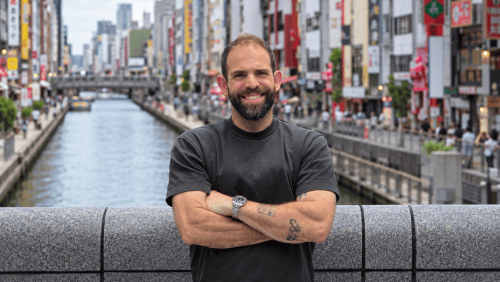
Through a mixture of opportunism and learning from his mistakes, Los Angeles-based DJ and music producer Lucas Duplan went from producing music in his bedroom to successfully reading large-scale crowds.

DJ Lucas Duplan
You're reading Entrepreneur United Kingdom, an international franchise of Entrepreneur Media.
Learning from one’s mistakes is a skill almost every entrepreneur needs, and Lucas Duplan, the Los Angeles-based DJ and music producer, was no exception. Rather than let setbacks and obstacles hold him back, Duplan found ways to turn them into opportunities for growth, turning scarcity into a deliberate business model.
Looking for Diamonds in the Rough
Duplan’s early foray into DJing and music producing began in Echo Park, where he grew up with a father who fixed jukeboxes for dive bars along Sunset. Duplan’s father often brought home the 45s people skipped the most, pushing Duplan to consider why those particular songs were overlooked.
This line of questioning, what makes people choose some songs over others, sparked the young artist’s broader interest in customer choice, something he continues to incorporate into his work today.
Duplan first put this idea into practice when he started producing at 16. His first paid performance was at a backyard quinceañera where the electricity failed twice. Despite these challenges, Duplan was encouraged to persist, outlining what would soon be a fundamental part of his growth plan: fail, diagnose, adjust, and test again.
Trial and Error
A key part of being a successful DJ and music producer is knowing what audiences want, and during a live set, that can mean reading a room in real time. This is easier said than done, as Duplan discovered for himself during a failed showcase in 2023.
While playing a set in LA, Duplan misread the crowd, emptying the floor in eight minutes, he says. Though disappointed with his performance, Duplan chose to learn from the experience instead of dwelling on it. He emailed the event’s promoter a full post-mortem of what he misjudged and asked for the least popular slot the promoter had. That slot happened to be Tuesdays, a residency Duplan says he made successful within just a few short months.
Scarcity as Strategy
Today, people booking Lucas Duplan tend to do so because he finds ways to make sets unique in the moment, rather than attempting to do so ahead of time. Each live performance includes at least one edit created specifically for that room and night, helping an otherwise replicable service—booking a DJ—feel unique.
Duplan’s sets are purposefully scarce for that reason, and he only takes on twelve private events per year. He explains that “scarcity is the brand,” highlighting how limited capacity supports the level of customisation he wants the product to provide. As he puts it, “Most DJs curate; I manufacture on-site.”
That was the case when he performed at a wedding and couldn’t source the couple’s vinyl-only song. Rather than omit it altogether, he rebuilt it by ear from stems. The solution Duplan devised showed him how to create music for a particular room and audience, leading to the creation of his debut single, “Skipped 45.”
Branching Out
Duplan is currently developing multiple revenue/brand lanes connected via customisability and personalisation, including club and festival performances, recorded music, and an intentionally small wedding/private-event operation.
Duplan’s debut EP Room Tone, for example, is meant to become a series that will feature installments produced live in different spaces throughout LA. He aims to create material he can maintain more control over, giving him more agency with platforms, audiences, relationships, and economics.
In doing so, Duplan hopes to make his brand more valuable while retaining creative control, opting to pursue quality over sheer quantity. Advertising via word-of-mouth is an important component of this model, largely because many of his live edits cannot be streamed.
Although some aspects of Lucas Duplan’s music are exclusive to the music industry, there are some lessons to be gained beyond it. His work showcases the broader value of differentiating oneself within one’s industry, particularly when it comes to responding to failure and adapting.
Duplan works in an industry that rewards reach, repetition, and more bookings, but his strategy is built around making certain components deliberately unavailable. If the model succeeds, that scarcity won’t limit his growth. It will be the reason people seek him out.
Learning from one’s mistakes is a skill almost every entrepreneur needs, and Lucas Duplan, the Los Angeles-based DJ and music producer, was no exception. Rather than let setbacks and obstacles hold him back, Duplan found ways to turn them into opportunities for growth, turning scarcity into a deliberate business model.
Looking for Diamonds in the Rough
Duplan’s early foray into DJing and music producing began in Echo Park, where he grew up with a father who fixed jukeboxes for dive bars along Sunset. Duplan’s father often brought home the 45s people skipped the most, pushing Duplan to consider why those particular songs were overlooked.
This line of questioning, what makes people choose some songs over others, sparked the young artist’s broader interest in customer choice, something he continues to incorporate into his work today.
Entrepreneur UK
Entrepreneur Staff