AI Can Do the Paperwork. But Can It Build Trust? The Business Lessons Shaping 2027
Business leaders reveal why AI, trust and human connection matter.

You're reading Entrepreneur United Kingdom, an international franchise of Entrepreneur Media.
From proving customer loyalty to embracing human connection and personalised wellbeing, business leaders are entering an AI-driven era with a surprisingly human message: technology may make businesses faster, but people will make them matter. Artificial intelligence is changing the way businesses work, communicate and grow. But as entrepreneurs look towards 2027, the most important lessons emerging from the past year are not necessarily about adopting the latest technology. They are about knowing what customers truly value, building businesses that can operate beyond their founders and understanding where human connection remains irreplaceable.
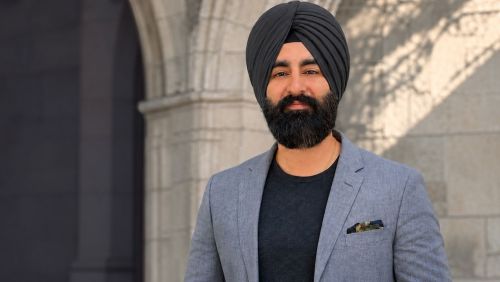
For venture capitalist Varun Datta, founder of Truth Ventures, that starts with a deceptively simple question: does the customer come back? Reflecting on the biggest business lesson of 2026, Datta believes the second purchase tells investors considerably more than the first. “A pilot just means someone was curious enough to try the product. When they renew or expand, that is when you know it’s fixing something they’ll keep paying for.” It is a distinction that has become increasingly important in a more cautious investment climate. With early-stage funding harder to secure in the UK, Datta believes founders need to demonstrate not simply that customers are interested, but that their products have become essential. He points to reported figures from the British Business Bank showing seed deals fell by 27% in 2025, with funding rounds also taking longer to close. His advice to entrepreneurs is therefore practical: protect your runway, give early customers time to renew and resist the temptation to hire ahead of proven demand. “If you do raise, show investors what the money will expand and why you think customers will stay.” It is also a lesson that extends into the next phase of artificial intelligence. Datta expects buyers in 2027 to become much more demanding about evidence of AI’s commercial value. The question will no longer simply be whether a business is using AI, but what difference it is making. He encourages companies to identify one workflow and measure the time or money it currently consumes. If a reconciliation process that once took two days can now be completed in two hours, that is a tangible business case for investment. It is a shift from selling the promise of AI to demonstrating its return.
The founder cannot be the bottleneck
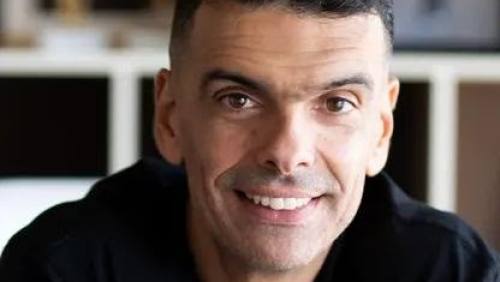
But while technology is changing the mechanics of business, Simon George, co-founder of Business Buzz, believes another challenge is emerging: knowing when to step aside. Business Buzz is one of the UK’s fastest-growing business networking communities, bringing together thousands of entrepreneurs, business owners and professionals. From his experience of working with business communities, George believes one of the biggest lessons of 2026 has been the importance of letting go. “You can’t scale a business if you’re the one holding it back.” For founders accustomed to being involved in every decision, delegation can be difficult. Yet George argues that being indispensable is not necessarily a sign of successful leadership. It can be evidence that the business has become too dependent on one person. His own lesson has been to trust the team, establish stronger systems and make decisions using data rather than instinct alone. “The real turning point comes when you stop running every part of the business and start building a business that can run without you.” It is a particularly relevant message as AI makes it easier for smaller businesses to automate administrative tasks and streamline operations. But George’s prediction for 2027 is not that technology will make human interaction less important. Quite the opposite. He believes genuine human connection will become one of the most valuable competitive advantages a business can have. As AI-generated content, automated messages and digital communication become increasingly commonplace, customers may place greater value on personal recommendations, face-to-face conversations and relationships built over time. “You can’t automate trust, and you can’t replace the power of a handshake, a coffee or a personal recommendation.” For George, the opportunity is to use AI to remove the repetitive work that consumes so much of an entrepreneur’s day. Scheduling, administration, follow-ups and routine processes can increasingly be automated, freeing business owners to concentrate on the relationships that generate opportunities and build loyalty. His message is straightforward: let AI do the paperwork so you can do the people work. Small businesses, he believes, are particularly well placed to benefit. They can combine the efficiency of larger organisations with the personal attention and familiarity that customers often struggle to find in bigger businesses. The winners in 2027, he suggests, will not necessarily be those using the most AI, but those using it to become more human.
Personalisation becomes the new value proposition
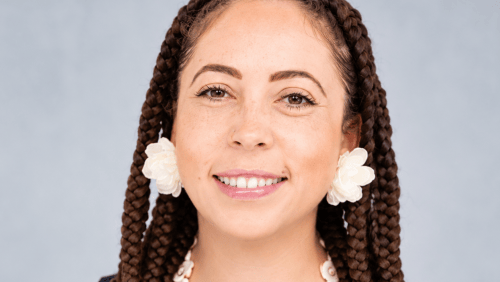
That emphasis on understanding people is also reflected in the experience of Sandrine Olmi, a Registered Nutritional Therapist working with families of neurodivergent children and women navigating hormonal changes. Her reflections on 2026 highlight a different but closely related challenge: in a world where information is increasingly accessible, people are not necessarily becoming better informed or more confident about making decisions. In fact, they can feel more overwhelmed than ever. “People don’t just buy our expertise anymore, they buy the reassurance that we understand them.” For her, the biggest business lesson has been the importance of listening before offering solutions. While nutritional science and genetics provide valuable insights, she believes professional expertise is about much more than supplying information. It involves understanding individual circumstances, connecting the dots and helping people make changes that are realistic within their everyday lives. It is a distinction that becomes particularly important as AI makes information cheaper and easier to access. Her prediction for 2027 is that human connection will become a premium service, particularly in health and wellbeing. People may be able to obtain instant answers from digital tools, but they will continue to need professional support to interpret information, understand their individual circumstances and turn recommendations into meaningful action. She also sees significant opportunities in personalised health and wellbeing. Advances in nutrigenomics, genetic testing and nutritional science are helping practitioners explore why individuals may respond differently to the same foods, nutrients and lifestyle interventions. The traditional idea that one diet, supplement or wellbeing programme should work for everyone is increasingly being challenged. However, she cautions against treating genetic information as a complete answer. Genetics is only one part of a much wider picture that includes lifestyle, professional expertise and individual needs. The real opportunity, she argues, lies in bringing these elements together and translating complex scientific information into practical, personalised support.
The future is not technology versus people
Although their businesses operate in very different sectors, the three perspectives share a common thread. Datta is looking for evidence that customers genuinely value a product enough to pay for it again. George believes businesses must become less dependent on their founders and more committed to building meaningful relationships. In health and wellbeing, personalisation and professional understanding are becoming increasingly important as information becomes more widely available. All three point towards a similar conclusion: technology alone will not create a sustainable business. AI can accelerate processes, reduce costs, analyse information and remove repetitive tasks. But it cannot, on its own, guarantee customer loyalty, create a trusted professional relationship or give a business the leadership structure it needs to grow. For entrepreneurs planning for 2027, the challenge may therefore be less about adopting AI for its own sake and more about understanding where it genuinely adds value. Measure what it saves. Build systems that allow people to do their best work. Listen to customers. Invest in relationships. And, above all, make sure the technology is serving a real human need. The businesses that stand out in the coming year may not be the ones that automate everything. They may be the ones that understand precisely what should never be automated.
From proving customer loyalty to embracing human connection and personalised wellbeing, business leaders are entering an AI-driven era with a surprisingly human message: technology may make businesses faster, but people will make them matter. Artificial intelligence is changing the way businesses work, communicate and grow. But as entrepreneurs look towards 2027, the most important lessons emerging from the past year are not necessarily about adopting the latest technology. They are about knowing what customers truly value, building businesses that can operate beyond their founders and understanding where human connection remains irreplaceable.
For venture capitalist Varun Datta, founder of Truth Ventures, that starts with a deceptively simple question: does the customer come back? Reflecting on the biggest business lesson of 2026, Datta believes the second purchase tells investors considerably more than the first. “A pilot just means someone was curious enough to try the product. When they renew or expand, that is when you know it’s fixing something they’ll keep paying for.” It is a distinction that has become increasingly important in a more cautious investment climate. With early-stage funding harder to secure in the UK, Datta believes founders need to demonstrate not simply that customers are interested, but that their products have become essential. He points to reported figures from the British Business Bank showing seed deals fell by 27% in 2025, with funding rounds also taking longer to close. His advice to entrepreneurs is therefore practical: protect your runway, give early customers time to renew and resist the temptation to hire ahead of proven demand. “If you do raise, show investors what the money will expand and why you think customers will stay.” It is also a lesson that extends into the next phase of artificial intelligence. Datta expects buyers in 2027 to become much more demanding about evidence of AI’s commercial value. The question will no longer simply be whether a business is using AI, but what difference it is making. He encourages companies to identify one workflow and measure the time or money it currently consumes. If a reconciliation process that once took two days can now be completed in two hours, that is a tangible business case for investment. It is a shift from selling the promise of AI to demonstrating its return.
The founder cannot be the bottleneck
But while technology is changing the mechanics of business, Simon George, co-founder of Business Buzz, believes another challenge is emerging: knowing when to step aside. Business Buzz is one of the UK’s fastest-growing business networking communities, bringing together thousands of entrepreneurs, business owners and professionals. From his experience of working with business communities, George believes one of the biggest lessons of 2026 has been the importance of letting go. “You can’t scale a business if you’re the one holding it back.” For founders accustomed to being involved in every decision, delegation can be difficult. Yet George argues that being indispensable is not necessarily a sign of successful leadership. It can be evidence that the business has become too dependent on one person. His own lesson has been to trust the team, establish stronger systems and make decisions using data rather than instinct alone. “The real turning point comes when you stop running every part of the business and start building a business that can run without you.” It is a particularly relevant message as AI makes it easier for smaller businesses to automate administrative tasks and streamline operations. But George’s prediction for 2027 is not that technology will make human interaction less important. Quite the opposite. He believes genuine human connection will become one of the most valuable competitive advantages a business can have. As AI-generated content, automated messages and digital communication become increasingly commonplace, customers may place greater value on personal recommendations, face-to-face conversations and relationships built over time. “You can’t automate trust, and you can’t replace the power of a handshake, a coffee or a personal recommendation.” For George, the opportunity is to use AI to remove the repetitive work that consumes so much of an entrepreneur’s day. Scheduling, administration, follow-ups and routine processes can increasingly be automated, freeing business owners to concentrate on the relationships that generate opportunities and build loyalty. His message is straightforward: let AI do the paperwork so you can do the people work. Small businesses, he believes, are particularly well placed to benefit. They can combine the efficiency of larger organisations with the personal attention and familiarity that customers often struggle to find in bigger businesses. The winners in 2027, he suggests, will not necessarily be those using the most AI, but those using it to become more human.