The Qatar We Inherit
Qatar changed from pearls to gas without losing its identity
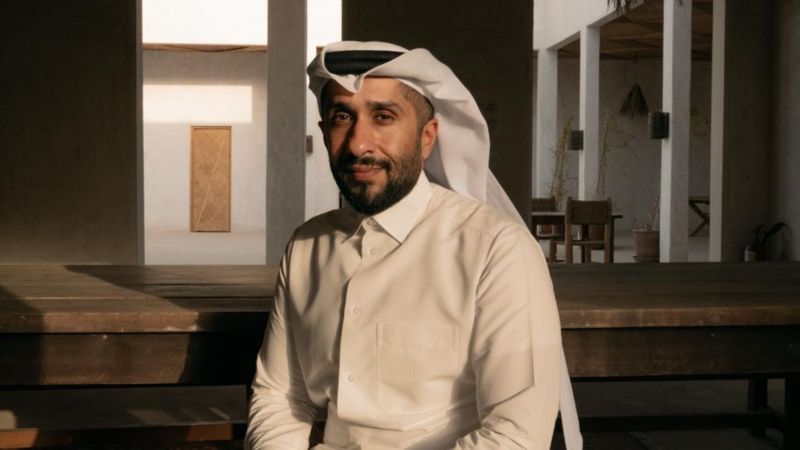
Hassan Al-Ibrahim
Hassan Al-Ibrahim builds, mentors, and innovates, transforming visionary strategies into sustainable solutions
Opinions expressed by Entrepreneur contributors are their own.
You're reading Entrepreneur United Kingdom, an international franchise of Entrepreneur Media.
Hassan Al-Ibrahim on the country his father helped build, the culture it is creating, and the Qatar his children will inherit
Before Qatar became a global destination, before Doha’s skyline and museums became well-known landmarks, life looked very different. The country depended largely on the sea, with pearl diving and trade shaping everyday life. Families were close knit, but opportunities were limited, and education was still developing. Hassan Al-Ibrahim’s father belonged to the generation that helped change that. He came of age at a moment when scarcity was still part of everyday life and the future was uncertain. He would become one of the early figures in the building of Qatar’s education system, part of a generation that helped lay the foundations of the country’s future “They helped to turn the scarcity into abundance,” Al-Ibrahim says.
Al-Ibrahim grew up in the 1980s and 1990s, in the middle of the transformation his father’s generation had helped set in motion. Qatar was moving from the legacy of pearls and trade towards an economy powered by hydrocarbons, infrastructure and increasingly global connections. Yet the transformation was not, he remembers, simply about becoming richer or more modern. “Physically, the country was shifting from the legacy of pearl diving and trade into an energy-driven and hydrocarbon-driven and globally connected economy,” he says. “There was still a sense of scarcity in terms of infrastructure, in terms of options. But an emerging abundance of opportunity and vision was surfacing.” What stayed with him was something less visible. “What did not change was how close people felt to one another.”
In a country changing so quickly, that closeness was important. Families lived near one another. Neighbours knew one another. Children could move between homes. Conversations happened face to face, often through the majlis, where ideas were exchanged and relationships maintained. “Social intimacy helped us to protect and preserve our identity and our social cohesion,” he says. For Al-Ibrahim, this is the deeper story of how Qatar changed. The country did not simply move from pearls to gas. It also had to find a way to grow while keeping the traditions and relationships that held the society together. “This transition from the pearls to gas was not just economic,” he says. “It was a test of whether we can grow outward without losing our inner fabric as a society.” Al-Ibrahim says this balance was shaped by the vision of H.H. Sheikh Hamad bin Khalifa Al Thani and remains uniquely sustained today under H.H. Sheikh Tamim bin Hamad Al Thani, with Qua=tar’s growth still closely tied to its sense of community and national identity.
That tension – between openness and identity, modernity and memory, global ambition and local intimacy – has been part of h Al-Ibrahim’s life as well. His career has taken him through many of the areas that have shaped Qatar today. He trained as a computer engineer, worked in the energy sector, moved into tourism and public service, and later into academia and the private sector. On paper, the journey looks varied, but to him, it makes perfect sense. “We never really choose between government and business,” he says. “We choose the space where they meet.” Public service appealed to him because it offered the possibility of shaping the conditions in which others could succeed. “Public service offered a chance to help design the rules of the game, not just to play it.” It is an idea that reflects both his generations and his fathers. His father’s generation focused on building the basic institutions Qatar needed. Al-Ibrahim’s generation has had to think about how those institutions should grow as the country changed.
Institutions. Tourism. International exchange. Culture. Education. Creative industries. And increasingly, how Qatar presents itself to the rest of the world. As Qatar began opening up to international visitors, Al-Ibrahim saw the country’s visa reforms as more than a way to attract tourists. For him, they were also about making it easier for people, ideas and talent to come into Qatar. “We were challenged by a new normal where we had to accelerate the openness of Qatar,” he recalls. The reforms, he argues, carried a message beyond the paperwork. “These visa reforms were not just technical changes,” he says. “They signalled that Qatar is ready to welcome talent, welcome visitors, welcome ideas.” There was another message beneath that one, too: that hospitality was not being invented for tourists. It was already there. “I did not differentiate between being a host and then leading a tourism entity,” he says. “To me they were the same.” Then he puts it even more simply: “By default, by nature, we are a hospitable nation. This comes as part of our DNA.”
After years of working in tourism, Al-Ibrahim has come to see that welcoming visitors is not just about showing them Qatar’s major attractions. It also means helping them understand the everyday customs and ways of life that may seem obvious to Qataris “What feels normal at home is often invisible or misunderstood abroad.” He believes this is one reason travel should not be about trying to recreate what visitors already know. People travel to experience something different and to understand how other people live. Qatar’s particular story is one of contrasts: extraordinary modernisation alongside strong social bonds; global visibility alongside intimate community; a small population hosting some of the world’s largest international events. The 2022 FIFA World Cup made that contrast impossible to ignore. From the outside, it was a global spectacle. From inside, Al-Ibrahim experienced something different. “The World Cup felt less like a single event and more like a comprehensive test of our institutions, our identity, our capacity to host the World Cup.” Suddenly, everyday decisions were being seen by the entire world. But what he remembers most is not the scale of the event. It is the fact that ordinary life continues underneath it. “What struck me most was how ordinary life continued.” Children went to school. People went to work. Families continued their routines. “The children went to schools, the people went to work, while the world enjoyed watching the World Cup.” He attended almost every match. Yet what remained with him was the peculiar duality of the experience: a country under unprecedented international scrutiny while its own daily rhythms remained remarkably intact. For Al-Ibrahim, the World Cup showed how Qatar’s leadership had used a major global event to push the country forward. He sees the vision of H.H. Sheikh Hamad bin Khalifa Al Thani continuing under H.H. Sheikh Tamim bin Hamad Al Thani, particularly in the development of infrastructure and in showing the world more of Qatar’s culture and identity.
The experience left Qatar with something that could not be counted in stadium capacity or visitor numbers. “It gave people a new confidence in what their country can handle and what they as people and nation can handle.” The World Cup became, in his words, an exercise in resilience – a discovery that a country could be tested on a scale far beyond anything it had previously experienced and emerge with a stronger sense of itself. That confidence has also shaped Qatar’s cultural ambitions. Over the past two decades, the country has invested heavily in museums, galleries, residencies, exhibitions and public art. But Al-Ibrahim is careful about the distinction between constructing cultural buildings and creating a culture. Around the world, he says, countries have built museums with the hope that the buildings themselves would become destinations. “Many destinations around the world in the last three or four decades were building white elephants.”
The lesson, he believes, is that art cannot live only behind museum walls. “You need to do more about art and not just put it between four walls.” His description of Qatar is almost deliberately simple. “If you come to Qatar, you can feel it’s an open-air museum. It’s an open-air art gallery. Art is everywhere.” You notice the change in the music, the airport, the public art and the streets. But for Al-Ibrahim, the more important change is among young Qataris themselves. They are beginning to see their culture as part of everyday life, rather than something that belongs only to the past. “You go to schools in Qatar, you see these talented kids. You go to universities in Qatar, you see them passionate about art.” Then comes the line that perhaps matters most: “It became something that is part of the social fabric.”
For Al-Ibrahim, that is when culture becomes something more powerful than a tourism strategy. It becomes an identity. And eventually, the economy. “Once you have that culture, from an economic perspective, it’s no longer just about taste and culture and trying to drive tourism to a destination,” he says. “It helps you to build a creative economy. And by default, the market will be created on the back of a creative economy.” His view of Qatar is modern, but it is still based on the importance of people and relationships. This also comes through in his research on civic engagement. He found that Qatar can appear to have limited citizen participation when judged by Western measures, but those measures do not tell the whole story. In Qatar, people may engage with society and government in less formal ways.
Here, conversation is itself an institution. The majlis remains a place where people meet, test ideas, challenge assumptions and speak directly with decision-makers. “The majlis culture in our part of the world has helped to keep this social fabric intact.” He compares it to the private clubs of Britain, but with a crucial distinction. “Every citizen can be a member of that social or private club and can have a say and can rub shoulders with decision makers here.” For Al-Ibrahim, the future is not about replacing this culture with a Western model of participation. It is about connecting the old and the new: ensuring that conversations that happen informally can increasingly find their way into modern systems of governance. Again, it is the same question. How do you modernise without erasing? How do you build something new without dismantling what already works? Perhaps that is why Al-Ibrahim is wary of simplistic interpretations of Qatar from abroad. He does not reject criticism, but he does resist narratives that reduce the country’s trajectory to resources alone. “There is a tendency to see our trajectory as either purely resource-driven rather than strategically driven,” he says.
The point is that Qatar’s development is more complicated than it can appear from the outside. It involves decisions about education, culture, tourism, security and the relationship between the state and its people. He believes it is more useful to look at those things together rather than reduce the country’s development to a simple story. “More nuanced, evidence-based conversations.” It is a fitting philosophy for a country that has become increasingly difficult to describe with a single narrative. Qatar is no longer only the story of hydrocarbons. Nor is it simply the story of extraordinary architecture or the World Cup. It is not only a tourism destination, a diplomatic actor, a financial centre or an emerging cultural capital. It is all of these things at once. And beneath them is a smaller, quieter story: a country trying to become more global without becoming less itself.
For Al-Ibrahim, the meaning of that work became most personal when he thought about his children. His doctorate was partly inspired by his father, but his children gave him another reason to finish it. He spent long days and nights working on the research, sometimes 17 or 18 hours in front of a screen. His children would ask why he was always reading or typing. He knows how much work went into completing it. “Work and education have taken so much time away from my children and from my family,” he says. The doctorate, he hopes, will show them something about perseverance and purpose. But he is conscious of the limits of example. “Being an example will never replace being present and sharing ordinary days and becoming part of their personal memories.” And then comes perhaps the most intimate sentence of the entire conversation. “You need to be that ghost that they remember,” he says. “When you’re gone, you need to be part of their daily memories.” The thought changes the scale of the story.
For all the discussion of nations, institutions, museums, tourism strategies and global events, the future of Qatar is ultimately being carried through ordinary lives. Children growing up in homes where grandparents are nearby. Neighbours who still look after one another. Young people encounter art in schools and universities. Families gathering in majalis. A new generation learning what it means to be Qatari in a country that now welcomes the world. Al-Ibrahim speaks with particular affection about that family network. Even when work took him away from home, he says, the wider community provided a kind of safety net. Children could move between relatives and neighbours. The family extended beyond the immediate household. That support system is part of the inheritance too.
His father taught him to see education as a responsibility. Much of Al-Ibrahim’s own career has followed that same idea: building institutions and creating opportunities for people who came after him. Now he thinks about what he will pass on to his children. Not just in terms of what he can give them, but what they will know about where they come from. His family’s story follows the changes Qatar has gone through. His father knew the country before the wealth of oil and gas had transformed it. Al-Ibrahim grew up as that change was taking place and went on to work in many of the institutions that shaped the country as it developed. His children are growing up in a very different Qatar, one where international connections, culture and new opportunities are part of everyday life. The country will keep changing. For Al-Ibrahim, the question is what should remain as it does. The close relationships between families, the sense of community and the connection to Qatar’s culture are things he does not want progress to leave behind.
For Al-Ibrahim, much of this comes back to a simple idea. Build institutions, but keep people at their centre. Open the doors, but know what is inside the house. Create museums, but let culture escape into the streets. Modernise, but preserve the majlis. Invite the world in, but remain curious about what makes your own society distinct. Above all, remember that every generation is only temporarily holding the country it has inherited. His father helped build the foundations of modern Qatar. Al-Ibrahim has spent his life navigating what those foundations became. His children will decide what happens next. Perhaps that is the real craft of becoming Qatar: not abandoning the past in pursuit of the future, but learning how to weave the two together. A country can change its economy, its skyline and its place in the world. The challenge is to change those things without losing the things that give the country its identity. And that, ultimately, is what Al-Ibrahim means when he speaks of the fabric of Qatar. It is not something preserved in a museum. It is something passed from one generation to the next.
Hassan Al-Ibrahim on the country his father helped build, the culture it is creating, and the Qatar his children will inherit
Before Qatar became a global destination, before Doha’s skyline and museums became well-known landmarks, life looked very different. The country depended largely on the sea, with pearl diving and trade shaping everyday life. Families were close knit, but opportunities were limited, and education was still developing. Hassan Al-Ibrahim’s father belonged to the generation that helped change that. He came of age at a moment when scarcity was still part of everyday life and the future was uncertain. He would become one of the early figures in the building of Qatar’s education system, part of a generation that helped lay the foundations of the country’s future “They helped to turn the scarcity into abundance,” Al-Ibrahim says.
Al-Ibrahim grew up in the 1980s and 1990s, in the middle of the transformation his father’s generation had helped set in motion. Qatar was moving from the legacy of pearls and trade towards an economy powered by hydrocarbons, infrastructure and increasingly global connections. Yet the transformation was not, he remembers, simply about becoming richer or more modern. “Physically, the country was shifting from the legacy of pearl diving and trade into an energy-driven and hydrocarbon-driven and globally connected economy,” he says. “There was still a sense of scarcity in terms of infrastructure, in terms of options. But an emerging abundance of opportunity and vision was surfacing.” What stayed with him was something less visible. “What did not change was how close people felt to one another.”

Marine Tanguy is a French-British art entrepreneur, author and speaker, best known as the founder... Read more