I spent 2026 bringing art, science and technology together. It changed what I want from AI
Art, science and technology reshaped my perspective on AI and creativity.

The HumanWare Project
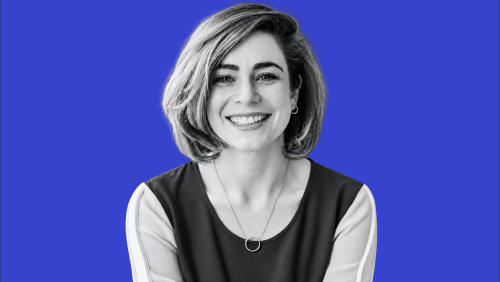
Méline Liu is the founder of The HumanWare Project
Opinions expressed by Entrepreneur contributors are their own.
You're reading Entrepreneur United Kingdom, an international franchise of Entrepreneur Media.
I launched my company, The HumanWare Project, in 2024 with a podcast and YouTube channel. I wanted to explore what it means to live longer, healthier and more creative lives, so I started by talking to scientists, longevity researchers and people building new technologies. In 2025, my team and I launched HUMANWARE magazine to give those stories more room. By 2026, I wanted to see what would happen if we brought the people behind those ideas into the same room.
That’s where the idea for the inaugural Carnival of the Future came from. As I began planning it, I kept thinking about the Met Gala. Once a year, people who care about fashion get dressed up, take creative risks and give the rest of us something to talk about. I wondered what would happen if we brought some of that energy to science. Could we make people as curious about the person behind a scientific discovery as they are about the person who made a dress? Could we give scientists, artists and craftspeople one crazy night worth a year?
What surprised me in 2026 was how creative scientists are. I knew creativity when I saw it in couture. It took me longer to recognise it in the way a scientist asks a question nobody else thinks to ask. Spend enough time talking to people about how an idea came to them and you start hearing similar things across very different disciplines. Somebody follows a hunch. Somebody spends years getting good enough at their craft to try something that seems obvious only after they’ve done it.
That was the opportunity I saw in bringing art, science and technology together. The challenge was giving people a reason to care about work that could feel a long way from their own lives. Someone can be a hero in their field and almost unknown outside it. With Carnival of the Future, I wanted to give an audience a chance to discover what excites those people. Longevity was a natural place to start. When I think about living longer in good health, I think about what I’d want to do with the years I gained. I’d want more time to make things, to be curious and to spend with people I love.
What I learnt about building HumanWare
Some of the people I met this year were getting older and felt healthier than they had years before. My first instinct was to explain that away as luck or the genetic lottery. Then I heard enough of these stories to become curious about what people knew, who they could speak to and what they had access to. An idea that comes up in conversation every day in one circle can be something a person in another part of the world has never heard of. That helped me get clearer about what I want HumanWare to do. There is so much information about health and longevity that it’s easy to spend an evening reading and come away less sure of what to believe. I want us to do some of the heavy lifting by finding people worth listening to and asking the questions a reader might ask if they were in the room. Then the reader can decide what they want to explore further. I think about a girl somewhere watching one of our interviews and imagining, perhaps for the first time, that she could become a scientist. I would be happy if we did that for one person. My proudest achievement of 2026 was building the HumanWare team. When you’re working on something that crosses several fields, people will ask who it’s for and whether anybody needs it. I ask myself those questions too. I’ve learnt to live with the scepticism and pay attention to whether I can explain our choices clearly. I’m proud to work with people who care about doing work they can be proud of themselves. I want HumanWare to carry on long after I’m gone, and the culture we build together will have more to do with that than any single interview or event.
Where I think the AI conversation will go in 2027
The more I spoke to people building new technology, the more I found myself asking a basic question. What is it for? We make tools to save ourselves time, then find ways to fill every minute we’ve gained. I’m guilty of this too. I can get excited by what a tool makes possible before I’ve worked out whether it helps me live the way I want to. I hope we bring some of that thinking to AI in 2027. I’m particularly curious about what happens in biotech. I expect more of the conversation to move towards drug discovery and whether researchers can use AI to decide which leads are worth spending years pursuing. I think investors will be watching that closely. I’m also interested in what AI could do for people who live somewhere with limited access to specialists. Being able to find a clear explanation or arrive at a consultation with better questions could make a difference. I expect we’ll also hear more about preventative and personalised care, including whether digital twins, or computer models built using a person’s health data, can tell us anything useful about that individual. My biggest worry is the quality of the information. A fluent answer can feel authoritative when you have no idea where it came from. I think about children growing up who will never have known a world without AI. What will they learn to look for when they see a face on a screen and want to know whether it belongs to a real person? I don’t know the answer. I suspect we’ll spend as much time talking about how we know what to trust as we do talking about what AI can make.
What I want to do next
For HumanWare, I think of 2027 as a year to work towards mastery. We’ve spent our first phase interviewing people at the top of their fields and learning how to ask better questions. Now I want us to follow some of the more niche ideas those conversations opened up and find a way of telling those stories that feels recognisably ours. I love Wes Anderson for that reason. You can see a frame and know whose eye you’re seeing the world through. I’d like a reader to pick up a HumanWare story and get that same feeling from the questions we ask and the details we notice. On a personal level, I’d like to make more time to switch off in 2027. I’ve done two silent retreats where I spent ten days on my own in complete darkness, and I’d love to do another. People always ask what I do for all that time. The answer is nothing, really. I spend so much of my working life asking questions and taking in new ideas that I’ve come to enjoy having a stretch of time when there’s nothing new coming in. I’m still working out what I want from a future in which technology can do more for us. I know I want the time it gives me back to mean something. Sometimes that will mean following an idea with my team. Sometimes it will mean sitting quietly on my own. I’d like to get better at making that choice for myself.
I launched my company, The HumanWare Project, in 2024 with a podcast and YouTube channel. I wanted to explore what it means to live longer, healthier and more creative lives, so I started by talking to scientists, longevity researchers and people building new technologies. In 2025, my team and I launched HUMANWARE magazine to give those stories more room. By 2026, I wanted to see what would happen if we brought the people behind those ideas into the same room.
That’s where the idea for the inaugural Carnival of the Future came from. As I began planning it, I kept thinking about the Met Gala. Once a year, people who care about fashion get dressed up, take creative risks and give the rest of us something to talk about. I wondered what would happen if we brought some of that energy to science. Could we make people as curious about the person behind a scientific discovery as they are about the person who made a dress? Could we give scientists, artists and craftspeople one crazy night worth a year?
What surprised me in 2026 was how creative scientists are. I knew creativity when I saw it in couture. It took me longer to recognise it in the way a scientist asks a question nobody else thinks to ask. Spend enough time talking to people about how an idea came to them and you start hearing similar things across very different disciplines. Somebody follows a hunch. Somebody spends years getting good enough at their craft to try something that seems obvious only after they’ve done it.
Méline Liu • Founder of The HumanWare Project
Méline Liu is the founder of The HumanWare Project, editor-in-chief of HUMANWARE magazine and creator... Read more