Morocco’s OCP Group: from resilience to anti-fragility
Over the last quarter century King Mohammed VI can be credited for steering a pivotal transformation. Thanks to his forward-looking vision, Morocco has diversified away from the primary sector into advanced manufacturing and knowledge-based services.
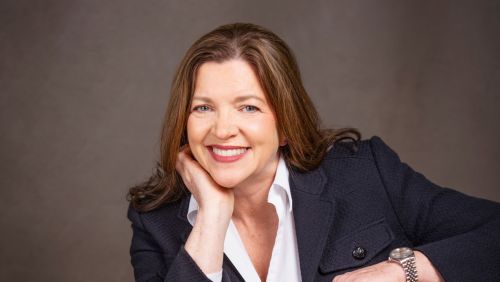
Courtesy of Alexandre Kateb
Opinions expressed by Entrepreneur contributors are their own.
You're reading Entrepreneur United Kingdom, an international franchise of Entrepreneur Media.
The Kingdom of Morocco is famous for its sense of hospitality and millennial historical heritage. But beyond that, what makes this country unique is its capacity to withstand crises and turn them into new catalysts for further transformation. Over the last quarter century King Mohammed VI can be credited for steering a pivotal transformation. Thanks to his forward-looking vision, Morocco has diversified away from the primary sector into advanced manufacturing and knowledge-based services. The King’s green development vision aimed to turn Morocco into an African posterchild for renewable energies and sustainable water management – which led the Kingdom to host COP 22 in Marrakech in 2016. In turn this enhanced Morocco’s soft power and its perception as a reliable partner, engaged in North-South and South-South development.
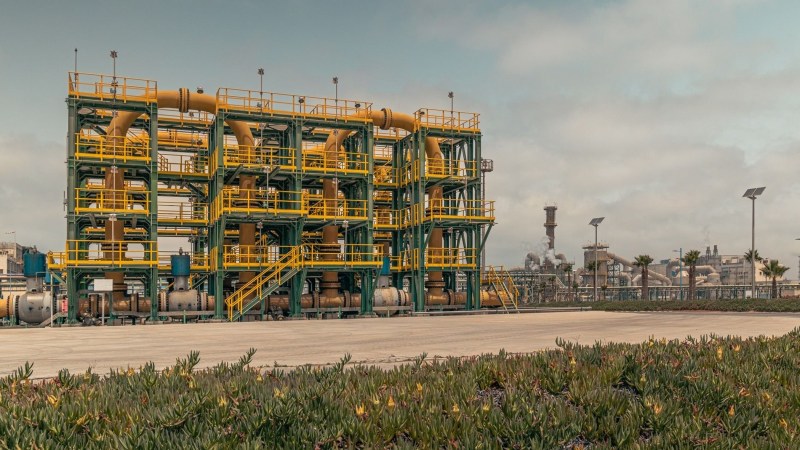
As the world leading producer of phosphate and phosphate derived fertilizers, OCP Group has benefitted from the King’s vision and development strategy. With the arrival at its helm of Mostapha Terrab, its long-standing Chairman and CEO since 2006, this Moroccan State-owned company that used to export raw phosphate rock, embarked on a bold transformational agenda. Raw phosphate rock sales now represent only a fraction of what OCP sells and exports to the world, which consists mostly of phosphate derived and blended fertilizers. OCP now provides roughly a third of all phosphate fertilizers sold globally and is now venturing into non-fertilizer related industries such as electric batteries and uranium extraction and processing. It sprawled new ventures including an R&D-focused University (UM6P) and sizable Renewable Energy and Water Desalination facilities. Additionally, along with Morocco’s “Look South” policy, OCP Group multiplied its fertilizer deliveries to African farmers tenfold and built processing factories in partnership with local actors.
A transformation with multiple benefits
This transformation brought significant benefits, with fertilizers routinely competing with cars as Morocco’s top exports. However, this has also increased OCP Group’s vulnerability to global supply shocks, as it had to import ever larger quantities of sulfur and ammonia – which are indispensable for turning raw phosphate rock into products like DAP and MAP. As a matter of fact, OCP Group has become one of the world’s largest consumers of sulfur and ammonia. No wonder then that the Hormuz crisis hit it hard. The closure of the Strait suddenly deprived the world from over a third of seaborne traded ammonia and sulfur. As a result, OCP’s turnover decreased by 7 percent in the first semester of 2026 and more importantly its net margin turned negative for the first time in two decades. A three-fold spike in the value of sulfur imports also weighed on Morocco’s trade balance by significantly reducing the net trade surplus generated by OCP Group’s operations.
Against this backdrop, the group’s leadership reacted quickly through a combination of measures. First, it decided to reduce temporarily its overall production, as a buffer against the Ammonia and sulfur squeeze, while boosting its supply of TSP – a product that is far less reliant on these inputs. It has also sought new suppliers all over the world, from the United States to China, to reduce its dependence on the Middle East. It has also fast tracked the construction of giga warehouses to scale up its inventories of sulfur and reduce its vulnerability longer term. Perhaps even more importantly it set up plans to increase, as soon as in 2027, its sulfur production from pyrite – a mineral that Morocco has in abundance – and from phosphogypsum – a subproduct and waste of phosphate processing.Beyond these tactical decisions, OCP Group has embarked into a new transformation, trimming non-core assets and delaying some projects whose economics are not conclusive against more pressing priorities. The group is opening its operations in renewable energy and desalination to external partners through innovative revenue sharing schemes. In this critical stage, the Group’s symbiotic relation with the Kingdom of Morocco shelled it from the volatility and short-term profitability pressure that publicly listed overseas competitors – like US based MOSAIC or EU-based Yara Group – had to experience because of the Hormuz crisis.
Resilience despite geopolitical fragmentation
In a context of heightened geopolitical fragmentation and great power competition, the way a company assesses and deals with geopolitical risks will be critical for its capacity to survive and thrive. OCP Group should be able to manage these challenges. It has invested early on in innovation and human capital – bringing it on par with world-class peer competitors. Its strong footprint and anchoring on the African continent also provide it with a distinctive ethos and corporate responsibility. At a time when its main North American competitor is scaling down, OCP Group announced new fertilizer processing plant project in Louisiana in the United States. As a sign of other forthcoming changes, OCP Chairman Mostafa Terrab recently appointed UM6P President Hicham El Habti as the group’s secretary general. The company’s financials remain robust. As a matter of fact, Standard & Poor’s kept the Group’s investment grade rating with stable outlook, endorsing its “anti-fragile” turn-around. Hence, if anything, the Hormuz crisis catalysed a reshuffle of the global fertilizers industry, as it becomes increasingly dominated by Global South champions like OCP.
Morocco’s geographic positioning provides it with vital geostrategic immunity. Its Atlantic and Mediterranean coastal infrastructure guarantees an uninterrupted supply route to sub-Saharan Africa, the Americas, and Europe. Above all, the lesson the Kingdom offers is clear: resilience, sustainability and productivity growth can go together and reinforce each other. Driven by a clear top-down vision and synchronized execution, a country or a company can overcome its structural vulnerabilities and accelerate its development, turning crises into new opportunities.
The Kingdom of Morocco is famous for its sense of hospitality and millennial historical heritage. But beyond that, what makes this country unique is its capacity to withstand crises and turn them into new catalysts for further transformation. Over the last quarter century King Mohammed VI can be credited for steering a pivotal transformation. Thanks to his forward-looking vision, Morocco has diversified away from the primary sector into advanced manufacturing and knowledge-based services. The King’s green development vision aimed to turn Morocco into an African posterchild for renewable energies and sustainable water management – which led the Kingdom to host COP 22 in Marrakech in 2016. In turn this enhanced Morocco’s soft power and its perception as a reliable partner, engaged in North-South and South-South development.
As the world leading producer of phosphate and phosphate derived fertilizers, OCP Group has benefitted from the King’s vision and development strategy. With the arrival at its helm of Mostapha Terrab, its long-standing Chairman and CEO since 2006, this Moroccan State-owned company that used to export raw phosphate rock, embarked on a bold transformational agenda. Raw phosphate rock sales now represent only a fraction of what OCP sells and exports to the world, which consists mostly of phosphate derived and blended fertilizers. OCP now provides roughly a third of all phosphate fertilizers sold globally and is now venturing into non-fertilizer related industries such as electric batteries and uranium extraction and processing. It sprawled new ventures including an R&D-focused University (UM6P) and sizable Renewable Energy and Water Desalination facilities. Additionally, along with Morocco’s “Look South” policy, OCP Group multiplied its fertilizer deliveries to African farmers tenfold and built processing factories in partnership with local actors.
A transformation with multiple benefits