Your Business Made Good Money This Year. So Why Do You Still Feel Broke?
Strong business sales don’t always mean healthy profits or cash flow.
Shutterstock
Opinions expressed by Entrepreneur contributors are their own.
You're reading Entrepreneur United Kingdom, an international franchise of Entrepreneur Media.
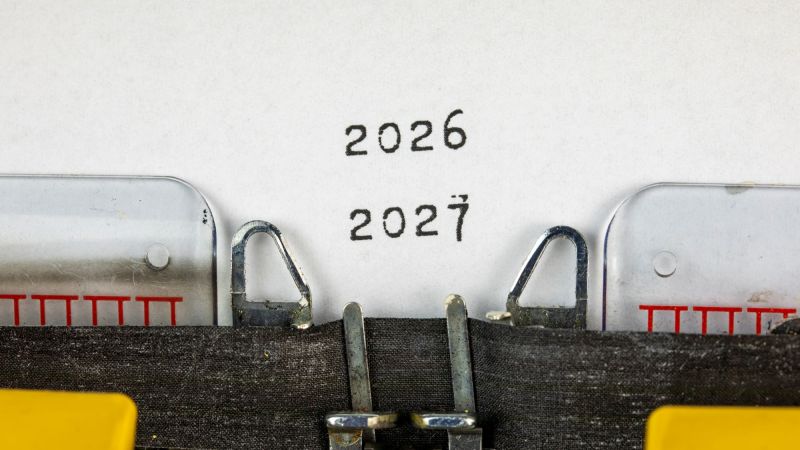
2026 has been a strong year in your business, so where did all the money go?
There is a particular kind of financial embarrassment that nobody talks about. Not the broke-and-struggling kind. The other kind. The kind where your turnover looks great, your accountant is pleased, and you are quietly dipping into personal savings to cover payroll or wondering how March got so tight when December looked so good. Ff that lands somewhere uncomfortable, you’re in good company. And the fix is more straightforward than you’ve probably been told.
The number that actually matters isn’t the one you’re sharing
Sales figures are seductive. They’re the number that gets posted, celebrated, quoted in proposals. A six-figure launch sounds brilliant until you factor in the ad spend, the affiliates, the tech subscriptions, the freelancers, and the fact that half of it’s still sitting in someone else’s payment plan due to you over the next 12 months or more. The number that tells you the truth about the health of your business is profit and many business owners just haven’t worked out what that looks like for each product they sell and for their business as a whole. But the number that tells you whether you can sleep at night is cash flow, because profit means nothing if it is just a theoretical number on a spreadsheet and the cash isn’t in your account when the bills land. A lot of business owners that I meet carry a vague awareness of this without ever actually sitting down and doing the maths. They know roughly what’s coming in. They have less idea what’s going out. And the gap between those two things is where the year goes.
There’s money in your account that isn’t yours
This is the bit that catches so many people out, and it catches them out hard. As a limited company owner, you pay corporation tax in one chunk, nine months and a day after your accounting year ends. Which means there is almost certainly a chunk of money sitting in your business account right now that belongs to HMRC, not you. Add VAT if you’re registered, and suddenly that comfortable-looking balance has a very different feel to it. Before you do anything with surplus money in your business, strip out what belongs to the tax man and ideally keep it in a separate account. Then work out what you need as a genuine cash flow buffer, because a launch that underdelivers, a client who pays late, or three quiet months in a row can wreck an otherwise healthy business if there’s no cushion. I’ve worked with people turning over a couple of hundred thousand a year who’ve had to borrow money from their children’s savings to run payroll. It happens more than anyone lets on. What’s left after tax and buffer? That’s your money. And this is where it gets interesting.
You are probably underpaying yourself
The most common thing I see when I sit down with a business owner’s finances is that they are paying themselves less than they should be, and they’ve dressed it up as financial responsibility. Suppliers have put their prices up. If you employ people, the minimum wage has gone up significantly over the last few years. The only person whose pay has stayed flat is usually the owner, because there’s this idea that keeping your salary low is virtuous somehow, or that paying higher rate tax is to be avoided at almost any cost. Here’s a thought. If paying yourself an extra £1,000 a month means £400 goes in tax, you still have £600 more than you had before. What would an extra £600 a month do for your life? Worth a moment, that one. Your company can pay money into your pension as your employer, up to £60,000 a year, and it comes off your corporation tax bill as a payroll expense. That’s not a loophole. That’s how it’s designed to work. And it means you can effectively give yourself a meaningful pay rise in a way that benefits the business too. Your company can also pay for things you might be funding out of personal income right now. Life cover written correctly, private medical care, relevant training. Every pound your business pays for legitimately is a pound you don’t have to find at home.
The question worth sitting with before January
The theme of a lot of end-of-year conversations I have is some version of this: I’ve had a decent year, so why doesn’t it feel like it? Usually it’s one of three things. The tax money got spent. The salary never kept up with the actual cost of living. Or the surplus sat in a current account earning next to nothing because there was always something more urgent to look at. None of these are catastrophic. All of them are fixable. But they don’t fix themselves. If you’ve got money sitting in your business account and you’re not sure whether it’s yours, whether it’s enough, or what it should be doing, that’s exactly the conversation to have before you close the year out. Not in January when it’s already gone. Now, while you can still see it and decide.
2026 has been a strong year in your business, so where did all the money go?
There is a particular kind of financial embarrassment that nobody talks about. Not the broke-and-struggling kind. The other kind. The kind where your turnover looks great, your accountant is pleased, and you are quietly dipping into personal savings to cover payroll or wondering how March got so tight when December looked so good. Ff that lands somewhere uncomfortable, you’re in good company. And the fix is more straightforward than you’ve probably been told.
The number that actually matters isn’t the one you’re sharing
Sales figures are seductive. They’re the number that gets posted, celebrated, quoted in proposals. A six-figure launch sounds brilliant until you factor in the ad spend, the affiliates, the tech subscriptions, the freelancers, and the fact that half of it’s still sitting in someone else’s payment plan due to you over the next 12 months or more. The number that tells you the truth about the health of your business is profit and many business owners just haven’t worked out what that looks like for each product they sell and for their business as a whole. But the number that tells you whether you can sleep at night is cash flow, because profit means nothing if it is just a theoretical number on a spreadsheet and the cash isn’t in your account when the bills land. A lot of business owners that I meet carry a vague awareness of this without ever actually sitting down and doing the maths. They know roughly what’s coming in. They have less idea what’s going out. And the gap between those two things is where the year goes.

Claire Sweet • Founder of Peace Together Money Coaching
Claire Sweet is an award-winning financial adviser, money coach and bestselling author, and Founder of... Read more