Leadership Lessons from One of Britain’s Most Recognised Female CEOs
Successful leadership requires energy, resilience, humility, discipline, adaptability and embracing uncertainty through change.

Getting Better Never Stops
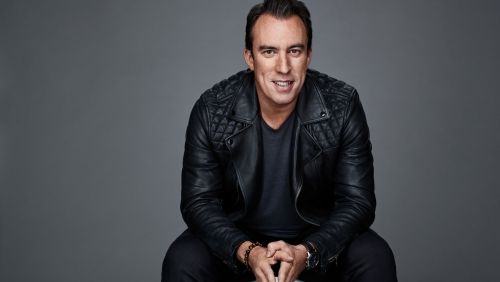
Harriet Green OBE is a visionary business mentor, philanthropist, and global leader in strategic transformation and organisational excellence.
Opinions expressed by Entrepreneur contributors are their own.
You're reading Entrepreneur United Kingdom, an international franchise of Entrepreneur Media.
What does a CEO actually do? This is a question I am regularly asked. More than anything, they carry weight. The weight of people’s jobs and of investor expectations; the weight of crises you can’t predict or that you can see approaching. It’s decision after decision, many of them imperfect, made under pressure, with incomplete information. You don’t get to opt out because of doubt, or of loneliness, or of mistakes. What you do get, is the opportunity to decide how much of your real self you bring to those challenges.
As a female CEO, I have led businesses through some of the most challenging conditions – from transforming Premier Farnell into a FTSE 250 global Commerce platform during the financial crisis, to rescuing Thomas Cook Group from £1.2bn of debt with 17 weeks to live. Here are my top 7 lessons for climbing to the top levels of leadership that I’ve learnt along the way:
Lesson 1: Energy as Personality, Growth as Mindset
My first and most important leadership lesson comes from my Dad. When I was a child, on one of our long walks where he would set me quizzes, he told me that he thought I could be quite special because of my energy. If this energy continued, with it would come huge opportunity and a lot of responsibility to change things for the better. I’d better be ready, he said. I do believe energy in leadership has to be a personality trait, not a strategy. It must exude from within and embrace people into a mission that drives real momentum, success and growth. For example, when I arrived at Thomas Cook in 2012, it was a business with a 171-year history that had lost belief in itself. The share price was 14p. Management morale was on the floor. You cannot transform a business in this state with a spreadsheet. You must bring a kinetic kind of energy into every room, every store, every call centre. That is what creates a psychology of belief and spreads a can-do attitude. Growth is also a mindset, not a number, and innovation-led growth is the only sustainable form of growth. Engage your teams in design workshops to solution your top 5 obstacles to achieving real innovation in your business. Growth will follow.
Lesson 2: Balance Resilience, Grit and Grace
My mother didn’t share my father’s view of me and sadly, because of his early death, I developed resilience early. As the eldest child and without his motivation, I grew up and strong fast. This is essential in leadership – the real resilience and grit to push forward one step at a time when the going gets tough. What it took me much longer to work out is that grace counts even more than grit in driving businesses. And that grace starts from within. I was 40 before I embraced self-compassion with its four main elements:
- Thinking about myself without judgement
- Actively taking good care of myself
- Feeling love and respect for myself
- Accepting comfort or help from others
Leadership, particularly successful entrepreneurship, engages in successive sprints, not an endless marathon. As such, this approach to total wellness, with grace and self-compassion at its core, is vital for change makers.
Lesson 3: Start Your Succession Quest Early
A critical lesson for any leader is that you must start your succession quest very early. Entrepreneurs and leaders aren’t immortal, and life happens often with no manual for the events that unfold, both professional and personal, so you must be ready with talent raring to go. How do you find and develop daily the people who will help you lead and take the business onto the next level?
Lesson 4: Practice Humility, Ignore Publicity
Practicing humility goes hand-in-hand with energy as a leadership lesson. I taught myself every day to ask: why do people work for me? Remember that this is a choice each person makes, a choice that determines your success as a leader. What has helped me to practice humility is to follow The SCARF Model by David Rock: Status, Certainty, Autonomy, Relatedness, and Fairness. In particular, I never have favourites within the team – everyone is treated as a rockstar. Another leadership lesson that ties into this – one that I had to learn the hard way – is to not take huge notice of the publicity around you. As a leader, especially entrepreneurs in the limelight, you’re never as good as they say you are on the upturn, nor as bad as they portray you on the downturn. Try not to pay too much attention to the publicity noise and focus instead on how your teams perceive you.
Lesson 5: Weave Together Discipline, Motivation, and Obsession
A huge lesson that I’m just understanding and unravelling now, with a big focus on meditation, mindfulness and slowing down, is this: to be a great leader, you need huge amounts of personal discipline (I will be a leader), lashings of motivation (I want to be the best) and a red thread of obsession (I can’t think about anything else!). Combined, this holy trinity can defy gravity but needs careful unwinding when you step back.
Lesson 6: See Feedback as a Gift
All feedback is a gift – remember that. Feeback can come at any time, from any place, in any tone from anyone, whether that’s a customer, an employee, a shareholder, a board member, a colleague, or a peer. As leaders, we are all on a journey of continual development, and both positive and negative feedback help us to navigate that journey. Most importantly, if you hear the same feedback twice, act on it.
Lesson 7: Learn to Love Change and Thrive on Uncertainty
My final lesson is that every storm runs out of rain eventually and 99% of success as a leader is being brilliant at managing uncertainty. At IBM, we were taking Watson IoT) Internet of Things – a true start-up inside a 100-year-old company – and making it a profitable, customer-led business. The lesson: The companies that survive are not the strongest. They are the ones that are strengthened to be the most adaptable. As leaders, we must support our organisations to change and to be more comfortable being uncomfortable. Leaders who can survive and thrive amidst great uncertainty will win.
What does a CEO actually do? This is a question I am regularly asked. More than anything, they carry weight. The weight of people’s jobs and of investor expectations; the weight of crises you can’t predict or that you can see approaching. It’s decision after decision, many of them imperfect, made under pressure, with incomplete information. You don’t get to opt out because of doubt, or of loneliness, or of mistakes. What you do get, is the opportunity to decide how much of your real self you bring to those challenges.
As a female CEO, I have led businesses through some of the most challenging conditions – from transforming Premier Farnell into a FTSE 250 global Commerce platform during the financial crisis, to rescuing Thomas Cook Group from £1.2bn of debt with 17 weeks to live. Here are my top 7 lessons for climbing to the top levels of leadership that I’ve learnt along the way:
Lesson 1: Energy as Personality, Growth as Mindset
My first and most important leadership lesson comes from my Dad. When I was a child, on one of our long walks where he would set me quizzes, he told me that he thought I could be quite special because of my energy. If this energy continued, with it would come huge opportunity and a lot of responsibility to change things for the better. I’d better be ready, he said. I do believe energy in leadership has to be a personality trait, not a strategy. It must exude from within and embrace people into a mission that drives real momentum, success and growth. For example, when I arrived at Thomas Cook in 2012, it was a business with a 171-year history that had lost belief in itself. The share price was 14p. Management morale was on the floor. You cannot transform a business in this state with a spreadsheet. You must bring a kinetic kind of energy into every room, every store, every call centre. That is what creates a psychology of belief and spreads a can-do attitude. Growth is also a mindset, not a number, and innovation-led growth is the only sustainable form of growth. Engage your teams in design workshops to solution your top 5 obstacles to achieving real innovation in your business. Growth will follow.
Harriet Green OBE is a visionary business mentor, philanthropist, and global leader in strategic transformation... Read more