Nobody told me perimenopause would show up in my brush first. So I built a company.
Perimenopause changed my hair, my leadership, and inspired a new company.
Esther & Ruth
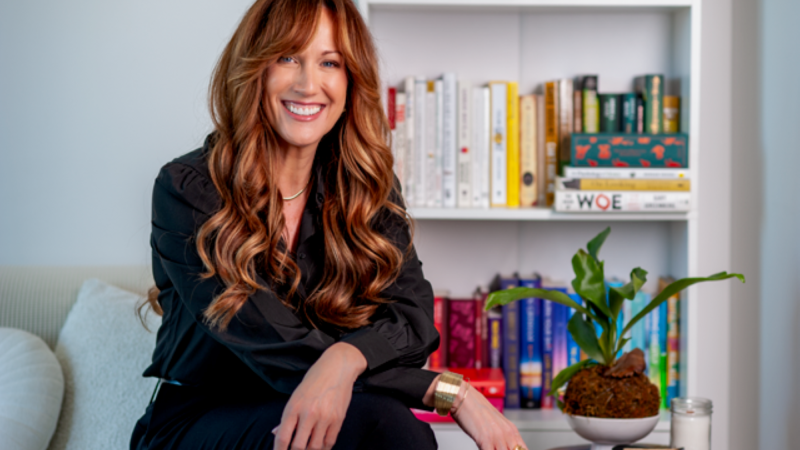
Janice Taylor, co-founder and CEO
Opinions expressed by Entrepreneur contributors are their own.
You're reading Entrepreneur United Kingdom, an international franchise of Entrepreneur Media.
I saw it in a photograph before I saw it in the mirror. It was an ordinary picture, the kind someone takes at a gathering and sends round the next morning. I was smiling. And there, under the light, was my parting, wider than I remembered it. I sat down in my kitchen and cried. Not because of vanity, but because something in my body had changed without asking me, and nobody had warned me it might. That was the start of my fourth company. I have built businesses before, launched early AI across all 5 major US sports leagues, studied the impacts of AI before it was trendy.. I thought I knew what starting something felt like: the long nights, the spreadsheets, the quiet terror of the first launch. What I did not know was what it would feel like to start something while my own body was in the middle of its biggest transition since adolescence. Perimenopause is not a footnote to my story as a founder. It is the reason for this company, and it has changed how I lead.
The season nobody plans for
Perimenopause usually begins in a woman’s forties and can last anywhere from four to ten years. Hormones do not simply decline; they fluctuate, sometimes wildly. Sleep goes. Concentration wobbles. And for many of us, hair changes. In a 2026 study of more than 17,000 women, published in Menopause, 71.2 per cent of women in perimenopause reported changes to their hair.
Yet when I went looking for help, I found two kinds of products. There were general hair-loss treatments made for everyone, and there were anti-ageing promises that seemed to want me to apologise for getting older. Nothing spoke to the woman I actually was: capable, busy, still ambitious, and quietly frightened by the brush in her hand. So, I asked a simple question, the one I now hear from women every single week: what is this new hair?
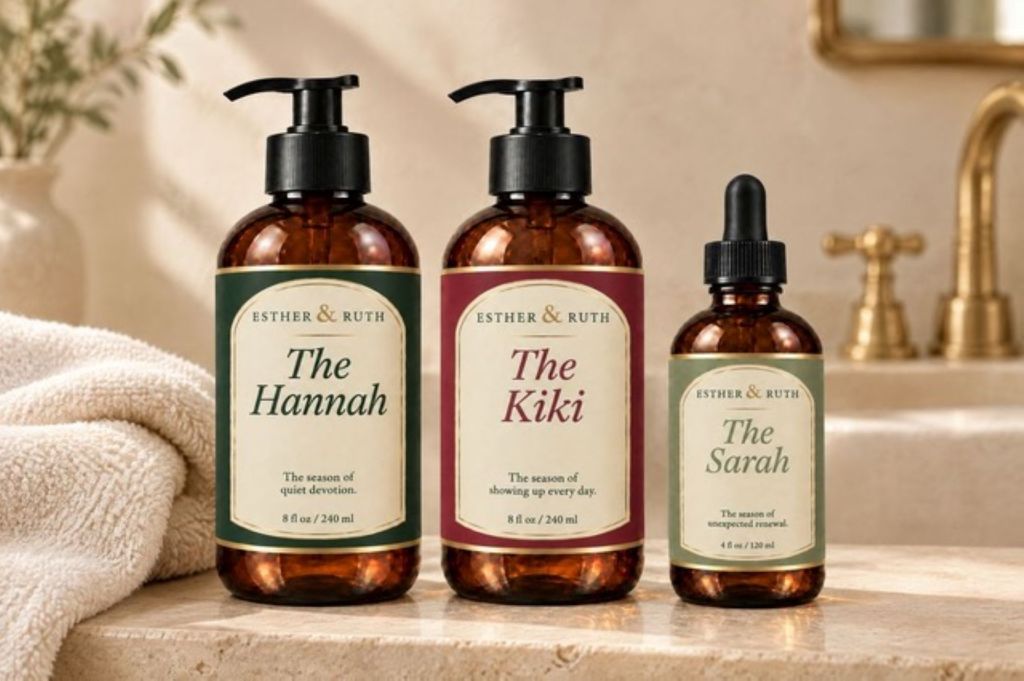
Esther & Ruth grew out of that question. I co-founded it with JoAnne Fontanini, whose Italian heritage and her mother’s rituals shape so much of what we make. We named the company after two women from ancient stories who each faced a season of enormous change and stayed rooted through it. Our tagline is “New Season, Same Roots.” It is not a product claim. It is how I want women to feel. Naming it Esther & Ruth was deeply personal beyond my love of God. I felt like an Esther—often an orphan, not feeling like I could be my true self. I wondered how many other women felt like an Esther, but deep down knew they were born for such a time as this? That perhaps there is a reason for every season of life. What a dream if every person knew that to be true. Ruth, I believe, is the conviction that where you go, I will go—in pain, in purpose, in loyalty. These two women, I believe, are every woman. Even if she has forgotten or doesn’t feel it, I know an Esther and a Ruth is in her.
What building in perimenopause has taught me
I want to be honest about this, because I think founders, and especially women founders over forty, are told too few honest things.
1. Energy is a resource. Budget it like cash.
There are days when my energy simply is not there. Early in my career I would have pushed through and called it grit. Now I plan for it. I batch my filming into a single session each week. I protect my mornings for the work only I can do. I have learned that a founder who manages her energy as carefully as her runway makes better decisions than one running on adrenaline.
2. Tell the truth, and people will tell you theirs.
When we started, I assumed polished brand content would carry the business. It did not. What worked was me, on my phone, at my bathroom sink, saying out loud the things women are rarely invited to say. My most-read posts this autumn were not about ingredients. They were about the photograph, the brush, and what it feels like to start again. That honesty became our strategy. Our campaign line is “Nobody told us. So, we’re telling each other.” Before we had sold a single product, we built a free community, Estherhood, where women going through this season talk to one another. I have learned more from those conversations than from any market report.
3. Lead with community, not with the product.
This is the part that surprised me most as a repeat founder. In my earlier ventures, the product came first and the audience came later. This time, the women came first. The products followed what they told us they needed. For years I have taught what I call Emotional Fitness: the practice of building inner strength the way you might build physical strength, a little every day. It sits between physical fitness and mental health, a new category of wellness. It began on a street in my neighbourhood in 2009, when I realised I had spent my life circling my own pain, and decided to map a way out of it that other people could follow. When I told the women who had followed that work that I was building something new, many of them wrote back with their own stories. That list became our first circle. A business built this way grows more slowly, but it grows on trust.
I also wrote about this in my book, Wisdom.Soul.Startup, and I talk about it every week on my podcast, The Big P, where women and experts speak openly about every change this season brings. The journey for each of us is to not only understand our calling but to sometimes use our most broken parts to create our masterpiece. My first book was written during my first start-up, which was also the most painful time in my life. The emergence of that book and the start-up led to the completion of my theory on the Science of Emotional Pain, which is the foundation of Emotional Fitness—a new category of wellness. In every new season of life, we see an eruption of our old pain stories and opportunities to write a new chapter. The Big P podcast and future book explore these themes.
4. You are not late.
There is a quiet belief, in business as in life, that a woman’s best ideas belong to her twenties and thirties. I do not accept that. I have more judgement now than I have ever had. I know what I will not compromise on. I know how to hire, how to listen, and when to walk away. Perimenopause has not made me less capable. It has made me less patient with things that waste my time, and that has been good for the company. I would say to any woman reading this who has an idea and thinks the window has closed: it has not. Your experience is not a liability. It is your unfair advantage.
5. Be careful with your words.
The wellness industry is full of promises. We decided early that we would not make them. We are sisters, not doctors. We do not diagnose, and we do not tell a woman her hair will be back by next month. What we say instead is true: hair grows in cycles, so care takes patience. I would rather build a smaller company that women trust than a bigger one they eventually feel misled by.
What I want other founders to know
If you employ women over forty, and you almost certainly do, some of them are going through this right now. Many of them will not say so. A little flexibility around hours, a meeting culture that does not punish an off day, and the simple permission to name what is happening can keep some of your most experienced people in the room. If you are a founder yourself and in this season, I want you to hear three things. You are not imagining it. You are not alone. And you are not finished. And if you are an investor, I would gently point out that more than a billion women worldwide are in perimenopause or menopause. They are buyers, decision-makers and leaders. For too long, the products made for them have been either clinical or quietly ashamed. There is room for something warmer, and the women themselves are telling us exactly what it should look like.
The season I am in
I no longer see it as my body betraying me. I see it as information: a sign of the season I am in, and a reminder of the women who are in it with me. Part of what we earn will go back to women who are starting again, through the Grace Field Fund, named for my mother Marilyn Joan Hadfield—a talented woman who sacrificed all her dreams to survive, yet used her talents in small ways for others. As I faced some of the same hardships, I asked my mother what she would do differently, and she said, “I would never have given up on myself.” The Grace Field Fund will provide hope to any woman who may be giving up on herself. I did not plan to start a business in the middle of perimenopause. But I have come to believe I was meant to build this one now, in this season, for such a time as this. Nobody told me. So, I am telling you.
I saw it in a photograph before I saw it in the mirror. It was an ordinary picture, the kind someone takes at a gathering and sends round the next morning. I was smiling. And there, under the light, was my parting, wider than I remembered it. I sat down in my kitchen and cried. Not because of vanity, but because something in my body had changed without asking me, and nobody had warned me it might. That was the start of my fourth company. I have built businesses before, launched early AI across all 5 major US sports leagues, studied the impacts of AI before it was trendy.. I thought I knew what starting something felt like: the long nights, the spreadsheets, the quiet terror of the first launch. What I did not know was what it would feel like to start something while my own body was in the middle of its biggest transition since adolescence. Perimenopause is not a footnote to my story as a founder. It is the reason for this company, and it has changed how I lead.
The season nobody plans for
Perimenopause usually begins in a woman’s forties and can last anywhere from four to ten years. Hormones do not simply decline; they fluctuate, sometimes wildly. Sleep goes. Concentration wobbles. And for many of us, hair changes. In a 2026 study of more than 17,000 women, published in Menopause, 71.2 per cent of women in perimenopause reported changes to their hair.
Yet when I went looking for help, I found two kinds of products. There were general hair-loss treatments made for everyone, and there were anti-ageing promises that seemed to want me to apologise for getting older. Nothing spoke to the woman I actually was: capable, busy, still ambitious, and quietly frightened by the brush in her hand. So, I asked a simple question, the one I now hear from women every single week: what is this new hair?

Janice Taylor • Co-founder and CEO of Esther & Ruth
Janice Taylor is the co-founder and CEO of Esther & Ruth, a perimenopause hair, scalp... Read more