Why uncertainty is where the best decisions are made
The messy middle is where good entrepreneurial decisions are rooted.
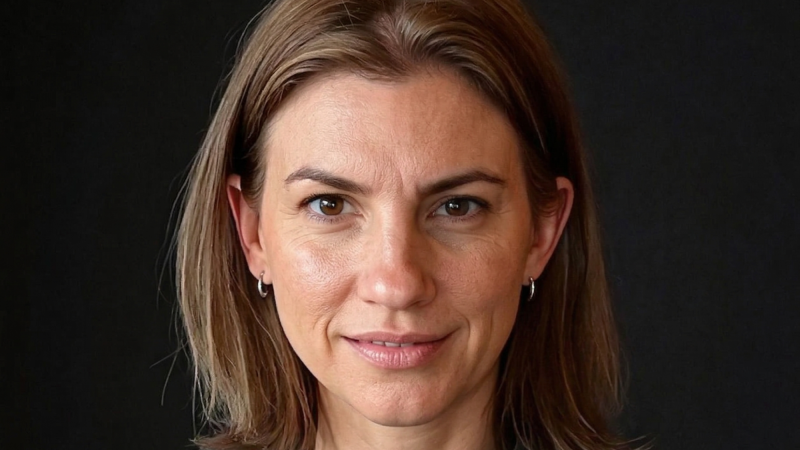
Eleanor Tweddell Change Speaker
Opinions expressed by Entrepreneur contributors are their own.
You're reading Entrepreneur United Kingdom, an international franchise of Entrepreneur Media.
There’s a moment I remember clearly from the year I started my own business. I was sitting on a train, a filter coffee threatening to tip over on the tray table, a notebook full of half-formed thoughts, no clear offer, no clients and a growing pile of evidence that I had absolutely no idea what I was doing. I’d been made redundant a few months earlier after 20 years in corporate communications, and everyone around me wanted to know the plan. What was I going to do now? What’s next? I knew I was starting something new… but what. I didn’t have an answer. And it was terrifying.
I’ve since spent years coaching leaders, founders and teams through exactly this kind of moment, and I’ve come to think of it as the messy middle, the disorienting stretch between the door closing on one thing and a new one properly opening. Every founder I’ve worked with or interviewed has lived through a version of it, and almost every one of them tried to rush through it as fast as possible. That’s the mistake. It isn’t the wrong place to be. It’s where good decisions are rooted.
Why we’re so desperate to skip it
Entrepreneurship rewards the appearance of certainty. Investors want conviction. Customers want confidence. Co-founders want a plan they can rally behind. Even people around you just want to hear you’ve got a “robust” plan when they say “I’m sure you know what you’re doing.” So we learn fast to perform clarity before we actually have it, because “I’m not sure yet” feels like weakness.
But that need for certainty fast is a fallacy. You can’t know. Not yet. Maybe never. What you can do is explore, be curious, sit with the problem you think needs solving, and let yourself have more questions than answers, like that notebook, full of thoughts about me, about what I wanted and thought the world needed. A quick decision might feel like progress, but it only draws on what you already know; it comes from the familiar. The messy middle might feel slower but it gives you time to find what you’d never have found by grabbing the first obvious answer. Going slower can feel wrong but doing what you’ve always done isn’t going to bring success either.
What actually happens in the mess
In my work I talk about five zones people move through in change: pause, mess, play, try, restart. They’re not always sequential, but the first three are where the real difference gets made. Pause is the bit almost nobody gives themselves permission to do. Before the next move, pivot, hire, fundraise or launch, there’s a beat to actually stop and notice what’s going on, rather than reacting to the last bit of feedback or panic. Most of us skip it because pausing feels unproductive. But stepping out is where you get perspective and time to think, and thinking is a hugely under-utilised advantage.
Mess is where real insight lives. It’s all the emotions, and the fear that comes in these moments. The doubt about whether you’re the right person to do this. The grief for what you’re letting go of. We feel we need to suppress this, to be the confident version at all times but the mess is where you find out what you actually believe, and what’s really going on. Observing and acknowledging the mess it is the power move.
Play is what happens when you get curious about solutions: low-stakes experiments, conversations outside your usual circle, trying an idea out loud before full commitment. This is the zone that produces opportunity, because you’re not defending a position. It can feel like a bold move but really it’s research, so that when you do decide, it’s with full ownership.
We you get this right
The people I’ve watched build resilient businesses can tolerate not knowing for longer than felt comfortable, and use that discomfort productively instead of numbing it with pretend certainty. It’s an act of confidence without having all the answers you’d think confidence should bring.
I think about this whenever I hear someone describe a moment of sudden inspiration. It rarely is. What actually happened, almost always, is that they sat in the mess longer than everyone around them was comfortable with, customers not quite responding as hoped, a co-founder relationship under strain, revenue not matching forecast, and let the discomfort do its job instead of forcing a decision to make it stop. It surfaced the real problem. The decision became obvious, they let themselves see it slowly and clearly emerge.
Three ways to use the messy middle better:
Name it as data, not failure. If you’re feeling unsure, scared or stuck, that isn’t a sign you’re doing this wrong. It’s information, a signal to investigate, not a feeling to push away or hide from.
Resist the urge to perform a decision. You don’t owe your investors, co-founder, or LinkedIn audience a certain story. A well-timed “we’re still figuring this out” is more credible, long term, than an announcement you’ll have to walk back in six months.
Try small, curious experiments before big, high-stake ones. Test the smallest version of an idea that could prove or disprove it, before you fully commit.
Nobody starts a business, or rebuilds or reinvents with full clarity. What separates the founders who build something lasting isn’t that they avoided the mess, it’s that they stopped treating it as the enemy of good decision-making and started treating it as the source of it.
That notebook-full-of-half-ideas version of me eventually became a blog, then a business, a podcast, and two books so far. Not because I found absolute certainty from the beginning but because I was bold enough to take time to think, to tune in, to embrace the mess and not push through, and play with ideas, try a few experiments – and keep going, each setback becoming more data. The best decisions are made when bad ideas, small fails, curious experiments, in the messy moments, aren’t seen as wrong turns but used as insight. No good decision is made without some good, messy thinking, and a wobbly coffee cup on a train tray table.
There’s a moment I remember clearly from the year I started my own business. I was sitting on a train, a filter coffee threatening to tip over on the tray table, a notebook full of half-formed thoughts, no clear offer, no clients and a growing pile of evidence that I had absolutely no idea what I was doing. I’d been made redundant a few months earlier after 20 years in corporate communications, and everyone around me wanted to know the plan. What was I going to do now? What’s next? I knew I was starting something new… but what. I didn’t have an answer. And it was terrifying.
I’ve since spent years coaching leaders, founders and teams through exactly this kind of moment, and I’ve come to think of it as the messy middle, the disorienting stretch between the door closing on one thing and a new one properly opening. Every founder I’ve worked with or interviewed has lived through a version of it, and almost every one of them tried to rush through it as fast as possible. That’s the mistake. It isn’t the wrong place to be. It’s where good decisions are rooted.
Why we’re so desperate to skip it
Entrepreneurship rewards the appearance of certainty. Investors want conviction. Customers want confidence. Co-founders want a plan they can rally behind. Even people around you just want to hear you’ve got a “robust” plan when they say “I’m sure you know what you’re doing.” So we learn fast to perform clarity before we actually have it, because “I’m not sure yet” feels like weakness.

Eleanor Tweddell • Founder of Another Door
Eleanor Tweddell is the founder of Another Door and author of Another Door Opens: Five... Read more