What Investors Really Look For in a Biotech Founder
Great technology may spark investment, but exceptional founders build lasting value.

Oxford Technology
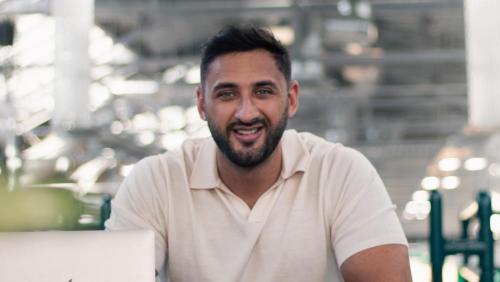
Andrea Mica, Director Oxford Technology
Opinions expressed by Entrepreneur contributors are their own.
You're reading Entrepreneur United Kingdom, an international franchise of Entrepreneur Media.
Biotech has never been short of brilliant ideas. The UK produces world-class science and an impressive pipeline of breakthrough technologies, yet from an investor’s perspective, the science is only the starting point. The founders who secure funding aren’t simply those with the most innovative idea, but those who can demonstrate they have the operational discipline to build a business, the network to open doors, the ambition to create a globally significant company, and the realism to navigate the inevitable setbacks along the way. Investors aren’t just backing a technology; they’re backing the people who will turn scientific promise into commercial success.
Before any investor writes a cheque, they’re asking a deceptively simple question: can this team turn exceptional science into a successful business? Scientific excellence is the ticket to the table, but it is rarely enough on its own. The founders who stand out are those who combine technical expertise with commercial awareness, communicate with clarity, surround themselves with people who complement their skills, and demonstrate the resilience to adapt when the inevitable challenges arise.
The perfect biotech founder is theoretically easy to design. They have an excellent idea, based on deep knowledge of the part of the sector in which they operate, an ability to communicate that very well to others and bring along their extensive networks in finance, pharma and science and academia.
Most of the research will already have been conducted by them so there is little risk and yet it will have been unpublished so that maximum patent life remains.
They will know how to lead operations in the company or better yet, know where to find contract research organisations to carry out the work so that there isn’t a need for investing in extensive research equipment and team. As they are so skilled, the research will work first time round, so the relatively high monthly cost of CROs will not be a problem.
They will be smart enough to have chosen a sector where well established and highly predictive animal models exist, yet there are no existing drugs to get in the way of the solution. Maybe there are even good in-vitro models, accepted by the FDA and other regulatory bodies.
They will of course be very familiar with the intricacies of the regulatory process and therefore able to identify a rapid route to market that will pay for the larger indications, which will require larger and longer clinical trials.
They will understand the requirements of production of the drug and will have been able to correctly choose the best route. Whether it’s a biologic, peptide or small drug.
They will also have boundless energy and resilience.
You will note that I use they as the pronoun, this is not for any gender related issue, it is simply because these sets of skills will require many people. As it is unlikely that all these skills and aptitudes could fit in one person.
Where to start though? Good multidisciplinary communication skills are essential, as without them it will not be possible to raise the investment necessary to run the company or project, nor will it be possible to get the best out of the many pairs of hands required to work on the project. Different audiences will require different skills and presentation styles.
From our experience, If the founder brings other good people with them, it is often evidence that they are capable and can work with at least some other people.
Possessing the ability to explain clearly to others who are not as expert as they are is key. If they have invested in or created something new, they will know the most about it. Everyone else they meet will know less about it than they do. So ensuring the people they meet can understand enough about the proposition to become interested rapidly is very important. This has to do with an ability to focus on the aspects that matter most at each moment in time.
No founder can possess every quality needed to build a world-leading biotech company. The most successful recognise this early, build teams that fill the gaps, and remain open to advice, collaboration and challenge. In biotech, breakthroughs are rarely achieved by individuals; they are the result of exceptional teams united by a shared vision.
Ultimately, investors are not looking for perfection. They are looking for founders who understand both the science and the journey ahead, who can inspire confidence that they will navigate uncertainty, seize opportunities and build enduring value. Great technology may spark an investment conversation, but it is exceptional founders and confident teams who convince investors to stay for the long term.
Biotech has never been short of brilliant ideas. The UK produces world-class science and an impressive pipeline of breakthrough technologies, yet from an investor’s perspective, the science is only the starting point. The founders who secure funding aren’t simply those with the most innovative idea, but those who can demonstrate they have the operational discipline to build a business, the network to open doors, the ambition to create a globally significant company, and the realism to navigate the inevitable setbacks along the way. Investors aren’t just backing a technology; they’re backing the people who will turn scientific promise into commercial success.
Before any investor writes a cheque, they’re asking a deceptively simple question: can this team turn exceptional science into a successful business? Scientific excellence is the ticket to the table, but it is rarely enough on its own. The founders who stand out are those who combine technical expertise with commercial awareness, communicate with clarity, surround themselves with people who complement their skills, and demonstrate the resilience to adapt when the inevitable challenges arise.
The perfect biotech founder is theoretically easy to design. They have an excellent idea, based on deep knowledge of the part of the sector in which they operate, an ability to communicate that very well to others and bring along their extensive networks in finance, pharma and science and academia.

Andrea Mica • Director Oxford Technology
Andrea Mica is a Director at Oxford Technology, one of the UK’s longest-established early-stage venture... Read more