The Long Road From Nothing to Something
Tom McDermott on taking the leap, setbacks and building Sprigg

Sprigg
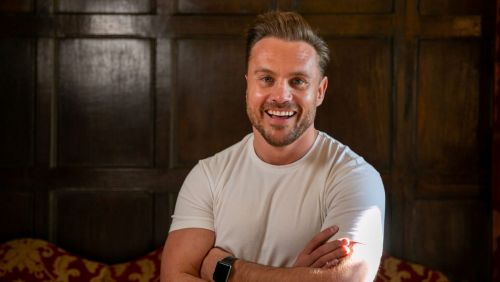
Tom McDermott, founder, Sprigg
Opinions expressed by Entrepreneur contributors are their own.
You're reading Entrepreneur United Kingdom, an international franchise of Entrepreneur Media.
When Tom McDermott left banking to start Sprigg, a restaurant chain that offers fresh bowls and coffee in Glasgow, he wasn’t looking for a new job. He wanted to change direction, challenge himself and build the kind of food business he felt was missing.
“I wanted to create fresh, nutritious food that was genuinely convenient,” he says, centred on customisable whole-food salad bowls. There was something personal about the decision, too. McDermott wanted to reach 40 knowing he had taken responsibility for where his life and career had gone. “I wanted to get to 40 and be able to look back and have full accountability for where I was at, both as a person and professionally.”
Eight years on, Sprigg has grown to four locations in Glasgow, with its latest opening on Byres Road. But the polished version of the story comes later. The beginning was much harder. “Day one of opening, and then pretty much every day for that next year,” McDermott says. “I was nearly overwhelmed on a daily basis by the challenge I’d taken on.” He was working 17 or 18-hour days, learning almost everything from scratch and trying to hold on to the idea of what Sprigg was supposed to become. His answer was not to keep changing direction. It was to become more certain.
“I gave myself no variables or allowances,” he says. “By being so definitive when I had so much to do and so much to learn, it allowed me to overcome the challenge of starting out.” That first year, he says, “remains, and I think always will remain, the hardest thing I’ve ever had to do.” The business began with £100,000. McDermott put in all £20,000 of his personal savings and secured an £80,000 bank loan against a personal guarantee. There was no large funding round or comfortable financial cushion – just a business plan, personal risk and a willingness to see where it could go. That sense of personal responsibility still runs through how he deals with setbacks. McDermott admits that he takes failure personally, but refuses to stay there. “I allow it to hurt and I allow myself to feel entirely responsible,” he says. “It isn’t a nice feeling, but by doing that I get to explore exactly what my role was in the failure or setback.”
Then comes the practical part: “Fix it, learn, change, help others improve.” For McDermott, failure is not something to dress up as a positive. It hurts. The point is what happens afterwards. “Don’t look back at it with regret,” he says. “Look back at it only as an opportunity you took.” His philosophy for starting a business is similarly straightforward. He calls it “the arrow”. “On a bit of paper, write the word ‘nothing’, draw an arrow and then write the word ‘something’,” he says. Before the business begins, there is nothing. The idea is the something. The difficult part is everything in between. “There is a hard reality between the two,” he says. “It’s the actual work that gets you to the something.” That, for McDermott, is the part aspiring entrepreneurs need to understand before they take the leap. Plans will change and things will go wrong, but that doesn’t make planning pointless. “It actually won’t go exactly to plan, but that’s exactly why you wrote the plan.”
McDermott talks about gratitude as something that has helped him keep perspective when the pressure builds. “I think it is a lost emotion in modern society but a powerful one and a source of strength when it comes to challenges.” Ultimately, he comes back to the decision that started everything: the choice to challenge himself and change course. “It was a privilege to be able to take that decision,” he says. “The outcomes are entirely mine to own and solve, tough times or otherwise.” His advice at the end is simple. “Work hard. And then do a bit more hard work.”
But there is something else he considers just as important: “Take care of those around you, both employees and loved ones. You need them both more than you think.”
When Tom McDermott left banking to start Sprigg, a restaurant chain that offers fresh bowls and coffee in Glasgow, he wasn’t looking for a new job. He wanted to change direction, challenge himself and build the kind of food business he felt was missing.
“I wanted to create fresh, nutritious food that was genuinely convenient,” he says, centred on customisable whole-food salad bowls. There was something personal about the decision, too. McDermott wanted to reach 40 knowing he had taken responsibility for where his life and career had gone. “I wanted to get to 40 and be able to look back and have full accountability for where I was at, both as a person and professionally.”
Eight years on, Sprigg has grown to four locations in Glasgow, with its latest opening on Byres Road. But the polished version of the story comes later. The beginning was much harder. “Day one of opening, and then pretty much every day for that next year,” McDermott says. “I was nearly overwhelmed on a daily basis by the challenge I’d taken on.” He was working 17 or 18-hour days, learning almost everything from scratch and trying to hold on to the idea of what Sprigg was supposed to become. His answer was not to keep changing direction. It was to become more certain.

Patricia Cullen • Features Writer
Entrepreneur Staff