How to supercharge your mid-career performance
Small daily habits could help professionals sustain performance for longer.

Shutterstock
Opinions expressed by Entrepreneur contributors are their own.
You're reading Entrepreneur United Kingdom, an international franchise of Entrepreneur Media.
As careers stretch into our 60s and 70s, many of the most experienced mid-career professionals are burning out just as they enter their most critical leadership years. Against this backdrop, it is becoming increasingly important to recognise that sustained performance isn’t simply about working longer hours or pushing harder. It’s about investing in the habits, mindset, and wellbeing that support high performance over the long term. In this feature, experts share their guidance on how established professionals can supercharge their performance through building the daily habit of reframing, adopting a curious mindset, nourishing their body and mind, and protecting their performance with simple movement.

Build the daily habit of reframing
Mid-career professionals can sustain their performance by learning to recognise and reframe the self- doubt and fear that can hold them back, notes Dr. Claire Handby, executive coach, and author of Uptick. “Your thoughts shape your actions. So, if you want different outcomes, my strongest advice is that you need to think differently first. This doesn’t mean pretending everything is great when it isn’t; it means choosing helpful thoughts, not harmful, daily, and not giving up.”
Dr Handby suggests challenging unhelpful thinking by asking whether a thought is kind, helpful, and true. “When you find yourself stuck in self-doubt or fear, ask: Is this thought kind, and helping me to move forward? Is it true? If your answers don’t meet this criteria, you get to choose better ones and move on.” Crucially, she adds, “this shift isn’t a one-time epiphany. It’s a practice. It’s a daily commitment to thinking differently, even when your old habits try to pull you back; you need to resist the old ways to move towards your new future.” Over time, this can become a form of ‘self-coaching’ and is key to people recognising unhelpful thinking sooner and redirecting it towards being more mindful of pursuing their own persistence and positive optimism. “You’ll begin to spot your unhelpful stories and thinking faster. Momentum in new thinking is your antidote to stagnated and pessimistic thinking,” Dr Handby sums up.

Fuel resilience and innovation through curiosity
For leadership mentor, and author of Your Leadership R•I•D•E:, Steve Muscat Azzopardi, curiosity is particularly important in helping mid-career professionals avoid becoming fixed in their thinking, and remain adaptable in fast-changing environments. “The world has too many people who are fixed in their mindset and have rendered themselves impervious to other perspectives, experiences or information that clashes with their worldview. Curiosity fosters adaptability, innovation, and resilience: all critical in today’s fast-paced organisations.”
Rather than viewing learning as something that belongs earlier in a career, Muscat Azzopardi
encourages everyone to approach their work with the mindset of a novice. “The novice mindset is
not a temporary stage on the way to becoming an expert. It is a permanent discipline. It is a
perspective you choose every single day.” One way he recommends professionals do this is by moving away from passively consuming information and, for every three pieces of content they consume, identifying one specific action or takeaway from each to put into practice. “If you lose your hunger for learning, you are simply coasting to a halt, no matter how much experience you have,” Muscat Azzopardi continues. “What matters is the willingness to keep learning, adapting, and paying attention to what comes next.”
Nourish your body and mind
As careers extend into later life, maintaining high performance depends on having the physical
foundations to sustain it. While mid-career professionals can choose the attitude they bring to work, they can also support this endeavour by considering the foods they prepare and eat, say Adam Kingl and Jakub Radzikowski, authors of Executive Eats. For people managing demanding roles alongside the pressures of a longer career, making time for cooking can provide an opportunity to step away from work and restore both physical and mental energy. “Cooking and nutrition, in their quiet and personal ways, can be antidotes or practices that promote mindfulness, steady mood, and spark creativity,” Kingl explains. “Food choices can have a much greater impact than simply getting you through a busy working day too,” Radzikowski adds. “Certain ingredients play a key role in supporting performance, helping to sharpen focus, improve decision-making, and enhance a sense of wellbeing and optimism.” By being more intentional about what they cook and eat and making nutrition part of their daily routine, professionals can reset the mind, nourish the body, and replenish energy, giving them a stronger foundation from which to perform sustainably.

Protect your performance with simple movement
For individuals who find themselves sitting for long periods in the office, maintaining high
performance also means taking care of the body that supports it. Simple, regular movement is
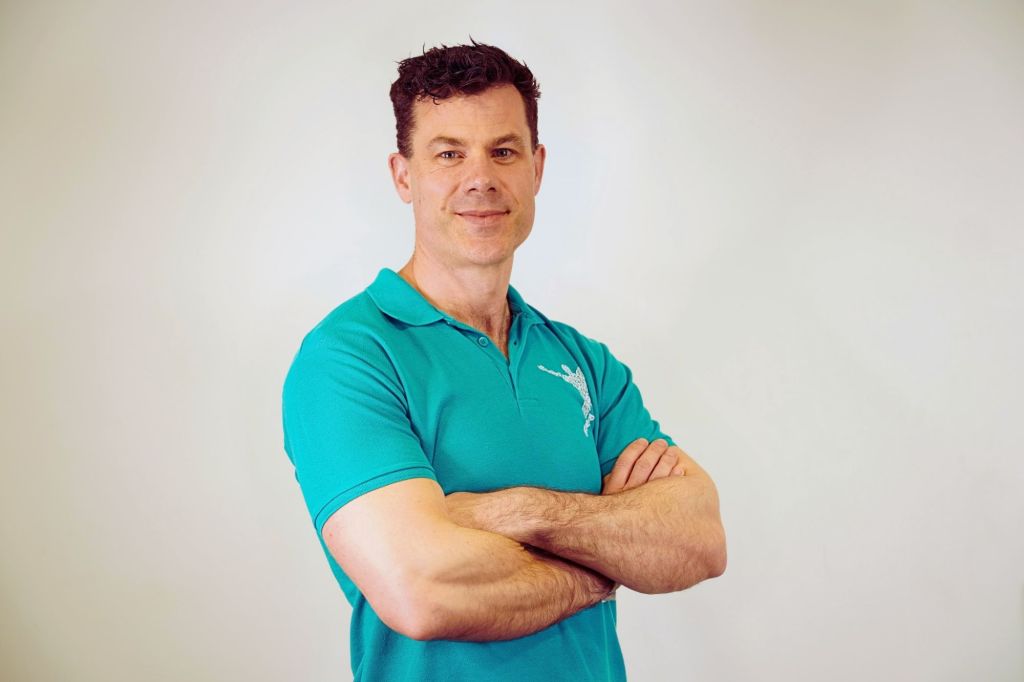
essential in keeping the body comfortable, mobile, and better equipped for the demands of working life, says Phil Evans, chartered physiotherapist, founder of Urban Body, and author of Built to Last After 50. Evans highlights how easily movement can be deprioritised when work and life become demanding. “When life feels overwhelming, it’s no surprise that people pull back. You move less, walks are skipped because you’re tired, and exercises are missed. When your head is full, everything feels heavier than it should.” “Movement doesn’t need to be complicated or take up huge amounts of time,” he continues. “Look for small, consistent opportunities to move throughout the day. Walk while you’re taking a phone call, take the stairs instead of the lift, get outside for ten minutes at lunchtime or even do some ankle stretches while the kettle boils. These little resets prevent your joints from going on strike and help prevent the slow stiffening that creeps in when you stay still for too long.” Evans says these small habits add up over time, helping people stay mobile and physically better equipped to cope with the demands of a busy working life.
After 50
As careers stretch into our 60s and 70s, many of the most experienced mid-career professionals are burning out just as they enter their most critical leadership years. Against this backdrop, it is becoming increasingly important to recognise that sustained performance isn’t simply about working longer hours or pushing harder. It’s about investing in the habits, mindset, and wellbeing that support high performance over the long term. In this feature, experts share their guidance on how established professionals can supercharge their performance through building the daily habit of reframing, adopting a curious mindset, nourishing their body and mind, and protecting their performance with simple movement.
Build the daily habit of reframing
Mid-career professionals can sustain their performance by learning to recognise and reframe the self- doubt and fear that can hold them back, notes Dr. Claire Handby, executive coach, and author of Uptick. “Your thoughts shape your actions. So, if you want different outcomes, my strongest advice is that you need to think differently first. This doesn’t mean pretending everything is great when it isn’t; it means choosing helpful thoughts, not harmful, daily, and not giving up.”
Dr Handby suggests challenging unhelpful thinking by asking whether a thought is kind, helpful, and true. “When you find yourself stuck in self-doubt or fear, ask: Is this thought kind, and helping me to move forward? Is it true? If your answers don’t meet this criteria, you get to choose better ones and move on.” Crucially, she adds, “this shift isn’t a one-time epiphany. It’s a practice. It’s a daily commitment to thinking differently, even when your old habits try to pull you back; you need to resist the old ways to move towards your new future.” Over time, this can become a form of ‘self-coaching’ and is key to people recognising unhelpful thinking sooner and redirecting it towards being more mindful of pursuing their own persistence and positive optimism. “You’ll begin to spot your unhelpful stories and thinking faster. Momentum in new thinking is your antidote to stagnated and pessimistic thinking,” Dr Handby sums up.

Patricia Cullen • Features Writer
Entrepreneur Staff