Rooted, but Restless
Pandora Sykes explores home, motherhood, creativity, culture and embracing life’s contradictions.
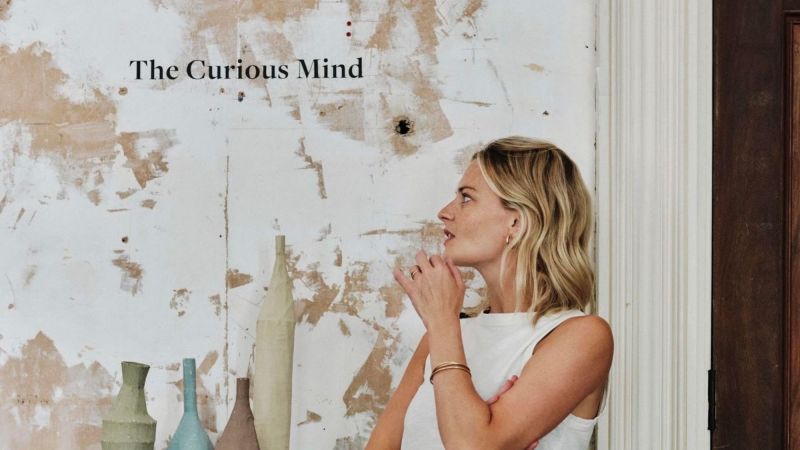
Aloha Shaw for Toast
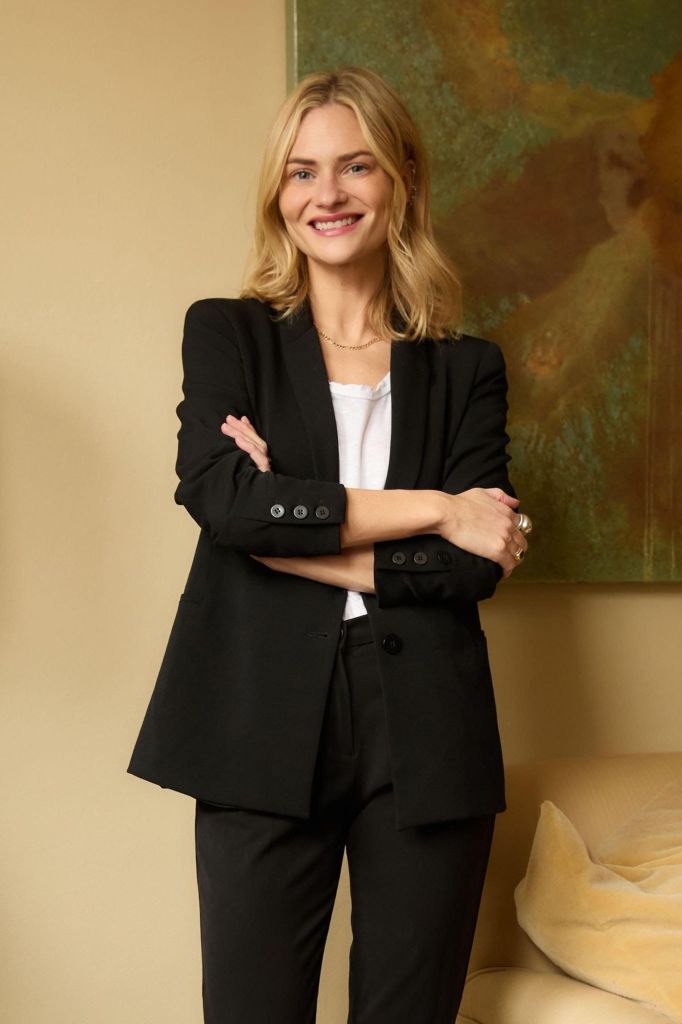
Pandora Sykes, writer, broadcaster and creator of Books + Bits
Opinions expressed by Entrepreneur contributors are their own.
You're reading Entrepreneur United Kingdom, an international franchise of Entrepreneur Media.
Pandora Sykes has lived in the same house with her husband and family for the last nine years. When I sat down to interview her, she is surrounded by galloping horses on a pink background by a French artist while her six years old son is lying next to the bed. There is a peace, deep joy and creative chaos to her. Her attachment to a physical place goes back to childhood. Her parents still live in the house where she grew up in, in the countryside, surrounded by fields with cows in the distance and a river at the end of the garden. Her brother built her a treehouse. It was, she says, an extraordinary place to be imaginative. Now she watches her own children play there. “I feel so connected to my parents’ house because it’s the location of my entire family but it’s also my whole childhood encompassed within it”. As someone who also watched my kids playing in the garden of my grand-mother in Ile de Re, I know how special this feels to watch the different chapters of your life woven into the same place.
Pandora’ career is a testament to the evolution of how we consume cultural content. She has written columns with major newspapers like The Sunday Times, made podcasts listened to by millions and major documentaries with BBC, interviewed bestselling authors and built a substantial audience through Substack. She has understood early in her career that what matters is the power of a conversation and a well articulated idea to as wide of an audience as possible, irrelevant of its format. In a cultural space that is full of snobbery, she has never approached a single medium with a sense of hierarchy, a Sunday Times journalist can indeed start a podcast or post about fashion online. She has explored so many facets of what it means to be a cultural commentator today and what is rare – she has excelled with every single medium.
Her eventual route into culture came through podcasting. A culture podcast she had been developing as a kind of experiment, The High Low made with Dolly Alderton, the podcast remained the UK’s No.1 podcast for women throughout its four-year tenure, reaching 1.2m listeners. She has never been interested in pretending to be an expert on everything she discusses. “I’m an enthusiast,” she says. It is an important distinction. Sykes’s authority seems to come less from claiming mastery than from being genuinely interested. She is a great reader, but does not call herself a book critic. She can interview an expert without needing to become the expert herself. She is comfortable saying she does not understand something, or has not read something, or needs someone else to explain it. In a culture that increasingly rewards the performance of omniscience, this feels so refreshing. “I’m really okay with saying, ‘I don’t know about that news story. Can you fill me in?’” The willingness to say “I don’t know” has become central to the way she thinks about culture and I have a feeling that this is how she was able to democratise her space.
Her BBC documentary Pieces of Britney, which became a No.1 documentary, began, in part, with a reckoning with her own relationship to the 90s. Sykes remembers watching the footage of Spears attacking a paparazzi car with an umbrella. Like many people of her generation, she absorbed the image as entertainment. Looking back, Sykes was struck by something more uncomfortable than the cruelty of the coverage. She had been part of the audience. “I just had no idea that things I enjoyed could have ramifications on the people making it.”
The temptation is to tell ourselves that we would never do that now. Sykes doesn’t quite believe it. “I don’t think anything has changed except that we can have more nuanced conversations about it.” That realisation is at the centre of what makes her work so essential in today’ s cultural landscape: she is adding nuance, multiple perspectives and is embracing our own complexities.
The question she keeps returning to is not simply how we consume cultural content, but how we consume people that shapes our culture. That question has personal resonance for anyone who has built a career in public, myself included. When the podcast she made with Dolly Alderton reached more than a million listeners, she found herself trying to process what everyone thought of everything she did. The effect, she says, was to make her sense of self feel “really diluted, really weak, really fragile”. She has since become much more protective of her boundaries. Everyone is entitled to an opinion but she does not owe everyone a response.
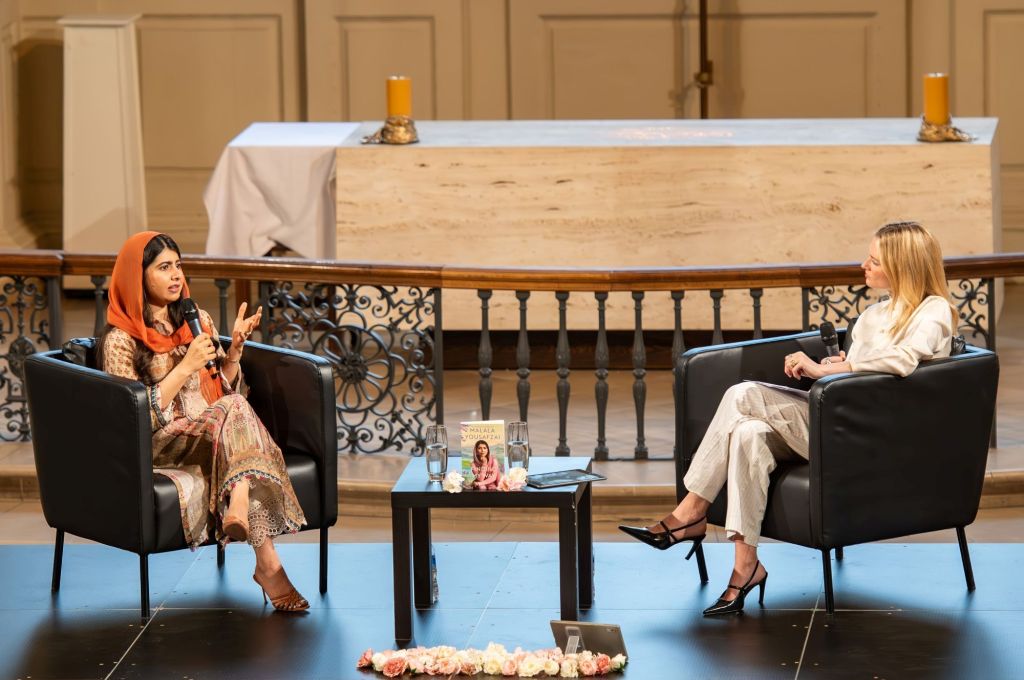
Her responsibility is to her family, close friends, collaborators, editors, producers and community and to making the best work she can. Building an audience and being available to an audience are not the same thing. She loves live events because they create the possibility of genuinely good conversations and over the years she has interviewed an extraordinary range of people on stage, from Booker Prize-winning authors including Margaret Atwood, David Szalay and Bernardine Evaristo to figures such as Malala Yousafzai, Jacinda Ardern and Kate Winslet. But she has learnt that an audience cannot become the authority on your own identity. Substack has given her a different relationship with readers. She started writing Books + Bits (which now has over 100,000 readers) while seven months pregnant. Now it occupies a substantial part of her working life and income. Again, the trajectory is characteristic of her approach. She followed curiosity, made something, discovered that people wanted it and built from there.
Motherhood has made Sykes more chaotic, not less. She is late. She loses things. She goes to the wrong place. She forgets chargers and keys. She has had to accept a capacity for chaos that she did not previously possess. There is humour in this, but also an idea about creativity that I love and dare I say – a poetry to it too. The “gains and loss” of a well-led life is a concept she explored in her 2019 essay collection, How Do We Know We’re Doing It Right? The same brain that can work for 14 hours making a documentary about Britney Spears is the brain that cannot reliably remember where it left its passport. That the ‘gains and loss’ of her own brain, she calls it. She has stopped expecting every part of herself to improve simultaneously. Perhaps this is why she is so resistant to neat cultural narratives. She has become suspicious of the idea that there is always a correct way to live: the perfectly balanced career, the perfectly organised mother, the perfectly informed citizen, the perfectly coherent self.
Perhaps the freedom to move intellectually comes from having somewhere secure to stand on. A stable home does not have to produce a fixed mind. A rooted life can make room for uncertainty. And perhaps the most interesting thing about Sykes is not that she has changed careers, built audiences or developed new ways of talking about culture. It is that she seems increasingly comfortable with the idea that a good life is not one in which everything fits. It is one in which there is enough stability to admit when it doesn’t. The house stays the same. The children grow. The work changes. The culture changes. And, if Sykes has her way, so does the mind.
Pandora Sykes has lived in the same house with her husband and family for the last nine years. When I sat down to interview her, she is surrounded by galloping horses on a pink background by a French artist while her six years old son is lying next to the bed. There is a peace, deep joy and creative chaos to her. Her attachment to a physical place goes back to childhood. Her parents still live in the house where she grew up in, in the countryside, surrounded by fields with cows in the distance and a river at the end of the garden. Her brother built her a treehouse. It was, she says, an extraordinary place to be imaginative. Now she watches her own children play there. “I feel so connected to my parents’ house because it’s the location of my entire family but it’s also my whole childhood encompassed within it”. As someone who also watched my kids playing in the garden of my grand-mother in Ile de Re, I know how special this feels to watch the different chapters of your life woven into the same place.
Pandora’ career is a testament to the evolution of how we consume cultural content. She has written columns with major newspapers like The Sunday Times, made podcasts listened to by millions and major documentaries with BBC, interviewed bestselling authors and built a substantial audience through Substack. She has understood early in her career that what matters is the power of a conversation and a well articulated idea to as wide of an audience as possible, irrelevant of its format. In a cultural space that is full of snobbery, she has never approached a single medium with a sense of hierarchy, a Sunday Times journalist can indeed start a podcast or post about fashion online. She has explored so many facets of what it means to be a cultural commentator today and what is rare – she has excelled with every single medium.
Her eventual route into culture came through podcasting. A culture podcast she had been developing as a kind of experiment, The High Low made with Dolly Alderton, the podcast remained the UK’s No.1 podcast for women throughout its four-year tenure, reaching 1.2m listeners. She has never been interested in pretending to be an expert on everything she discusses. “I’m an enthusiast,” she says. It is an important distinction. Sykes’s authority seems to come less from claiming mastery than from being genuinely interested. She is a great reader, but does not call herself a book critic. She can interview an expert without needing to become the expert herself. She is comfortable saying she does not understand something, or has not read something, or needs someone else to explain it. In a culture that increasingly rewards the performance of omniscience, this feels so refreshing. “I’m really okay with saying, ‘I don’t know about that news story. Can you fill me in?’” The willingness to say “I don’t know” has become central to the way she thinks about culture and I have a feeling that this is how she was able to democratise her space.

Marine Tanguy is a French-British art entrepreneur, author and speaker, best known as the founder... Read more