Why the Digital Evidence Backlog Is Becoming a Crisis for Policing
Edward Dixon, founder of Rigr AI, has spent a decade watching investigators’ work. He started at an American multinational technology giant, which sent him through a corporate social responsibility program to the National Center for Missing and Exploited Children in Washington, D.C.
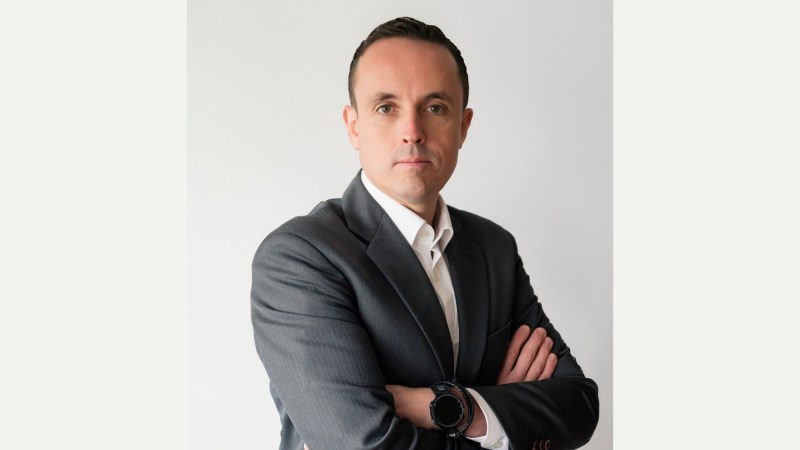
Edward Dixon, founder of Rigr AI
You're reading Entrepreneur United Kingdom, an international franchise of Entrepreneur Media.
UK police forces are holding more digital evidence than they can examine. House of Lords research published in February 2026 found a backlog exceeding 20,000 devices in England and Wales, a figure that has barely improved for years.
That backlog is not simply a capacity problem. It is a triage problem. The distinction matters because the two demand different responses. More capacity means more analysts, more labs, and more hours. Better triage means deciding which material gets human attention first and accepting that not all of it needs the same urgency. Investigators already know that not every message, video, or chat log will matter to the case. The difficulty is identifying which pieces of evidence or intelligence will alter or shorten the course of a case.
The Independent reports HMICFRS findings that digital forensic examinations are taking up to two years in some forces, with some investigators managing up to 54 active cases at once. When evidence sits unexamined, suspects remain on bail, and cases stall.
The usual answer is more staff and more labs. That helps, but it does not address the underlying question. How much of that evidence needs a human to look at it first, and in what order?
Edward Dixon, founder of Rigr AI, has spent a decade watching investigators’ work. He started at an American multinational technology giant, which sent him through a corporate social responsibility program to the National Center for Missing and Exploited Children in Washington, D.C. He sat with analysts identifying victims from seized material and watched one scrub through videos frame by frame, manually cropping faces to search for matches.
“You literally just sit beside somebody when they work,” Dixon says. “It was not hard to find the problems. I was not there for a week looking for them.”
That experience shaped his view of what technology should do. Decisions, he argues, belong to humans. Policing decisions are a state function, not a private one. What AI can do is enrichment and triage, such as pulling names from thousands of messages, identifying languages in audio, flagging faces, and then surfacing the material most likely to be actionable first.
UCL research published in July 2026 supports that framing. It found that uncertainty over device relevance drives a “seize everything” culture, with decisions scattered across people and teams who lack visibility of the wider process. A principal investigator quoted in the report said investigators are drowning in digital data. The report recommends structured digital triage, with senior officers and forensic specialists agreeing to a digital strategy at the outset.
Dixon describes the problem as a crate of evidence dropped on a desk in random order. The offender organized the material, but not to help the investigation. An investigator might face 200,000 messages or 20,000 videos in a single case, reviewed by two officers over months. Some material gets deprioritized simply because no one has time to reach it. The officer can work through the crate in that random order, or the machine can triage first, surfacing what is most likely to matter.
He gives an example from a case that crossed jurisdictions. Audio, in a language investigators could not place, stalled progress until someone recognized a second language in the recording. That recognition redirected the case to a different country, where local officers heard the same audio and recognized the setting. The machine put the right information in front of the right person, and local knowledge did the rest.
Safeguards matter in that process. Dixon’s view is that AI systems should expose uncertainty rather than hide it. He states, “Traditionally, people have thought of results that come from a computer as being, by definition, very precise and very accurate. People have been conditioned to trust the answers from a machine, and there is a danger in that. AI is powerful but fallible, and we have to give the user every opportunity to exercise their judgment and expertise.”
If a transcript is uncertain about a word, it should flag the doubt and point to the timestamp so an officer can listen. If the system estimates a subject’s age, it should give a range, not a single number, because biology is not a perfect clock.
As device storage grows, the volume of material will keep rising. Dixon says, “The risk is that a force’s capacity to seize evidence will continue to outpace its capacity to analyze it. The right way to use technology in police work is not to blindly use AI to automate tasks, but to make the best use of precious human expertise.”
UK police forces are holding more digital evidence than they can examine. House of Lords research published in February 2026 found a backlog exceeding 20,000 devices in England and Wales, a figure that has barely improved for years.
That backlog is not simply a capacity problem. It is a triage problem. The distinction matters because the two demand different responses. More capacity means more analysts, more labs, and more hours. Better triage means deciding which material gets human attention first and accepting that not all of it needs the same urgency. Investigators already know that not every message, video, or chat log will matter to the case. The difficulty is identifying which pieces of evidence or intelligence will alter or shorten the course of a case.
The Independent reports HMICFRS findings that digital forensic examinations are taking up to two years in some forces, with some investigators managing up to 54 active cases at once. When evidence sits unexamined, suspects remain on bail, and cases stall.
Entrepreneur UK
Entrepreneur Staff