Niklas Freihofer’s Two Greatest Assets: Trust and Leadership
When trust is low, decisions are checked repeatedly. Information is guarded. Responsibility remains concentrated at the top. Even talented teams can become slower because people hesitate to act without reassurance or approval.
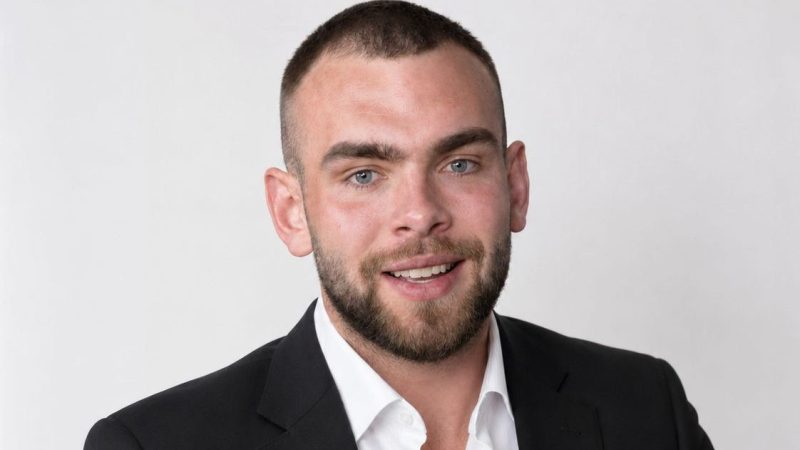
Niklas Freihofer
You're reading Entrepreneur United Kingdom, an international franchise of Entrepreneur Media.
Building a company is often discussed in terms of products, markets, capital and growth. For Niklas Freihofer, two of the most important factors sit underneath all of them: trust and leadership.
Over more than a decade in finance and business, Freihofer has found that companies rarely struggle because opportunity disappears altogether. More often, the difficulty lies in whether the right people can carry responsibility and whether the founder has created enough clarity for them to do so effectively.
“The biggest challenge throughout has been trust: finding the right people, building the right team, and getting to a point where I truly know I have the right people around me,” he says.
For Freihofer, trust is not simply a cultural value. It has a direct effect on how quickly a business can move.
When trust is low, decisions are checked repeatedly. Information is guarded. Responsibility remains concentrated at the top. Even talented teams can become slower because people hesitate to act without reassurance or approval.
A founder may initially see that caution as control, but over time it can become a constraint.
As a business grows, the number of decisions increases faster than one person can realistically manage. If every important issue still has to return to the founder, the company eventually becomes limited by the founder’s capacity rather than the opportunity in front of it.
That is where trust becomes operational.
A strong team does not remove the need for accountability. It creates confidence that responsibility can move through the organization without disappearing. People understand what they are responsible for, they know the standards expected of them and they are capable of making decisions without creating new uncertainty at every step.
For Freihofer, that kind of trust is earned rather than assumed.
The real test is not whether someone appears capable when circumstances are easy. It is whether they remain aligned when pressure increases, whether they continue to execute consistently and whether they can carry responsibility without constant supervision.
That is where leadership becomes equally important.
Trust alone is not enough if the direction of the business is unclear. A founder can surround themselves with talented people, but without strong leadership those people may still move in different directions.
Freihofer sees leadership as the ability to create clarity around where the company is going, what matters most and who is accountable for delivering it.
That becomes especially important in fast growing businesses.
Growth creates more opportunities, but it also creates more complexity. Teams expand. New layers of management appear. Information moves through more people. Decisions that were once obvious can become slower as the organisation becomes larger.
At that stage, leadership is less about personally solving every problem and more about making sure the company can continue solving problems without depending on one individual.
The founder’s role changes from carrying the business to creating an environment in which other people are capable of carrying it.
For Freihofer, this is where trust and leadership begin to reinforce each other.
Leadership creates direction. Trust allows responsibility to move within that direction.
Without leadership, trust can become vague. Without trust, leadership can become overly centralized.
The strongest companies need both.
That principle is especially relevant to Freihofer because he places a high value on speed and execution. A business cannot move quickly if key people are constantly waiting for confirmation, but it also cannot move effectively if people are making decisions without a clear understanding of the company’s priorities.
The objective is not speed for its own sake. It is confident execution.
That requires founders to become increasingly selective about where they remain involved.
Some decisions deserve direct attention because they can materially affect the direction of the company. Others should be handled by people who have earned the responsibility to make them.
Knowing the difference is part of leadership.
The same is true when mistakes happen.
A high trust environment cannot mean avoiding accountability. Strong leadership requires the ability to identify where something went wrong, correct it and make sure responsibility remains clear without creating a culture where every mistake produces hesitation.
For Freihofer, the long term strength of a company therefore depends on more than the founder’s own ability.
One person can create the initial momentum behind a business, but sustained growth requires a transfer of responsibility. The company has to become capable of making decisions, maintaining standards and moving forward without every function depending on the person who started it.
That is why trust and leadership carry so much weight in Freihofer’s view.
Capital can fund growth. Products can create demand. Sales can create momentum.
But leadership determines where the company is going, and trust determines whether the people inside it can move there together.
Building a company is often discussed in terms of products, markets, capital and growth. For Niklas Freihofer, two of the most important factors sit underneath all of them: trust and leadership.
Over more than a decade in finance and business, Freihofer has found that companies rarely struggle because opportunity disappears altogether. More often, the difficulty lies in whether the right people can carry responsibility and whether the founder has created enough clarity for them to do so effectively.
“The biggest challenge throughout has been trust: finding the right people, building the right team, and getting to a point where I truly know I have the right people around me,” he says.
Entrepreneur UK
Entrepreneur Staff