Most Successful Small-Caps
The little-known companies powering the AI boom
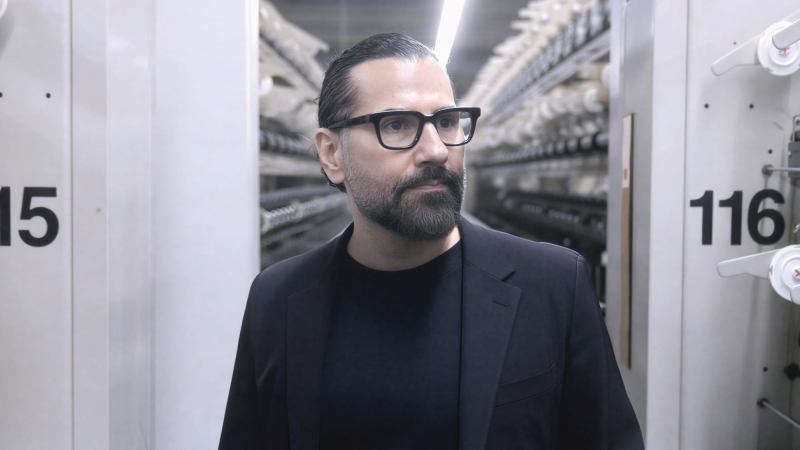
Bit Digital
Sam Tabar, CEO, Bit Digital
Opinions expressed by Entrepreneur contributors are their own.
You're reading Entrepreneur United Kingdom, an international franchise of Entrepreneur Media.
Sam Tabar has worked hard to cultivate an image: lawyer-turned-hedge-fund-exec-turned-tech-builder, straddling industries that rarely blend cleanly. Today, he runs Bit Digital, one of the few public companies with Ethereum-staking exposure, and co-founded WhiteFiber, an AI infrastructure startup whose ambitions run far ahead of its track record. In a moment when AI hype is swallowing entire sectors, Tabar positions himself as one of the adults in the room. Whether that holds up under scrutiny is a more open question.
A shiny résumé with hairline fractures
Tabar’s early career ticks all the prestige boxes: Oxford University, Columbia Law School, Skadden, Bank of America. It’s the sort of timeline that reads smoothly on LinkedIn but tends to be less glamorous from the inside. He describes those years as stifling – “a beautifully decorated room with no windows”, a metaphor that says as much about the institutions as it does about his appetite for reinvention. The “Old Guard versus technologists” framing has become a cliché in founder stories, and Tabar leans into it. The reality is more prosaic: he left well-paid jobs for a sector where the upside is enormous and the failure rate even more so.
The hybrid-expertise pitch: useful insight or convenient branding?
Tabar often emphasises his trifecta of law, finance, and technology, presenting it as a unique analytical lens. It’s not a bad pitch: regulation, capital, and hardware are all central to the AI infrastructure race. But it’s increasingly common among executives who have hopscotched through multiple industries. Where the framing is less convincing is in its implied causal power: that crossing disciplines somehow guarantees better execution. The coming years will determine whether this interdisciplinary branding translates into actual operational advantage or simply makes for crisp paragraph breaks in investor decks.
WhiteFiber and the AI infrastructure land grab
WhiteFiber’s founding story is anchored in a straightforward observation: traditional data centers weren’t built for GPU-heavy AI workloads. This is true. It’s also the thesis of nearly every infrastructure start-up chasing the generative-AI wave. Tabar argues that retrofitting old cloud-era facilities is futile, he says “it’s like trying to turn a sedan into a race car mid-race.” Instead, WhiteFiber repurposes industrial shells that already have meaningful power infrastructure. The strategy sounds efficient, but it also means navigating a thicket of constraints: utility politics, supply-chain choke points, interconnection queues that can stretch years, and the increasingly crowded race for megawatts. So far, WhiteFiber’s advantage seems to hinge more on speed of execution than proprietary technology. Speed can matter. But it’s also the easiest claim for a young company to make and the hardest to verify.
Hard limits: where the rhetoric meets reality
Tabar is at his most grounded when discussing physical constraints. “AI is infinite. Infrastructure is not,” he says, a line that cuts through the sector’s inflated expectations. Power contracts, transformers, cooling systems, GPUs, fiber – none of these scale like software, and all of them are subject to shortages, bottlenecks, and geopolitical friction. Anticipating constraints is one thing; navigating them without blowing budgets or timelines is another. Many infrastructure startups have discovered the difference the hard way.
Crypto experience meets compute ambition
Tabar’s transition from crypto mining to AI compute invites scrutiny. Mining rigs and GPUs share some superficial overlap, but the engineering, thermal, and networking requirements of high-performance compute are far more demanding. Tabar recognises this and points to a team that predates the AI boom – though this is a claim most infrastructure startups now make. Bit Digital’s Ethereum staking provides a steadier revenue stream than Bitcoin mining, but it is not immune to regulatory shocks or market cycles. But there is a dual identity, blockchain finance on one hand via Bit Digital, and AI infrastructure via WhiteFiber on the other.
A narrative built on constraints but is it enough?
Tabar frequently returns to the lesson that constraints drive innovation: legal, financial, and physical. It’s a tidy philosophy and one that explains his career pivots neatly. But tidiness isn’t proof. WhiteFiber still has to compete against hyperscalers, well-funded operators, and sovereign-backed data-center developers who command deeper resources and entrenched utility relationships. The company’s long-term success will depend less on narrative coherence and more on its ability to deliver reliable megawatts, stable cooling, and consistent uptime, an unglamorous checklist that breaks far more companies than it makes.
A measured realist or an optimistic synthesizer?
Tabar portrays himself as a realist in an industry addicted to techno-utopian promises. He talks about limitations, friction, and the physical drag on digital dreams. It’s a refreshing contrast to the pitch-deck optimism that dominates the sector. But realism is not the same as execution. And in a market where infrastructure projects routinely run over budget, over schedule, or straight into a wall, it’s still unclear whether Tabar’s mix of disciplines will give him an edge or simply make his story more polished than the average founder’s. For now, Tabar is betting that the world will need far more AI-ready infrastructure than exists today. He’s likely right. The open question is whether WhiteFiber will be the one of the companies to build it.
Sam Tabar has worked hard to cultivate an image: lawyer-turned-hedge-fund-exec-turned-tech-builder, straddling industries that rarely blend cleanly. Today, he runs Bit Digital, one of the few public companies with Ethereum-staking exposure, and co-founded WhiteFiber, an AI infrastructure startup whose ambitions run far ahead of its track record. In a moment when AI hype is swallowing entire sectors, Tabar positions himself as one of the adults in the room. Whether that holds up under scrutiny is a more open question.
A shiny résumé with hairline fractures
Tabar’s early career ticks all the prestige boxes: Oxford University, Columbia Law School, Skadden, Bank of America. It’s the sort of timeline that reads smoothly on LinkedIn but tends to be less glamorous from the inside. He describes those years as stifling – “a beautifully decorated room with no windows”, a metaphor that says as much about the institutions as it does about his appetite for reinvention. The “Old Guard versus technologists” framing has become a cliché in founder stories, and Tabar leans into it. The reality is more prosaic: he left well-paid jobs for a sector where the upside is enormous and the failure rate even more so.
The hybrid-expertise pitch: useful insight or convenient branding?
Tabar often emphasises his trifecta of law, finance, and technology, presenting it as a unique analytical lens. It’s not a bad pitch: regulation, capital, and hardware are all central to the AI infrastructure race. But it’s increasingly common among executives who have hopscotched through multiple industries. Where the framing is less convincing is in its implied causal power: that crossing disciplines somehow guarantees better execution. The coming years will determine whether this interdisciplinary branding translates into actual operational advantage or simply makes for crisp paragraph breaks in investor decks.

Wissam Younane • Founder and CEO, BNC Publishing
Wissam Younane is a prominent media executive and entrepreneur based in Dubai, United Arab Emirates.... Read more