Making Room for Growth: Katie Keith and the Future of Women’s Entrepreneurship
Katie Keith connects experienced women leaders to unlock growth and opportunity.
Katie Keith
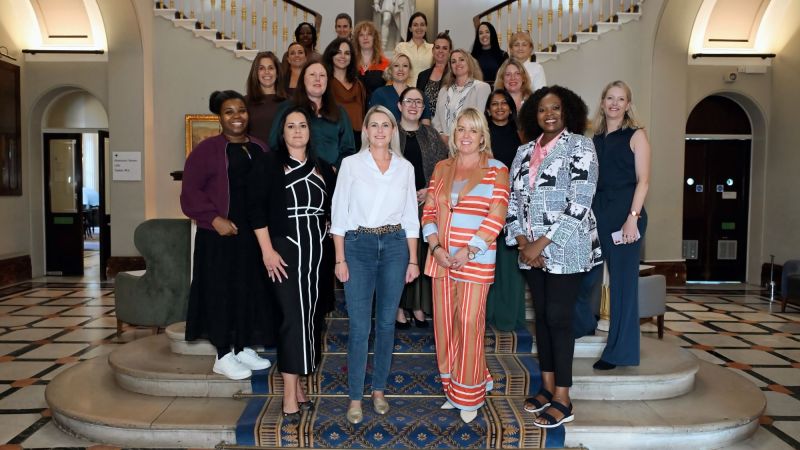
Peer Group in London
Opinions expressed by Entrepreneur contributors are their own.
You're reading Entrepreneur United Kingdom, an international franchise of Entrepreneur Media.
When Katie Keith moved from Australia to the UK 10 years ago, she arrived with two suitcases and a sense of adventure. “I didn’t know a soul,” she says. “I just threw myself into it.” That instinct to take the leap now defines her next chapter. After almost three decades in the corporate world, including nearly 20 years in banking and seven years in international payments, Katie has built Invarah House – a new advisory platform bringing experienced women in business together to challenge their thinking, make better decisions and unlock their next stage of growth.
Katie’s route to this point has been anything but linear. After almost two decades in financial services, she began questioning what she wanted from the next stage of her career. “I just felt like I needed to do something more,” she says. “I almost became institutionalised in corporate.” She returned to study, completing a Master’s in coaching and behavioural change at Henley, and left banking for a senior leadership role in international payments. The pandemic brought another turn when she lost her job. It was a pivotal moment that led her to build her own business and take on the leadership of Global Chamber London, a role she held for five years working with businesses around the world. Across this work, she began noticing a recurring theme among experienced women who had achieved a great deal, but lacked a place to step back, challenge their thinking and consider what came next. “A lot of the women I work with are in mid-stride,” Katie says. “They’ve been around the block for a couple of decades at least and are ready to take on the world.”
Success, Katie argues, can create its own paradox. The more established leaders become, the more connections and opportunities they have – yet difficult decisions can still feel lonely. “They’ve run successful businesses or been in the industry for a very long time, but connection is lacking,” she says. That observation led Katie to launch Invarah House, a curated peer advisory environment for experienced women who have outgrown the spaces that give them access to better thinking and stretch. It gives members a trusted space to test ideas, challenge assumptions and draw on the perspective of peers facing similar decisions. For Katie, the value lies in having people who will ask difficult questions, challenge assumptions and bring different perspectives. She is also careful not to assume women share the same experience. “Just because we’re women, there’s a general bias there that we’ve all had the same experience. We haven’t.” At the heart of Invarah is what Katie calls discernment: making better decisions while staying aligned with what you are building. Her methodology brings together three elements – the woman, the business and the wider system around them. “All three cannot exist without each other.”
Katie’s international career has shaped her understanding of how quickly external conditions can affect a business, but she believes the biggest constraint is often closer to home. “They’re always the biggest bottleneck in their own business.” For many of the women she works with, the goal is not simply growth but financial fulfilment and greater freedom. “That’s always one of their burning ambitions,” she says. In one recent case, she helped a founder shift her model “from fractional to advisory in the C-suite space.” Kate sees these decisions as part of a wider question about women, business and investment. She points to the Working Mums Club, a modern thinking childcare and co-working business who is raising investment to expand nationally, and asks why solutions to major social problems can struggle for attention compared with fashionable technology ventures. “We don’t take it seriously, because she’s not AI, because she’s not tech, because it’s not sexy.”
For Katie, some barriers to growth are deeply rooted. “These women are carrying ancestral beliefs through to their businesses today,” she says. Her response is to create spaces where women can challenge those assumptions and make better decisions. Katie sees an opportunity to rethink traditional executive peer networks who have been in existence for many years. “Why can’t we have something which is transformed for the female mind? That’s what Invarah is.” Her ambition is international: to build a model where experienced female leaders can run and facilitate their own advisory circles. “I want to expand into multiple countries around the world,” she says, creating new opportunities for women to build six-figure advisory businesses of their own.
For Katie, the next chapter is about more than helping women grow their businesses. It is about changing who gets to build the rooms where those decisions are made. Her own journey – from Australia to the UK, from banking to coaching and now entrepreneurship – has taught her that experience is not always enough. Sometimes what matters is having people around you who will question the obvious, challenge the comfortable and ask what comes next. That is the space Katie wants Invarah to occupy. “I’m building rooms that I wish I had.”
When Katie Keith moved from Australia to the UK 10 years ago, she arrived with two suitcases and a sense of adventure. “I didn’t know a soul,” she says. “I just threw myself into it.” That instinct to take the leap now defines her next chapter. After almost three decades in the corporate world, including nearly 20 years in banking and seven years in international payments, Katie has built Invarah House – a new advisory platform bringing experienced women in business together to challenge their thinking, make better decisions and unlock their next stage of growth.
Katie’s route to this point has been anything but linear. After almost two decades in financial services, she began questioning what she wanted from the next stage of her career. “I just felt like I needed to do something more,” she says. “I almost became institutionalised in corporate.” She returned to study, completing a Master’s in coaching and behavioural change at Henley, and left banking for a senior leadership role in international payments. The pandemic brought another turn when she lost her job. It was a pivotal moment that led her to build her own business and take on the leadership of Global Chamber London, a role she held for five years working with businesses around the world. Across this work, she began noticing a recurring theme among experienced women who had achieved a great deal, but lacked a place to step back, challenge their thinking and consider what came next. “A lot of the women I work with are in mid-stride,” Katie says. “They’ve been around the block for a couple of decades at least and are ready to take on the world.”
Success, Katie argues, can create its own paradox. The more established leaders become, the more connections and opportunities they have – yet difficult decisions can still feel lonely. “They’ve run successful businesses or been in the industry for a very long time, but connection is lacking,” she says. That observation led Katie to launch Invarah House, a curated peer advisory environment for experienced women who have outgrown the spaces that give them access to better thinking and stretch. It gives members a trusted space to test ideas, challenge assumptions and draw on the perspective of peers facing similar decisions. For Katie, the value lies in having people who will ask difficult questions, challenge assumptions and bring different perspectives. She is also careful not to assume women share the same experience. “Just because we’re women, there’s a general bias there that we’ve all had the same experience. We haven’t.” At the heart of Invarah is what Katie calls discernment: making better decisions while staying aligned with what you are building. Her methodology brings together three elements – the woman, the business and the wider system around them. “All three cannot exist without each other.”

Patricia Cullen • Features Writer
Entrepreneur Staff