The Space to Create
Justine Simons has spent decades hardwiring culture into London’s future.
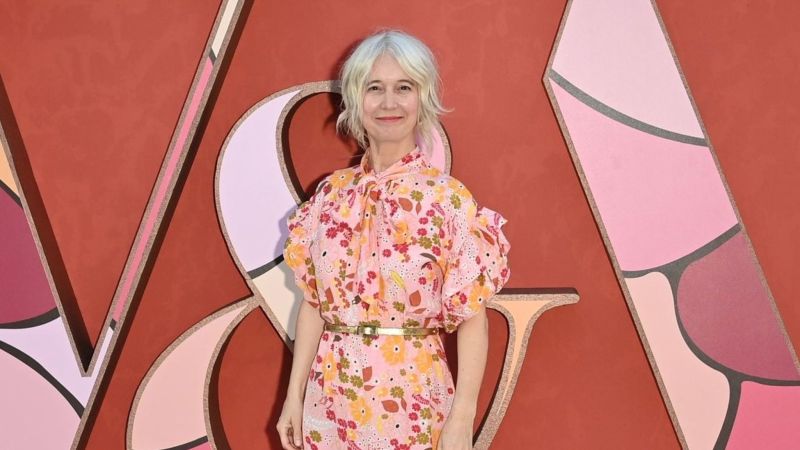
Justine Simons, London’s Deputy Mayor for Culture and the Creative Industries
Opinions expressed by Entrepreneur contributors are their own.
You're reading Entrepreneur United Kingdom, an international franchise of Entrepreneur Media.
Long before Justine Simons was thinking about planning policy, creative economies or the future of London, there was a house in Stoke-on-Trent where culture arrived through the front door. Simons’s father was a professional musician and Musical Director at a major live and cabaret venue in Stoke. Her mother was a social worker and self-taught dressmaker who would make herself evening gowns for performances, often from Vogue patterns, tracking down all kinds of interesting and affordable fabrics.
The glamorous world of the stage sat alongside an ordinary family life in which music, creativity and an open door were simply part of the landscape. “Our house was always open, lots of kids gravitated to the good energy – the moment you walked through the door, my dad would offer you grilled oatcakes and cheese (a Stoke speciality). It wasn’t precious or pressurised and there was zero academic snobbery in our house, my parents just wanted us to do things that made us happy. Which I realise with hindsight was a huge gift.” It is an unusually vivid origin story for someone who has spent more than two decades operating at the intersection of culture, government, property and economic development.
Simons has worked for all three London mayors and played a central role in projects including the Fourth Plinth and the London 2012 cultural programme. She was appointed Deputy Mayor for Culture and the Creative Industries by Sadiq Khan in 2016. But before London, there was Stoke. “I’m very proud of my hometown, Stoke-on-Trent. As a global centre of ceramics, the city made a big impact on the world, pioneering new techniques and spearheading the industrial revolution.”
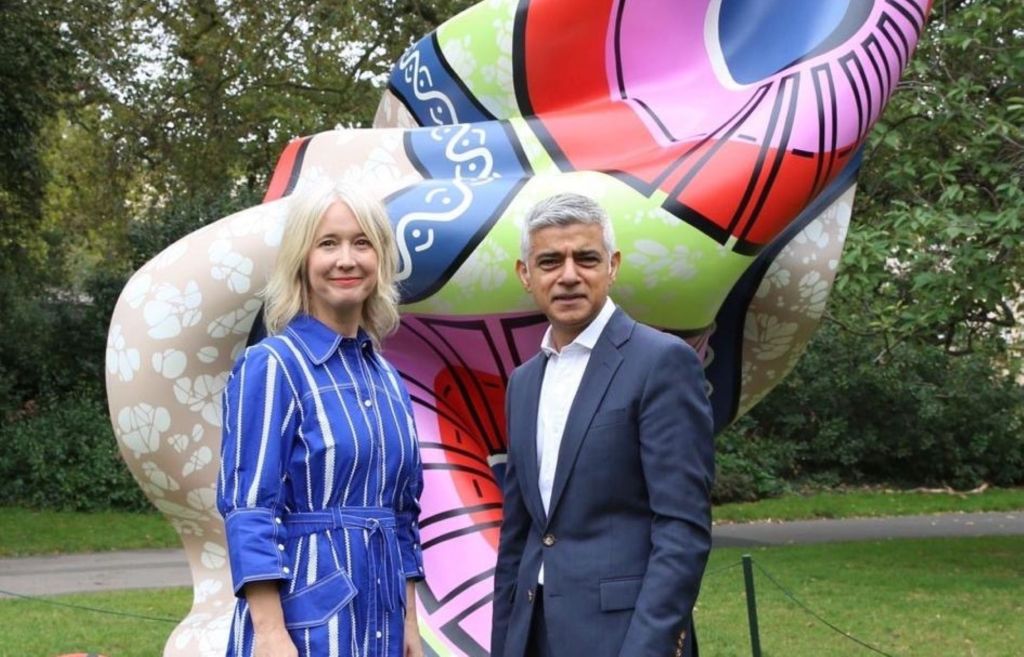
The Potteries is a fitting place to begin a career devoted to the economic and social power of creativity. Stoke was built around making things: ceramics, design, manufacturing and craftsmanship. Its history is one of skilled people turning ideas and raw materials into objects that travelled far beyond the city. “As with many industrial cities, the changing world brought many challenges, but at its heart Stoke is a city that is built on the talent and creativity of generations of craftspeople; shaped by skilled artisans and makers. There is a renewed sense of pride and passion in the Potteries and it was recently designated a World Craft City for Ceramics.” Simons found her own creative route through dance. “My own creative journey growing up was through dance. I joined a youth dance group and it was transformative. Dancing built my confidence and gave me so many fundamental skills; working as a team, forming my own ideas and communicating them, resolving conflict with other humans – all the things I depend on as Deputy Mayor today.”
It is perhaps the most revealing thing she says about the importance of culture. For Simons, creativity is not simply about producing art. It is about developing the confidence to have an idea, the ability to work with others and the resilience to turn an idea into something real. “It’s why I am so passionate about all young people having access to a creative education. Whatever your background, creativity can help you reach your potential.” That conviction has stayed with her as London has become the focus of her professional life. “I’m hugely proud to have worked for all three London mayors and have seen so many changes over the years. From helping to establish the Fourth Plinth as a landmark public sculpture prize to delivering the largest cultural festival the capital had staged when we hosted the London Olympics and Paralympics in 2012.” The scale of the work has changed dramatically. But so has the political understanding of what culture is for.
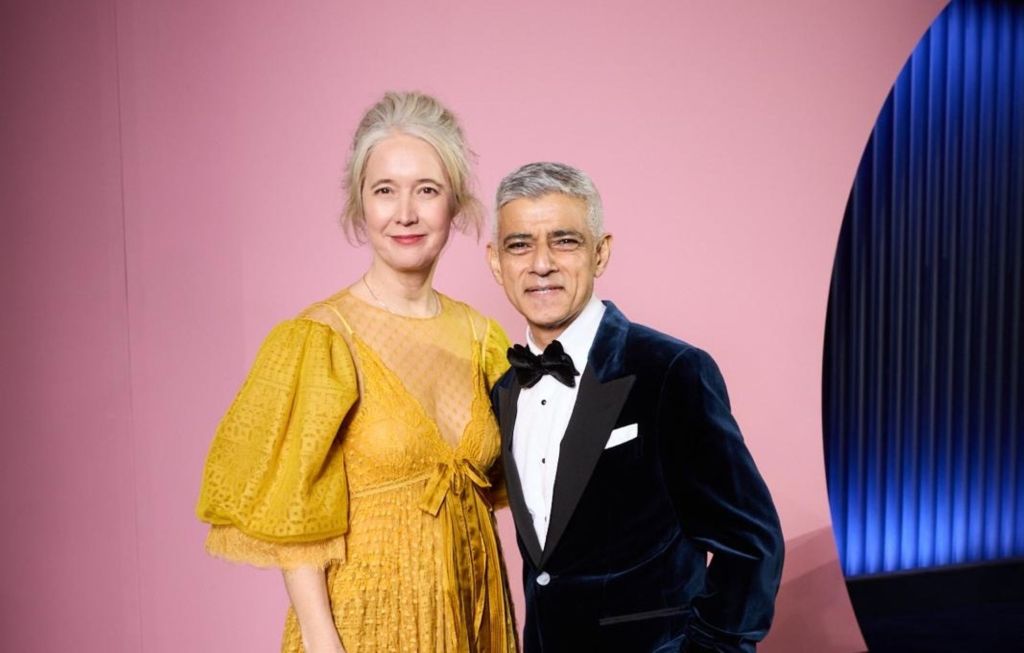
“We’ve achieved a huge amount, but Sadiq is the first Mayor to make culture a core priority and that has allowed us to think big and be bold. He really understands the power of culture and needs no persuading about the role it can play in driving our economy and the value it brings to our communities.” That ambition is visible in East Bank, the cultural and education district in Stratford developed as part of the legacy of the 2012 Olympics. It now brings together institutions including V&A East, Sadler’s Wells East, UAL London College of Fashion, the BBC and UCL East. City Hall describes the East Bank as a £1bn cultural and education district. “Since he became Mayor, there has been a step change in ambition.
From establishing East Bank, London’s newest cultural and education district as a legacy of the London 2012 Olympics. Stratford is now home to some of the country’s most important cultural spaces including V&A East, Sadler’s Wells East, UAL London College of Fashion, BBC and UCL East. The new London Museum will open later this year in historic Smithfield in the heart of the City. Our investment in London’s creative economy has delivered almost £12 billion in economic growth and our London Borough of Culture has celebrated local culture and taken creativity to doorsteps all across the capital.”
But the bigger challenge facing London’s creative economy is not simply how to build new cultural institutions. It is how to keep the people who make London creative in the city. “Culture is in our DNA. It’s our identity as a city and has helped to define our story through the decades. Today London’s creative economy is worth £64 billion a year and one in every five jobs is a creative one, it’s also the reason most people visit our city. But we can’t take it for granted.” Behind those numbers sits a less glamorous reality: artists, musicians, designers and other creative workers need somewhere affordable to work. “Behind this great success story our creative community is working really hard – the artists and designers, the musicians and the choreographers.
Like many big cities around the world, building a career as a creative requires grit and determination and one of the things creatives most need is affordable permanent space.” This is where Simons’s phrase “hardwiring culture” becomes more than a piece of policy language. The idea is that culture should not be an afterthought once the planning, property and economic decisions have already been made. It needs to be considered part of the city’s infrastructure. “Much of my work has been about making sure that as London grows and develops creativity is locked in for the long term. We need to move away from the cycle of artists being continually pushed out of areas as land values rise. That’s why I use the phrase ‘hardwiring culture’ – it means recognising the role culture plays in our city, valuing it in the system so that it is protected.”
The practical implications are significant. “In practice this means protecting artist studios, grassroots music venues and clubs in London’s planning system for the first time and establishing a Creative Land Trust, a social investment charity that buys buildings for use as affordable studios. We also established the first Culture and Communities at Risk Office, which I like to call ‘the bat phone’, it is a frontline support service giving advice and help to venues and creative spaces.”
It is an approach that treats creative space as economic infrastructure. A studio may not look like an economic asset in the same way as an office block, but without studios, rehearsal rooms, venues and workshops, the creative economy begins to lose the conditions that allow it to flourish. The Creative Enterprise Zones take that thinking further. “The fact is, artists need London, just as much as London needs artists. They are the lifeblood of our creative industries and help to drive the economy, but they need space to do their work.” The programme was born out of concern about the rapid loss of artists’ workspaces as property prices rose and neighbourhoods changed. “When Sadiq Khan became Mayor of London in 2016, London was in the midst of a significant loss of artist workspaces due to rising property prices and redevelopment. We started collecting the data on creative workspaces and realised we were about to drop off a cliff. So, we set about designing solutions and experimenting with new ideas. One of which was Creative Enterprise Zones; areas that provide permanent affordable creative space, so artists can put down roots in areas they have long contributed to.”
There are now 12 Creative Enterprise Zones across London, together they are on target to deliver 80,000 square metres of permanent new affordable workspace. The programme is explicitly designed to help artists and creative businesses put down roots rather than being displaced as areas develop. Simons sees signs that the strategy is working. “And the good news is it’s working. While challenges remain, I’m proud that the number of artists’ workspace sites in London remained stable last year. So that’s why hardwiring culture is our mantra – so it’s not just an add on, but understood as core to our success as a global capital.” The other side of the argument is access. “Free museums and galleries are a real flagship policy and one that is renowned and revered around the world. This year marks 25 years since the Government made the transformative decision to make museums free. It opens our museums and galleries to millions and has become a fundamental part of London life.” For Simons, this is not simply a question of visitor numbers or tourism. It is about who gets to participate in the cultural life of a city. “Access to art and culture is a right, not a privilege and something we must never take for granted.” That idea reflects the way she experienced culture growing up. Her own introduction to creativity did not come through an elite cultural education. It came through everyday life and a youth dance group that gave her confidence.
Today, the scale is very different. She is dealing with a £64bn creative economy, major cultural institutions, planning policy and the future of London’s creative workforce. But the underlying idea remains remarkably simple. Culture does not happen by accident. People need opportunities to make things. They need places to work. Young people need access to creativity before they know where it might take them. And cities need to recognise that the people making them interesting are also helping to make them prosperous. Perhaps that is what Simons has been trying to hardwire into London all along: the idea that culture is not decoration around the business of a city. It is part of the business. Her story began in Stoke, a city shaped by makers. She found dance and discovered what creativity could give a young person. Now, from City Hall, her job is to make sure London remains a place where the next generation can find the space to make something of its own.
Long before Justine Simons was thinking about planning policy, creative economies or the future of London, there was a house in Stoke-on-Trent where culture arrived through the front door. Simons’s father was a professional musician and Musical Director at a major live and cabaret venue in Stoke. Her mother was a social worker and self-taught dressmaker who would make herself evening gowns for performances, often from Vogue patterns, tracking down all kinds of interesting and affordable fabrics.
The glamorous world of the stage sat alongside an ordinary family life in which music, creativity and an open door were simply part of the landscape. “Our house was always open, lots of kids gravitated to the good energy – the moment you walked through the door, my dad would offer you grilled oatcakes and cheese (a Stoke speciality). It wasn’t precious or pressurised and there was zero academic snobbery in our house, my parents just wanted us to do things that made us happy. Which I realise with hindsight was a huge gift.” It is an unusually vivid origin story for someone who has spent more than two decades operating at the intersection of culture, government, property and economic development.
Simons has worked for all three London mayors and played a central role in projects including the Fourth Plinth and the London 2012 cultural programme. She was appointed Deputy Mayor for Culture and the Creative Industries by Sadiq Khan in 2016. But before London, there was Stoke. “I’m very proud of my hometown, Stoke-on-Trent. As a global centre of ceramics, the city made a big impact on the world, pioneering new techniques and spearheading the industrial revolution.”

Marine Tanguy is a French-British art entrepreneur, author and speaker, best known as the founder... Read more