The Man Behind the Fireworks
Jonathan Reekie’s career has centred on making artists’ visions possible.
Somerset House
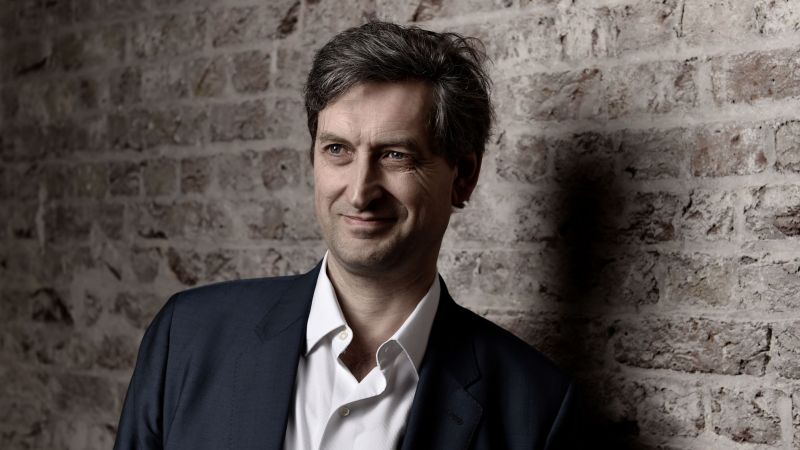
Jonathan Reekie, Director, Somerset House Trust
Opinions expressed by Entrepreneur contributors are their own.
You're reading Entrepreneur United Kingdom, an international franchise of Entrepreneur Media.
Jonathan Reekie has spent a career making creative projects possible for artists.
It all started at six in the morning with an olive grove near a monastery on a hill outside Batignano, in the Tuscan countryside. Inside, and around it, some of Britain’s finest opera singers, conductors, musicians and directors had gathered for a summer of music. It was part monastery, part student commune, part operatic fever dream. Jonathan Reekie was 20. He had no qualifications for any of this. He had, however, managed to blag his way in. When they told him there was no accommodation, he said: “Don’t worry. I’ve got a tent.” The tent proved to be less romantic than planned. Camping in Tuscany in summer is, as he discovered then, “absolute hell.”
But he stayed. His first production was directed by Richard Jones, and was an opera by Antonio Salieri. In the middle of the olive grove was a concrete well. A scaffolding platform had been built at the bottom, six inches above the water. Reekie’s job was to sit there all evening with a score. He was waiting for his cue. “At the right moment,” he says, he had to “set fireworks off that would come out of the well as the wizard appeared”. He also had another job. He was the car-park attendant. “I don’t recommend trying to be a car park attendant in Italy,” he says. “They don’t do what you tell them to do.” This story contains almost the whole philosophy of Reekie’s working life.
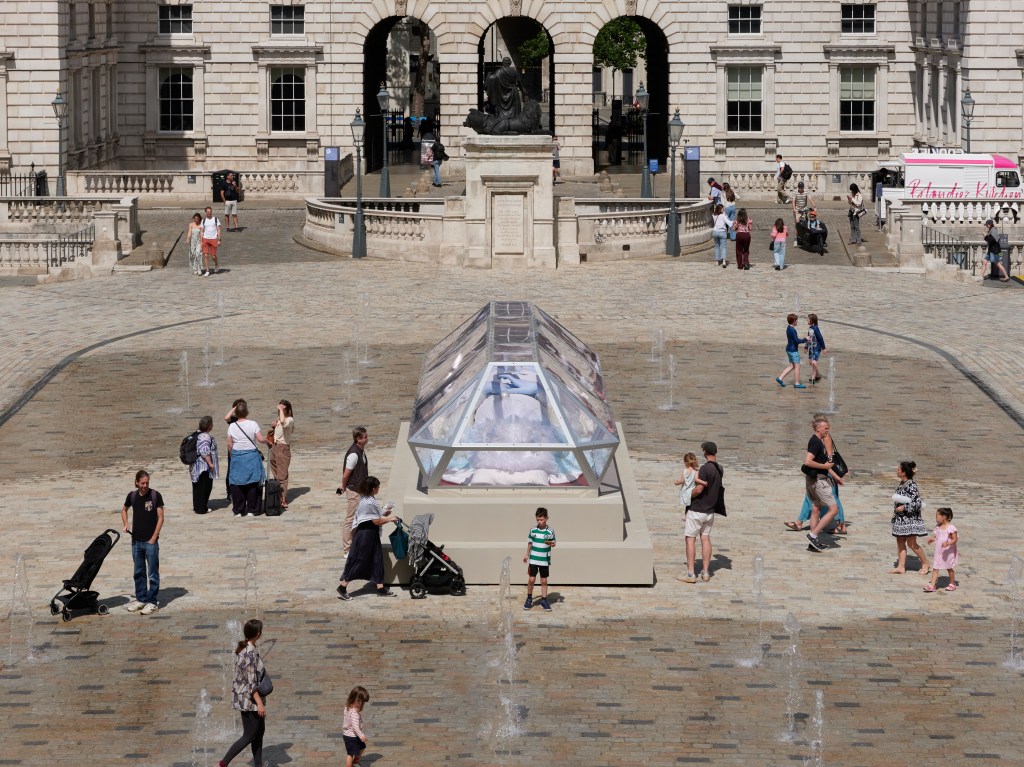
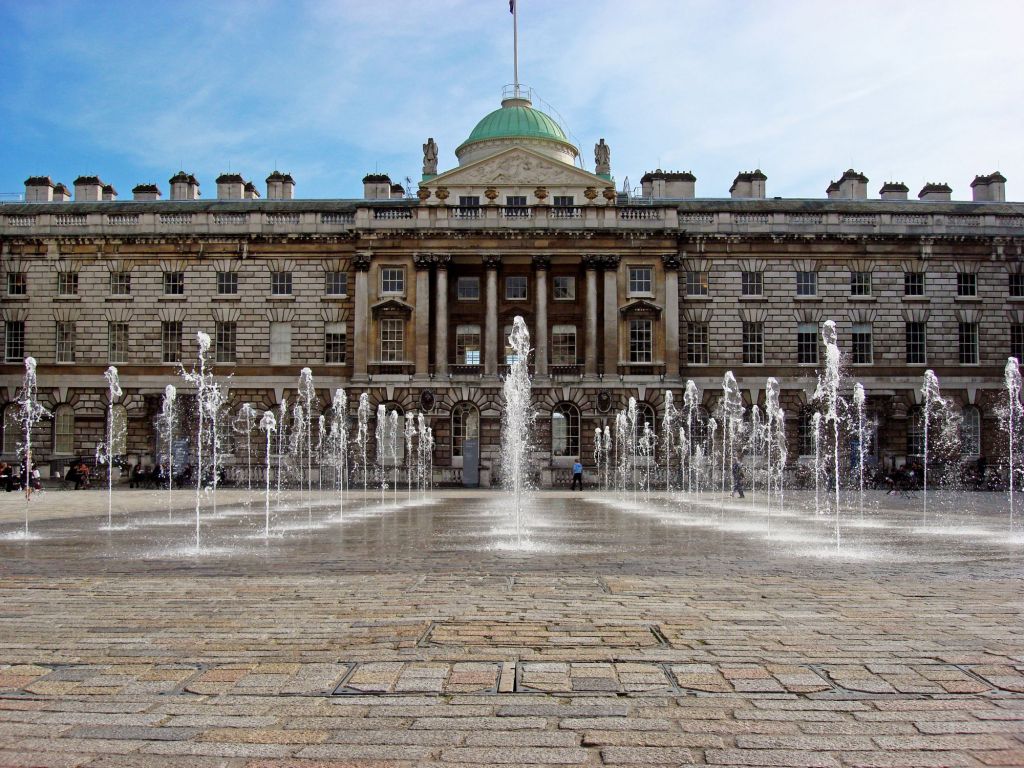
More than three decades later, Reekie is Director of Somerset House Trust, a position he has held since 2014. Before that came a career through opera and theatre, including the Almeida Theatre, where he founded Almeida Opera, and 16 years leading Aldeburgh Music. At Somerset House, he has helped shape one of London’s more unusual cultural institutions: neither museum nor gallery, theatre nor conventional arts centre, but a sprawling combination of exhibitions, performances, artists’ studios, creative businesses and public spaces. Its model is unusual, too. It does not receive regular state subsidy and has to generate tens of millions of pounds a year through its own activities, partnerships, philanthropy and other income. But the most revealing way to understand Reekie is not through the size of the budgets or the prestige of the institutions. It is through the artists. Because Reekie has spent his career trying to make their artistic projects a possibility.
“If you have a belief in artists and the work that they make, and you believe the importance of it, then having a part in bringing that to life is a really wonderful and privileged thing to be able to do.”
At Glyndebourne, Reekie began by making tea and typing schedules “even though my typing is not very good” and encountered contemporary opera for the first time. Nigel Osborne’s Electrification of the Soviet Union, directed by the American director Peter Sellars, stopped him in his tracks. “It was literally a light bulb moment for me,” he says. “It was just the most unbelievably exciting thing I’d ever seen.” It opened up a world he had not known existed. Soon he was at the Almeida Theatre, which had just become a producing theatre under Jonathan Kent and Ian McDiarmid. Reekie saw an opportunity. He had a theatre. He had discovered contemporary opera. He had an institution with a history of new music. So why not create a contemporary opera festival? A couple of philanthropists helped significantly in the early days. The festival continued for more than a decade and produced close to 40 contemporary operas, many of them commissions.
One of those works was Thomas Adès’s Powder Her Face, which has since become a modern classic. ‘’The reason why contemporary opera is important is because you’ve got to keep renewing the repertoire to keep the artform alive for future generations,” Reekie says.
It is a philosophy that became particularly important at Aldeburgh. When Reekie arrived there, the organisation was at a critical moment in its history: caught between the generation that had known Benjamin Britten and the generation that would have to decide what his legacy meant in today’s world. It was the familiar problem of institutions created by extraordinary individuals. Was Aldeburgh going to become a museum to its founder? Or could it remain a living institution? “It needed to be a living breathing modern reflection of what the founder believed in,” Reekie says. The answer required a particular kind of historical intelligence. Reekie began looking backwards, not to preserve the past but to understand it and work out how to articulate in the present . Britten, he realised, was far more radical than the museum version of Britten might suggest. He had centred worked with young people and community. He collaborated with writers, directors and designers and was interested in other art forms. He commissioned other composers and he sometimes invited artists whose work he did not necessarily like because he felt was important. He was building a canon. “It was very contemporary.”
This became the basis of Reekie’s approach. “If we go back to what Britten’s ethos was, it’s actually very contemporary and relevant.” The way to honour Britten, therefore, was to recover Britten’s appetite for the new. “Not the world as it was when he was alive.” That distinction sounds obvious until you consider how many cultural institutions are trapped by the reputations that made them. Founders become brands. Traditions become obligations. Sarah Lucas could sit within a classical music festival. Punchdrunk could respond to Britten. The artists did not resemble Britten. That was precisely the point.
The philosophy travels naturally to Somerset House. It was not built as a public cultural building; from the outside, Reekie says, it can feel like a place that was designed to keep people out rather than draw them in. “From the outside it’s quite an intimidating space to enter,” he says. “There isn’t an obvious front door.” Perhaps that is why Somerset House has spent so much time trying to become something more than a building. It has become an ecosystem. There are exhibitions and performances, but also studios, creative businesses, designers, musicians and artists. The distinction between the person who makes art and the person who works somewhere in the wider creative economy is deliberately blurred.
For Reekie, this proximity matters. It changes how the institution thinks. “A key feature of the Somerset House model isn’t just a bunch of people like me or a curator sitting on high going, ‘Oh, well, let’s do a show about this and let’s do a show about that,’ ideas can bubble up from below”. That phrase may be one of the clearest descriptions of his leadership. Reekie is not interested in the director as an omniscient programmer. The director’s job is partly to make the institution porous enough to notice what is happening. He describes artists as “a kind of societal early warning system.” Sometimes, he says, they are “canaries in the coal mine”.
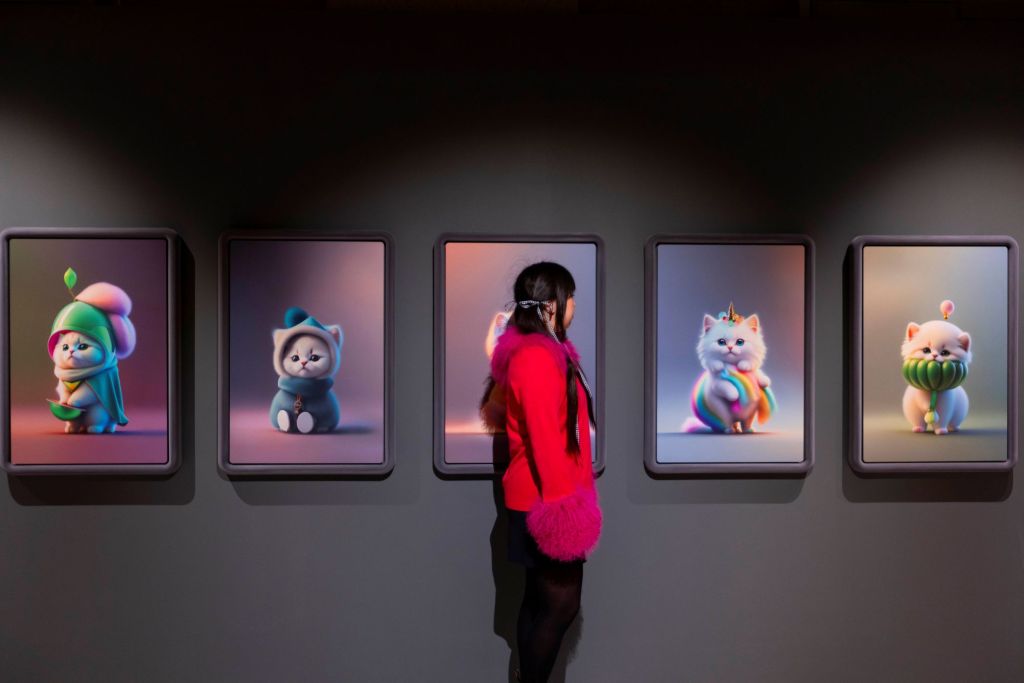
CUTE, Somerset House’s hugely successful exhibition exploring the aesthetics and politics of cuteness, is a good example of this philosophy. The germ of the idea came from senior curator Claire Catterall observing an artist connected to Somerset House Studios and noticing something larger happening around them. The aesthetic was spreading through online culture, fashion and popular imagery.
It became Somerset House’s most visited exhibition with more than 80% of the audience visiting the building for the first time. “The key is to start with the work,” Reekie says. That is an unusually strong position at a time when cultural organisations are under intense pressure to demonstrate audience growth. The danger is that audiences become a market to be captured rather than a public to be expanded. Reekie’s instinct is almost the reverse. Change the work – and the range of stories it tells – and audiences can change with it. The Missing Thread, for example, explored the untold story of Black British fashion. “So if you give oxygen to a story that has historically been marginalised , you will bring different audiences into the building.”
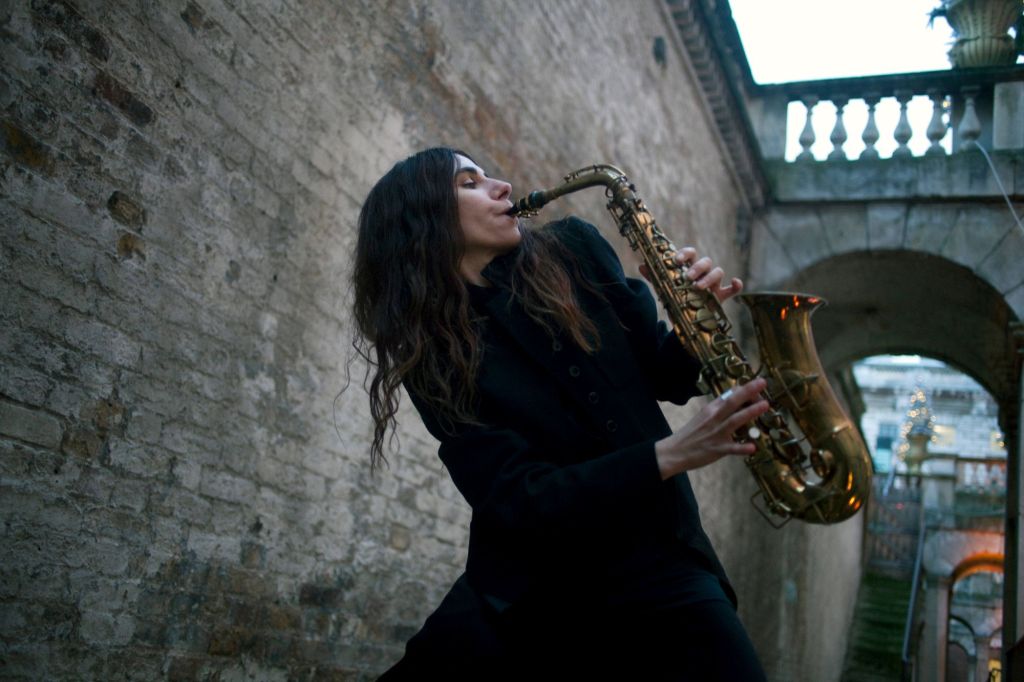
That philosophy also explains why Somerset House can accommodate something as improbable as PJ Harvey recording an album inside a glass box. The project came through Michael Morris at Artangel, who had been talking with Harvey and developing the idea. Reekie already knew Morris. When he arrived at Somerset House, he showed him some of the spaces that were still derelict. The resulting image – PJ Harvey making music while the public watched – remains a core memory of the London cultural scene.
But making things possible requires money. And here the romance of the enabler collides with the less romantic reality of institutional survival. Somerset House receives no regular state subsidy and has to generate its own income through a mixture of commercial activity, partnerships, philanthropy, ticketing and other sources. Reekie has spoken of the scale of the operation as requiring tens of millions of pounds a year. The advantage, he says, is freedom. “It does create freedom.” There is freedom from “filling out long forms, justifying yourself”. There is also a particular freedom in Somerset House’s lack of an obvious institutional category. “We’re not quite an arts center. We’re not a museum. We’re not an art gallery.” That ambiguity can be artistically liberating. It can also be commercially useful. If no one quite knows what Somerset House is, there is more room to decide what it might become. But independence is not the same thing as ease.
Corporate partnerships matter deeply in this context. Virgin, for example, has been a partner for several years. “So basically you’ve got more levers to pull,” Reekie says. “So when things are difficult, you’ve got more options.” Then comes the qualification: “The bad news is it’s hard work.”
It is one of his best lines because it punctures the romance of institutional independence.
“You’ve got to have a belief in artists,” Reekie says. Trust them. Give them room. Find the money. Take the risk. And then, when the moment comes, get out of the way. Which brings us back to the well. A 20-year-old Reekie is sitting six inches above the water in an Italian olive grove, a score in his hands, waiting for his cue. Above him, the opera is unfolding. The audience is watching the artists. Nobody has come to see the man in the well. Then the moment arrives. The wizard appears. The fireworks go off. And for a second, the machinery disappears entirely. That is the trick. The best enabler is almost invisible until the fireworks.
Jonathan Reekie has spent a career making creative projects possible for artists.
It all started at six in the morning with an olive grove near a monastery on a hill outside Batignano, in the Tuscan countryside. Inside, and around it, some of Britain’s finest opera singers, conductors, musicians and directors had gathered for a summer of music. It was part monastery, part student commune, part operatic fever dream. Jonathan Reekie was 20. He had no qualifications for any of this. He had, however, managed to blag his way in. When they told him there was no accommodation, he said: “Don’t worry. I’ve got a tent.” The tent proved to be less romantic than planned. Camping in Tuscany in summer is, as he discovered then, “absolute hell.”
But he stayed. His first production was directed by Richard Jones, and was an opera by Antonio Salieri. In the middle of the olive grove was a concrete well. A scaffolding platform had been built at the bottom, six inches above the water. Reekie’s job was to sit there all evening with a score. He was waiting for his cue. “At the right moment,” he says, he had to “set fireworks off that would come out of the well as the wizard appeared”. He also had another job. He was the car-park attendant. “I don’t recommend trying to be a car park attendant in Italy,” he says. “They don’t do what you tell them to do.” This story contains almost the whole philosophy of Reekie’s working life.

Marine Tanguy is a French-British art entrepreneur, author and speaker, best known as the founder... Read more