Your Business Reflects Your Energy: Why Founders Must Stop Ignoring Their Greatest Asset
Burnout taught me that energy is one of my business’s greatest assets.
Big Energy: A Mystical Guide to Reclaiming Your Power
Opinions expressed by Entrepreneur contributors are their own.
You're reading Entrepreneur United Kingdom, an international franchise of Entrepreneur Media.
For years, I thought my ability to keep going was one of my greatest strengths in business. I had spent the first 10 years of my entrepreneurial journey co-founding a film company that produced content for everyone from Tony Robbins to Selena Gomez. Long days, pressure and making things happen with limited resources were simply part of the job. I became very good at pushing through and, like many entrepreneurs, probably wore that ability as a badge of honour. Then I burnt out.
As it turns out, pushing through isn’t an unusual business strategy. Research from Xero found that almost half of the UK’s smallest business leaders and sole traders have experienced burnout and stress from taking on too many roles. Around the same time, I was diagnosed with a benign brain tumour, my relationship broke down and the money stopped coming in. It felt as though everything I had built my life around was unravelling at once. Yet I hadn’t forgotten how to run a business. The ideas were still there, but I was approaching everything from a completely different internal state. My creativity and focus changed. Decisions felt heavier, and the amount I could produce with the time available to me changed.
It made me realise something I had never considered before: my energy wasn’t simply something I needed to get through the working day. It was one of the resources my business was built on. In founder-led businesses this is crucial because there is so little distance between the founder and the company. If you are excited by what you’re building, people often feel it. If you deeply believe in an idea, that conviction finds its way into how you communicate it. Equally, when you are depleted or scattered, that doesn’t stay neatly contained inside you. It affects what you create and what you have available to give to the business. Your clarity, your presence, your thinking quality – these are what clients pay premium rates for. Anything that depletes these is a business risk not just a personal one. That’s why it’s time to start treating energy as a business asset. So how can founders begin working differently with their energy?
1. Manage your energy as deliberately as you manage your time
We accept that time is finite, so we manage calendars, prioritise and delegate. Our energy is finite too, yet receives considerably less attention. How we utilise it affects the quality of our thinking, the opportunities we notice, how we lead and the decisions we make. Strategy and market conditions matter, but the state of the person responding to those realities can profoundly affect what happens next.
2. Notice what depletes you and what expands you
Pay attention not only to how long something takes, but to what happens to you while doing it. The people, environments and work that consistently drain or energise you offer clues about the conditions in which you do your best work. I’ve learnt not to dismiss those clues quite so quickly.
3. Stop measuring productivity by time alone
Your best thinking, creativity and judgement don’t necessarily emerge because you’ve allocated them a slot in your calendar. There are days when an hour creates more than eight hours of forcing ever could. The question isn’t always how much time you gave something, but who you were while you were giving it.
4. Become aware of the energy you consume and the energy you can access
Most of us think about energy in terms of what we use: how much we have and how much something requires. What we consider less often is the energy we can access when we become more connected to ourselves. I call this our Big Energy. You might describe it as intuition, spirit, presence or inner knowing, but I’ve come to believe there is a dimension of our human capacity that we barely touch when effort is the only resource we know how to use. This is where things became interesting for me. I began to realise that creating more didn’t necessarily require me to expend more. Sometimes it required access to a different dimension of myself.
5. Create space to access rather than constantly giving out your energy
Meditation, breathwork, walking or simply stepping away from constant input can create enough space for something else to become a reality in your life. We’ve all experienced analysing a decision repeatedly, only to suddenly know what to do once the noise settles. For me, these practices became the beginning of something much deeper. They made me curious about just how much of our capacity remains inaccessible when our default response to growth is simply to do more. Managing energy, then, isn’t simply about preventing burnout. It’s about understanding what allows you to bring your best thinking, creativity, judgement and presence to the business.
If your only model for creating more is working harder, eventually you’ll hit a ceiling because human effort has limits. And sometimes the ceiling we think belongs to the business actually belongs to the way we’ve learnt to operate within it. The more interesting question I discovered was not how much more can I get out of myself? but how much more of myself can I bring to what I’m creating? Our businesses will always require practical action, commercial judgement and hard work. Big Energy isn’t an alternative to those things. It’s about recognising the consciousness and energetics behind them.
For a long time, I thought my greatest professional strength was my ability to keep going. Burnout taught me that I’d been measuring the wrong thing. The most valuable resource we bring to our businesses isn’t how much energy we can expend on them. It’s the quality and depth of energy we’re able to bring to them. And whether we pay attention to it or not, eventually the business reflects the difference.
For years, I thought my ability to keep going was one of my greatest strengths in business. I had spent the first 10 years of my entrepreneurial journey co-founding a film company that produced content for everyone from Tony Robbins to Selena Gomez. Long days, pressure and making things happen with limited resources were simply part of the job. I became very good at pushing through and, like many entrepreneurs, probably wore that ability as a badge of honour. Then I burnt out.
As it turns out, pushing through isn’t an unusual business strategy. Research from Xero found that almost half of the UK’s smallest business leaders and sole traders have experienced burnout and stress from taking on too many roles. Around the same time, I was diagnosed with a benign brain tumour, my relationship broke down and the money stopped coming in. It felt as though everything I had built my life around was unravelling at once. Yet I hadn’t forgotten how to run a business. The ideas were still there, but I was approaching everything from a completely different internal state. My creativity and focus changed. Decisions felt heavier, and the amount I could produce with the time available to me changed.
It made me realise something I had never considered before: my energy wasn’t simply something I needed to get through the working day. It was one of the resources my business was built on. In founder-led businesses this is crucial because there is so little distance between the founder and the company. If you are excited by what you’re building, people often feel it. If you deeply believe in an idea, that conviction finds its way into how you communicate it. Equally, when you are depleted or scattered, that doesn’t stay neatly contained inside you. It affects what you create and what you have available to give to the business. Your clarity, your presence, your thinking quality – these are what clients pay premium rates for. Anything that depletes these is a business risk not just a personal one. That’s why it’s time to start treating energy as a business asset. So how can founders begin working differently with their energy?

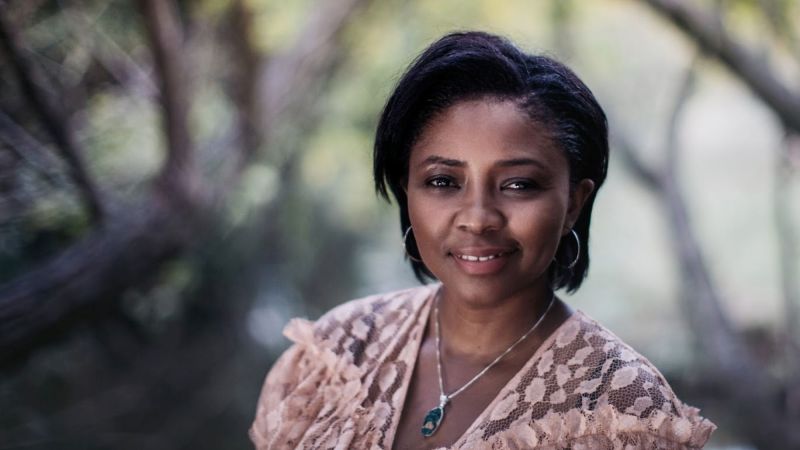
Folake Balogun • Speaker, mentor and bestselling author of Big Energy: A Mystical Guide to Reclaiming Your Power
Folake Balogun is a speaker, mentor and bestselling author of Big Energy: A Mystical Guide... Read more