The World of Possibilities: A Life in Books
Gail Rebuck transformed British publishing, making books accessible to all.
Penguin Random House
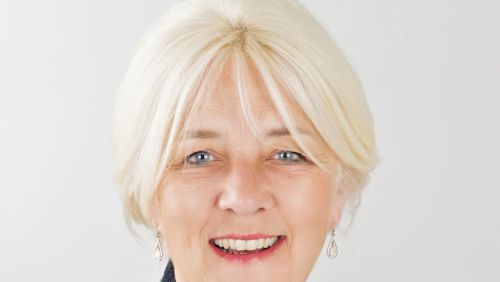
Baroness Gail Rebuck, Chair of Penguin Random House UK and founder of World Book Day
Opinions expressed by Entrepreneur contributors are their own.
You're reading Entrepreneur United Kingdom, an international franchise of Entrepreneur Media.
Every Saturday morning when she was a child, British publisher Gail Rebuck went to the library with her mother and brother. “I would walk up and down these musty shelves and discover all these books,” she says. “The only thing that worried me was what would I do if I had finished all the books before I went back the next Saturday.” The limit was seven books. Each book was an opening to a new world of possibilities and a stretch to her imagination. “It was a gateway to the world.”
Today, Rebuck is one of the most influential figures in British publishing. She led Random House UK as chair and chief executive for more than two decades before becoming chair of Penguin Random House UK following its creation in 2013. She was also the founder of World Book Day in the UK, helping turn the simple act of choosing a book into a national celebration.

I am a big believer as a woman that we rest on the shoulders of the women who wanted to have more to life than they had. I feel that Gail’s story is one of those. Her parents had both left school at 13. Her mother came from poverty; her father left school to work in the family business. Her paternal grandfather, a refugee from Eastern Europe, arrived in Britain at 15, unable to speak English. He was a tailor and remained illiterate throughout his life. Her mother understood the frustration of stifled ambition. Women of her generation had aspirations, Rebuck says, but few avenues through which to pursue them. “So they were constantly thwarted.” She wanted something different for her daughter, although even her own horizons were shaped by the world she had known. Rebuck was sent to a French school, partly because her mother had always regretted not speaking another language. She learned to read and write in French, absorbed Molière and Stendhal, and encountered history from a perspective other than the British one which shall be a requirement in the education of our kids. Gail first hand had the knowledge that history was written by a few people for a specific audience and one could challenge that.
Her first job was with a children’s book packaging company, producing illustrated books for publishers. From there she moved to Robert Nicholson Publications, one of the small publishing houses that characterised the industry she entered in the late 1970s. She was given responsibility before she had acquired the confidence that was supposed to accompany it. “I knew nothing from nothing, to be honest,” she says. “And I was just kind of left on my own.” She considers this less a flaw than an education. “In many ways it was the best way to learn. No one told me what to do and I just had to kind of figure it out myself.”

Publishing was then a less regimented business. A young person might encounter several parts of it rather than being placed immediately inside one narrow professional lane. That breadth would shape the way Rebuck later thought about talent. At Random House, young employees would occasionally tell her they wanted to become commissioning editors. Her renown response was: “Well, go and commission something then.” If someone had a strong proposition, she believed they should pursue it, regardless of their position in the hierarchy. “If you have a good idea, then what’s stopping you developing that idea and bringing it to a publishing meeting?” she asks. “The worst that can happen is that you’re told no.” The modern corporate structure, she believes, can sometimes make people wait for permission.
In 1982, Rebuck became one of the founders of Century. She had to contribute £6,000, a substantial sum at the time and remortgaged her home to find it. She and Anthony Cheetham began in a rented room in Marylebone, buying books before the business had properly established how it would pay for them. “We were buying all these books. How on earth are we going to pay for them?” It was publishing in start- up mode: small, exposed, entrepreneurial. Century’s first list appeared in 1983; by the time the company merged with Hutchinson, there were only about 22 employees. The industry around it was changing rapidly. Hardback and paperback publishing, once largely separate businesses, began to converge. Rights became increasingly central. Supermarkets entered the market with aggressive discounting. American ownership brought a new scale and a more international outlook. Then came Amazon, e-books and the Kindle. Rebuck watched publishing move from a collection of relatively independent houses towards the concentrated global industry it is today.
When she became CEO of Random House UK in 1991, women were still conspicuously rare in senior positions. The press had its own way of registering the novelty. Private Eye once described her as a “Barbie doll who crunches diamonds between her teeth”. 2026 would spend multiple essays unpacking this sentence with the sheer amount of biases it carries for a female leader. Rebuck took the line home to her four-year-old daughter, Grace who loved Barbie deeply. “Guess what, Grace? I’ve been described as a Barbie doll who crunches diamonds between her teeth.” Her daughter looked at her. “Mummy, you’re nothing like a Barbie doll.” “I just loved that,” Rebuck says. Rebuck’s response was less to dwell on the caricature than to get on with the work.
World Book Day launched in Britain in 1998. Rebuck approached the government with an unusually simple proposition: publishers would make a £1 book voucher available to every child aged five to 18 in full-time education if the government would help distribute them through schools. The idea was to put a bookshop within reach of every child. Then came the question of the extra pound. What about children who did not have it? Rebuck’s answer was to produce a book that could be redeemed for the value of the voucher alone. More than a million copies were printed and distributed to bookshops. A child did not need to come from a family of readers or know what they were looking for, especially as we know that if a parent is nervous to read a book so will be his/ her own children. The reach of World Book Day is extraordinary. Rebuck still meets adults who remember it not simply as a school event, but as an introduction to books. “World Book Day was the first time I met an author who came into my school, the first time I had a book in my hand.” “I mean, honestly, it’s very, very moving.” As someone who doesn’t come from a house filled with a book, I felt deeply moved by the impact of Gail. I so remember the first joy of holding my first book and a promise that perhaps, I too could escape the world I came from.
During a lecture, Rebuck mentioned that around 11m adults in Britain had poor functional literacy. Afterwards, people came up to her. “What are you going to do about it?” “So I thought, ‘Here we go again.’” Quick Reads was the answer. Publishers approached established authors and asked them to write short, compelling books – no more than 20,000 words – across different genres. They had to be accessible without feeling childish. Before the scheme began, Rebuck visited literacy recovery groups. What she encountered there changed her understanding of the readers’ publishing was failing to reach. There was a mother and daughter, a successful plumber, pensioners, someone for whom English was not a first language, someone who was dyslexic. “What kinds of books might interest you?” she asked. “Every genre,” she says. “Crime, romance, science fiction. Honestly, all of life was there.” The appetite was there. What was missing was access to books that treated adults as adults. Those who struggled with reading were often left with children’s books, which could bring its own humiliation. “They had to read children’s books, which was plain embarrassing and shaming for them.” Quick Reads offered something more important than a shorter book, written in very accessible language. It offered an adult reader the possibility of seeing themselves as a reader. Over time, Rebuck began hearing from people who had concealed their literacy difficulties at work. After reading a Quick Read, they had acquired enough confidence to ask for training or help. A small book had changed the terms of the conversation.
That conviction now informs her work around the National Year of Reading in 2026, at a moment when reading for pleasure among children and young people is in serious decline. Rebuck is wary of treating this simply as a literacy problem. Reading, she argues, is the foundation of imagination and imagination matters far beyond the page. “The fundamental building block of any creative industry” is how she describes it. This is where her argument becomes less about publishing and more about the kind of country Britain wants to be. For years, she says, education policy has been caught in an artificial contest between science and the arts: STEM subjects on one side, the humanities on the other. The mistake is to assume that the future belongs exclusively to technical knowledge. Innovation, she argues, happens where the two meet. “It’s the STEAM.” The arrival of artificial intelligence makes the argument more urgent, not less. If machines become increasingly capable of generating text, analysing information and producing answers, what becomes valuable is not simply knowing more, but knowing which questions to ask, being able to recognise what matters, and having the imagination to approach a problem from an unexpected direction. Rebuck points to the changing requirements of employers and the renewed interest in humanities graduates: people trained in history, philosophy and literature, disciplines that teach interpretation, judgement and curiosity alongside knowledge.
She has watched extraordinary talent emerge from the Royal College of Art, from Somerset House, both organisations she chaired, and from publishing. Britain produces writers, artists, designers, games companies and ideas of global quality. What it struggles to do is keep them. “We produce this creative talent but we don’t scale it.” A successful British gaming company reaches a certain size, she says, and may then be sold to the highest bidder, often outside Britain. The talent remains; the ownership migrates. For Rebuck, that is a problem of economics. The UK has become very good at producing the raw material of a creative economy and punches above its weight, but less good at building the conditions that allow it to grow substantially. Her argument about education follows the same principle. What she resists is the assumption that the humanities are an indulgence: history, philosophy, literature – disciplines that teach people how to interpret a world rather than merely operate within it. “They’re the kinds of brains and imaginations who will be a fundamental part of our digital future.”
Decades later, after running one of the world’s great publishing companies, taking risks on books that other publishers rejected, watching Fat Is a Feminist Issue, the first book she commissioned, sell millions of copies and Fifty Shades of Grey become a global phenomenon (both books written by female authors that she took huge financial risks on), and putting books into the hands of children and adults who had been left outside the culture of confident reading, Rebuck keeps returning to her life mission: access can alter the course of a life. One must leave the door ajar and let people discover for themselves how far it leads. Keep the gateway open. And make sure everyone knows they are allowed through it.
Every Saturday morning when she was a child, British publisher Gail Rebuck went to the library with her mother and brother. “I would walk up and down these musty shelves and discover all these books,” she says. “The only thing that worried me was what would I do if I had finished all the books before I went back the next Saturday.” The limit was seven books. Each book was an opening to a new world of possibilities and a stretch to her imagination. “It was a gateway to the world.”
Today, Rebuck is one of the most influential figures in British publishing. She led Random House UK as chair and chief executive for more than two decades before becoming chair of Penguin Random House UK following its creation in 2013. She was also the founder of World Book Day in the UK, helping turn the simple act of choosing a book into a national celebration.
I am a big believer as a woman that we rest on the shoulders of the women who wanted to have more to life than they had. I feel that Gail’s story is one of those. Her parents had both left school at 13. Her mother came from poverty; her father left school to work in the family business. Her paternal grandfather, a refugee from Eastern Europe, arrived in Britain at 15, unable to speak English. He was a tailor and remained illiterate throughout his life. Her mother understood the frustration of stifled ambition. Women of her generation had aspirations, Rebuck says, but few avenues through which to pursue them. “So they were constantly thwarted.” She wanted something different for her daughter, although even her own horizons were shaped by the world she had known. Rebuck was sent to a French school, partly because her mother had always regretted not speaking another language. She learned to read and write in French, absorbed Molière and Stendhal, and encountered history from a perspective other than the British one which shall be a requirement in the education of our kids. Gail first hand had the knowledge that history was written by a few people for a specific audience and one could challenge that.

Marine Tanguy is a French-British art entrepreneur, author and speaker, best known as the founder... Read more