How Writer Antony Pickthall Is Turning Creative Curiosity Into New Ventures
Writers and entrepreneurs may have more in common than people assume. Both begin by questioning what already exists. They also look for connections others might miss and imagine how things could work differently. For some creatives, the line between telling stories and building something new is thin.

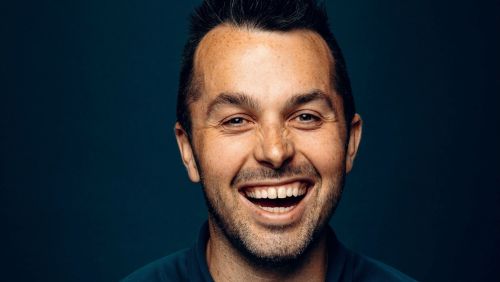
Antony Pickthall
You're reading Entrepreneur United Kingdom, an international franchise of Entrepreneur Media.
Antony Pickthall is a British writer whose work spans poetry, theatre, screenwriting, and fiction, including his short-story collection Stay With Me. He sees writing and entrepreneurship as closely linked, because both depend on asking better questions. His path has not been straightforward, with unproduced screenplays and stalled commissions along the way. But he believes each experience has helped him understand how ideas can develop into something meaningful.
Pickthall traces his writing back to song lyrics, which gradually grew into poems. Poetry then led him to attempt a novel. Unhappy with his dialogue, he wrote a play to practise, which drew him into theatre. He later completed an MA in playwriting at Birmingham. Each move came from looking for the best way to tell a particular story, rather than sticking to one format.
For Pickthall, the guiding principle is that the story always comes first, with the format depending on the circumstances. When theatres closed during COVID-19 and their future was uncertain, he returned to fiction for the first time since his teens. The disruption pushed him to reconsider how he could continue telling stories when the medium he had been working in was no longer readily available.
In his view, writing well is only part of the job; writers also need to understand the industry they are trying to enter. Pickthall credits mentors and fellow creatives such as Talent Campus London Screen Writers Festival, with helping him navigate setbacks. He recalls a screenwriting retreat in Scotland, run by California-based Roadmap Writers, as a turning point. The experience, he says, “gave me heart, gave me confidence in a way that I’d not experienced before.”
Pickthall believes writers who want to break into screenwriting need to understand what makes a script usable for a production company. That means knowing what kinds of stories are being made, understanding the market, and recognising the directors and creatives shaping the field. But commercial awareness should not come at the cost of originality. The challenge is finding a place within the latest wave of creative expression without losing the spark that makes a writer’s work distinctive.
Connections are the principle Pickthall returns to most, linking characters, history, and ideas. His play All Heads Turn, about the Elizabethan playwright Christopher Marlowe, required extensive research into Marlowe’s life and his relationship with Shakespeare. Changing scholarly views about their work, including the possibility that they collaborated on Edward III, demonstrate how our understanding of history can evolve as new connections emerge.
He sees a similar opportunity in artificial intelligence. Rather than dismissing AI, Pickthall views it as a compelling tool that can force writers to think differently and ask better questions. Yet Pickthall is clear that AI’s development must not come at the expense of writers’ rights. As a member of the Writers’ Guild of Great Britain, he supports the need to protect creative work through explicit permission, transparency over the material used to train AI systems, and fair compensation when writers’ work is used. For him, the challenge is to embrace AI’s potential while ensuring that the people whose creativity helps power these tools are properly recognised and rewarded.
His curiosity now extends to publishing. Pickthall has established a literary agency representing poets, including his own poetry, and hopes to launch a subscription-based poetry app. The proposed platform would give readers access to an evolving collection for a monthly fee, while allowing poets to publish individual poems, chapbooks, or full collections without interfering with their existing print contracts. Poets would receive 80% of royalties, with the agency retaining 20%.
The idea reflects another of Pickthall’s concerns: that talented writers can be overlooked by traditional publishing routes. He believes older writers, in particular, may be seen as less commercially attractive by agents. The app would offer poets another way to reach readers and build a closer relationship with them, including through videos of poets reading their own work. Rather than simply adapting an existing publishing model, he wants to create a different route to audiences while giving creators a substantial share of the returns.
Pickthall’s view is that writers are entrepreneurs because both generate ideas that can shift how society thinks. Stories can do more than entertain: they can bring overlooked issues into public conversation and change how people understand the world around them. But he is also interested in turning ideas into practical solutions beyond the page.
His latest idea began with questioning why modern homes still rely on water-intensive waste systems. He is exploring an early-stage concept for a retrofit kit that could reduce the amount of water used when flushing existing toilets, while investigating whether waste streams could be separated and recovered for useful purposes, such as fertiliser. The concept is not yet a proven product. Pickthall hopes to develop a prototype through FabLab Academy in Amsterdam. A programme that enables people from different backgrounds to learn practical fabrication and prototyping skills. He is seeking sponsorship to support the course and living expenses while he develops the idea.
For Pickthall, the project reflects the same instinct that drives his writing: question the way things are done, look for connections, and consider what might be possible if someone approached the problem differently. He does not see a lack of formal technical training as a reason to abandon an idea. Instead, he wants to learn the skills needed to explore it and discover whether it can become something practical.
One of his enduring inspirations is Percy Bysshe Shelley, who grew up near Pickthall’s hometown. He admires Shelley’s combination of politics, observations of human nature, storytelling, and determination to challenge the world around him. That spirit runs through Pickthall’s own work, from historical drama and poetry to experiments in publishing and ideas for more sustainable infrastructure.
Across these different pursuits, his approach remains consistent. Whether he is developing a story, rethinking how poetry reaches readers, or questioning the design of everyday systems, he starts by looking beyond what already exists. For Pickthall, creativity is not confined to producing something new on the page. It is also about recognising where things could work differently, and finding a way to make that possibility real.
Antony Pickthall is a British writer whose work spans poetry, theatre, screenwriting, and fiction, including his short-story collection Stay With Me. He sees writing and entrepreneurship as closely linked, because both depend on asking better questions. His path has not been straightforward, with unproduced screenplays and stalled commissions along the way. But he believes each experience has helped him understand how ideas can develop into something meaningful.
Pickthall traces his writing back to song lyrics, which gradually grew into poems. Poetry then led him to attempt a novel. Unhappy with his dialogue, he wrote a play to practise, which drew him into theatre. He later completed an MA in playwriting at Birmingham. Each move came from looking for the best way to tell a particular story, rather than sticking to one format.

Patricia Cullen • Features Writer
Entrepreneur Staff