Unboring Your Boring Talking Head
AI will make video editing accessible, but creativity will matter more.
Mochine
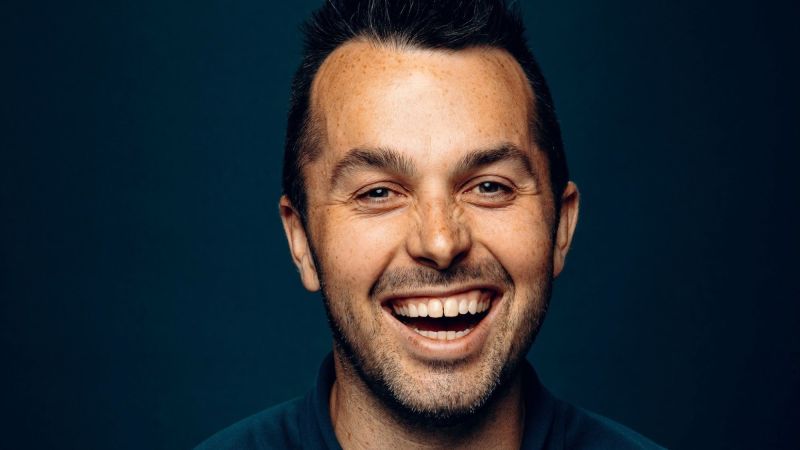
Chris Savage, CEO and co-founder of video marketing platform Wistia and now Mochine
You're reading Entrepreneur United Kingdom, an international franchise of Entrepreneur Media.
There is a reason the phrase ‘talking head’ has acquired such unflattering connotations. For all the promise of video as a way to bring people closer, too much of it involves someone sitting in front of a camera, delivering a monologue while the audience quietly wonders how much longer it has to last.
The problem is rarely the person speaking. It is what happens to the footage afterwards – or, more often, what doesn’t.
A good idea can be flattened by clumsy editing; an interesting speaker can be lost in a succession of unbroken shots and an awful lot of waffle. Making a video is easy enough. Making one that people actually want to watch that converts into revenue is another matter.
For years, that gap has been filled by editors, motion designers and production teams, whose work turns raw footage into something with pace, personality and a point of view. But their skills have not been readily available to everyone. A business owner with an hour to spare, a doctor explaining a treatment or a marketing team recording a webinar may have plenty to say, but little time or expertise to make it look and sound its best. Artificial intelligence is beginning to alter that relationship between the person with the idea and the people needed to bring it to life.
For Chris Savage, CEO and co-founder of video marketing platform Wistia and now Mochine, the next few years will make video editing accessible to almost everyone. But he doesn’t believe that will spell the end of human creativity. Quite the opposite: when anyone can make a decent video, having something genuinely interesting to say will matter more than ever. His predictions for 2027 centre on three developments: everyone becoming an editor, AI being used to enhance real footage rather than replace it, and creativity becoming an increasingly valuable skill.
The end of the editing bottleneck
For decades, video editing has been the preserve of people with the time, training and patience to master specialist software. Turning raw footage into something engaging has traditionally required a level of technical skill that many businesses simply don’t have in-house.
Savage believes that is about to change. “For the last 30 years, editing video has meant learning complicated software or hiring someone who knows how to use it. Think about how crazy that is. You can record something in five minutes and end up spending five hours trying to make it interesting.”
His first prediction for 2027 is that everyone will become an editor. Rather than wrestling with timelines, layers and unfamiliar controls, people will increasingly be able to make changes simply by describing what they want with a single prompt: cut the pauses, tighten the story, add graphics or bring a particular point to the fore. “If you can describe what you want, you can edit a video. That’s a massive shift,” Savage says. For those who have avoided video because the editing seemed more daunting than the filming itself, that could make a considerable difference.
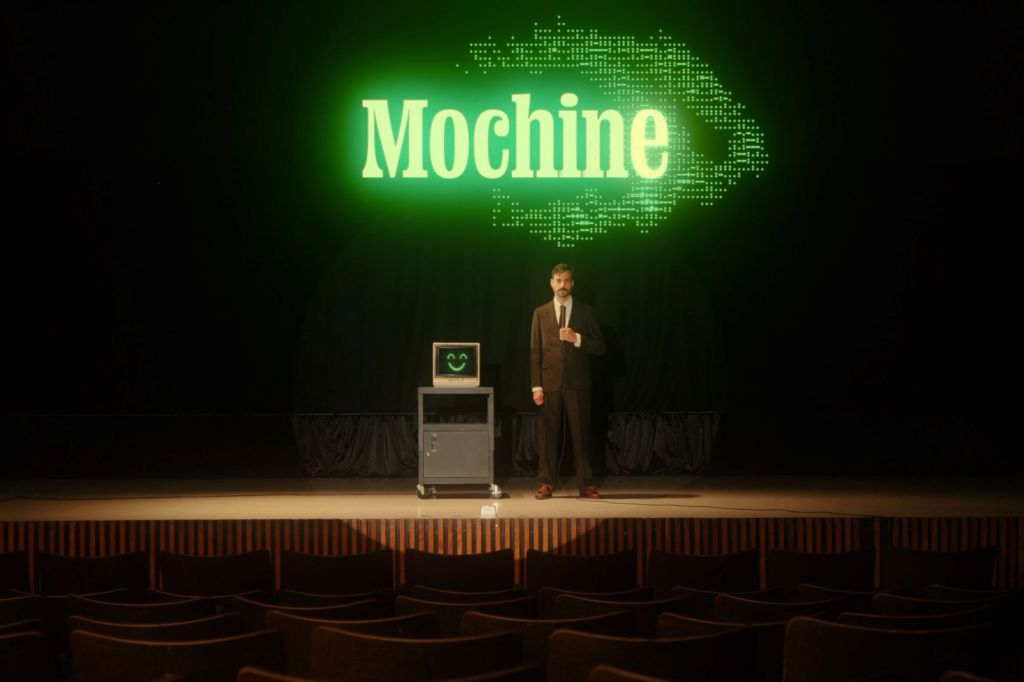
Wistia’s State of Video Report 2026 found that 26% of people who do not create video say a lack of technical ability is holding them back. It suggests that the reluctance to get in front of a camera is not always about confidence or a shortage of things to say. Sometimes, it is simply not knowing what to do with the footage afterwards. It is a problem Wistia is now looking to tackle with the launch of Mochine, its latest move into AI-powered video creation. The tool is designed to help brands make more of the footage they already have. Mochine is the new brain child of thte Wistia team: a platform used by more than 425,000 marketers worldwide. It’s been designed to bring some of the work traditionally undertaken by editors and motion designers within reach of people without that specialist training. Users can upload existing footage and apply a Motion Kit, adding graphics, titles and visual emphasis, or create their own style using a logo, prompt or screenshot.
Brands can also experiment with bespoke Motion Kits designed around their own visual identity, giving their videos a more consistent look and feel. They can ask the tool to make edits through written instructions, rather than having to work through the footage manually. But making editing easier is only part of Savage’s argument. His second prediction is less about what AI can create and more about what it should leave alone: the person on camera.
Why AI shouldn’t take the human out of video
If the first big change is that anyone can edit a video, the second is a question of what AI should actually be used to create. Much of the attention surrounding generative AI has focused on its ability to produce images, voices and increasingly convincing footage from scratch.
But Savage is less interested in replacing the person in front of the camera than in finding better ways to show them. “I’m completely blown away by what’s possible with AI right now, but I think a lot of people are solving the wrong problem with video. Everyone’s racing to generate footage and replace the person on camera. And I keep thinking, why? The person is the whole point! Their personality, their weird little quirks, the stuff that makes them human. Video works because it connects people.” It is a point that gets to the heart of what makes video different from other forms of content. A person’s mannerisms, their enthusiasm for a subject, even the occasional stumble over a word can be part of what makes them worth listening to. A perfectly rendered artificial presenter might deliver the information, but it is harder to manufacture the familiarity and trust that come from hearing someone speak in their own voice.
Savage believes the more interesting use of AI is not to replace the original footage but to improve it. “CGI didn’t replace cameras, and generative AI won’t either. What’s really exciting to me is augmentation. Taking real footage and making it incredible. Adding motion graphics, polish, and storytelling that used to take hours or days. And that’s not just for some big-budget production. It’s for the webinar, the recorded meeting, the sales follow-up. The everyday videos businesses are already making. That’s what we’re doing with Mochine, and I think it’s a much more interesting use of AI.” It is an approach aimed at the thousands of videos businesses already produce: the webinar that needs a little more life, the product demonstration that could do with clearer visual explanations, the founder speaking directly to customers. The person and their message remain at the centre; AI takes on some of the work involved in making the footage more watchable.
For Dr Courtney Lavigne, a board-certified orthodontist and founder of Anchor Orthodontics in Providence and Wakefield, Rhode Island, that distinction has a practical value. “I’m an orthodontist, not a video producer. Mochine has given me so much more confidence making videos for patient education and for the dentists who refer to us. The Motion Kits make even my simplest recordings feel polished and professional.” Her experience illustrates the appeal for people whose expertise lies elsewhere. An orthodontist explaining a treatment does not need to become a motion designer; a business owner sharing their knowledge does not need to spend an afternoon learning editing software. The hope is that the technology can take some of the labour out of making a video without taking away the person who makes it worth watching.
When everyone can make a video, what makes one worth watching?
There is, however, a catch to making video creation easier. If everyone can produce something polished, simply looking polished will no longer be enough. The question becomes what separates the videos people scroll past from those that make them stop.
Savage’s third prediction for 2027 is that creativity will become more valuable precisely because the technical barriers are coming down. “Look at what’s happening with software right now. Suddenly, everyone can code, and demand for great engineers is going up. I think the exact same thing is about to happen with video.” As the volume of video grows, the competition for people’s attention will become fiercer. A polished finish may become commonplace, but originality is harder to come by. Audiences will still want stories that surprise them, perspectives they haven’t heard before and people who have something genuinely interesting to say. “When everyone can make a pretty good video, pretty good stops being good enough. The bar doesn’t go down. It goes way up. Your taste matters more. Your ideas matter more. Having something actually interesting to say matters more.”
An editing tool can tidy a recording and give it a professional finish. Knowing whether the story is worth telling, where its interest lies and what will make an audience care is another matter. Knowing what to leave in, where to place the emphasis, how to tell a story and when a simple, unpolished moment is more effective than another flourish will still require judgement.
Savage expects the number of videos being made to grow considerably, but he also believes that will bring a greater appetite for people who know how to make them genuinely good. The role of the producer may change, but it is unlikely to disappear. If anything, the ability to recognise a good idea and turn it into something people want to watch could become more sought after.
The person is still the point
There is something rather appealing about the idea that the answer to boring video is not more elaborate production, but making it easier for people to tell better stories. That, at least, is the ambition behind Mochine. For Wistia, which has spent 20 years helping businesses use video, the tool is a way of putting the work of editors and motion designers within reach of people who would never ordinarily have access to them. Savage puts it more succinctly: “Mochine takes the boring and makes it unboring. You can add motion, graphics and stylise the videos you’re already creating. We’ve spent 20 years helping businesses make better video, and Mochine is about putting more of that expertise at marketers’ and business owners’ fingertips, making content creation even easier.”
The tagline, ‘Unboring Your Boring Talking Head’, is deliberately playful, but the point behind it is more serious. Making a video look polished is one thing; giving someone a reason to watch is quite another. AI can take some of the work out of production, but it cannot guarantee an interesting idea or a compelling story.
For all the excitement about what machines will be able to make, perhaps the more interesting question is what people will do with the time and creative freedom they give back. The best videos may still be the ones in which someone has something worth saying – and knows how to say it. To find out more click here.
There is a reason the phrase ‘talking head’ has acquired such unflattering connotations. For all the promise of video as a way to bring people closer, too much of it involves someone sitting in front of a camera, delivering a monologue while the audience quietly wonders how much longer it has to last.
The problem is rarely the person speaking. It is what happens to the footage afterwards – or, more often, what doesn’t.
A good idea can be flattened by clumsy editing; an interesting speaker can be lost in a succession of unbroken shots and an awful lot of waffle. Making a video is easy enough. Making one that people actually want to watch that converts into revenue is another matter.

Patricia Cullen • Features Writer
Entrepreneur Staff