What if the best growth strategy isn’t growing your business first, but growing yourself?
Why investing in yourself may be the most powerful business growth strategy.
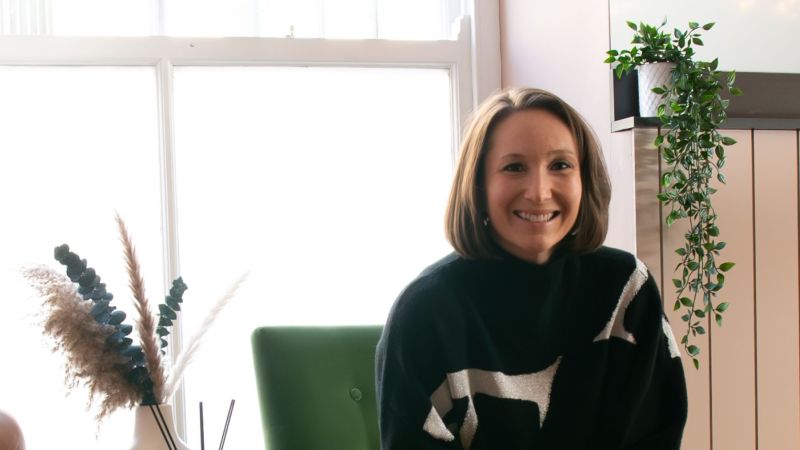
Ginny Nicholls is the founder of Interim Digital
Opinions expressed by Entrepreneur contributors are their own.
You're reading Entrepreneur United Kingdom, an international franchise of Entrepreneur Media.
As 2026 draws to a close, founders will be encouraged to set bigger targets, move faster and scale harder. My experience suggests that the most valuable place to start may be the person running the business.
At the end of every year, business owners are encouraged to look ahead. We set revenue targets, review margins, make hiring plans and decide what we want the next 12 months to deliver. The underlying assumption is usually the same: success means making the business bigger. What we rarely assess with the same rigour is the capacity of the person expected to deliver that growth. I learned that the hard way.
On 21 December 2021, I ended up in A&E with a heart rate so high that I thought I was on the verge of collapse. There had been no single catastrophic event. The truth was a much tougher pill to swallow – I had been declining slowly, ignoring the warning signs of significant burnout until my body made ignoring them impossible. A therapist later described it as my brain throwing my body a hand grenade. It was a frighteningly accurate description of what had happened and how it had felt. Reflecting back I can clearly see it happened because I had spent so long putting my business first and treating my energy as an unlimited resource that my body eventually forced the conversation I had refused to have.
That day began a five-year process of seeking mental health support, getting sober, investing in personal development and receiving an ADHD diagnosis that helped me understand how my brain worked. I stopped asking only how I could grow the business and started asking what I needed in order to grow as a person. That shift changed my health, my leadership and, unexpectedly, the commercial trajectory of the company. In 2022, Interim Digital’s revenue grew by 90.7%. The year after burnout forced me to change my priorities, the business very nearly doubled. That did not happen because personal development is a magic formula for revenue growth. It happened because understanding myself allowed me to build a business around my strengths instead of constantly forcing myself to operate in ways that depleted me.
The founder is part of the business model
Founders often talk about separating the personal from the professional, but in a founder-led business the two are inseparable. Our decisions, habits, confidence and capacity shape everything from the clients we choose to the people we trust and the opportunities we notice. My ADHD diagnosis did not change who I was, but it gave me a clearer explanation for how my brain worked. It helped me recognise why I could be brilliant at relationships, ideas and spotting connections, yet become completely overwhelmed by repetition, rigid processes and trying to hold every operational detail in my head.
Most importantly, I became more honest about what I was good at, what I was not and where my own behaviour got in the way. Once I stopped measuring myself against an imaginary perfect founder, I could make better decisions about the business I was capable of leading well. Entrepreneurship culture praises founders for pushing through. We celebrate resilience, but sometimes confuse it with endurance when the more important question is whether the way we are working is sustainable.
I stopped trying to build the agency I thought I should want
Interim began in 2017 as my freelance business. By 2021, I could see a clear gap on both sides of the market. Agencies wanted access to brilliant freelancers through one trusted point of contact, without spending years building and managing their own networks. At the same time, skilled freelancers wanted reliable additional revenue streams without having to devote all their energy to sales.
That gap became the blueprint for Interim Digital’s current model. Rather than build a traditional agency around an ever-growing payroll, I focused on the parts of business that energised me: relationships, spotting opportunities and connecting brilliant people. Around that, we built a curated network of more than 100 vetted freelancers, fractional leadership and increasingly sophisticated systems and AI-supported workflows. This was not a decision to avoid ambition, but to redefine it. I wanted to build something commercially strong that created breathing space for clients, meaningful work for freelancers and a sustainable role for me.
Since adopting the model in 2021, we have supported more than 50 agencies and brands and paid nearly £1m to freelancers. In 2026, revenue grew by 37% between January and October compared with the same period in 2025, putting us on course for a record year. We also won Independent Agency of the Year (Small) at the Prolific North Champions Awards, having built the business without full-time hires or external investment. Those results matter, but not because they prove that every founder should copy this model. They matter because they show that a business can grow after its founder stops pursuing the version of growth they have been told to want.
The real test came later
In the summer of 2025, after an initial biopsy, I was diagnosed with stage 1 melanoma. What followed was further surgery, more tests and the peculiar strain of trying to continue with ordinary life while waiting for answers that could change it. Towards the end of the year, I was incredibly fortunate to be declared cancer-free. I would never suggest that the personal work I had done made a cancer diagnosis easy. It did not. But I genuinely do not believe I would have managed my mental state, kept the business ticking over and remained present for the people around me without the work that began after the ‘day-of-the-hand-grenade’.
By then, I had learned to ask for support when I needed it both professionally and personally . The business had systems, trusted people and a model that did not depend on me delivering every piece of work. I had also learned that protecting my health was not something to do after everything else was finished. There will always be more work. Your body does not necessarily wait for a convenient gap in the diary. The diagnosis sharpened my perspective again. When your health is on the line, work problems that once felt enormous become much smaller. Responsibilities still matter, but they return to their proper scale. A difficult email is a difficult email. A delayed project is a delayed project. Neither deserves to consume your entire self or sanity.
Wellbeing is not separate from strategy
Wellbeing is often treated as something founders fit around the edges of business. That misses the point. If a company relies on its founder’s judgement, relationships and creativity, protecting that person’s ability to think clearly is a strategic issue. Burnout narrows your field of vision. It makes every problem feel urgent and every decision feel personal. It can leave you too exhausted to delegate, even when refusing to delegate is the very thing making you exhausted. Most importantly, looking after myself more seriously helped me see and feel the joy in running my business again.
The practical changes were not glamorous. After that day in 2021, the first thing I did was look at my husband and say, “I need help.” The second was to Google ‘mental health support’. What followed was hours of walking, hours of therapy, months navigating the diagnostic process and the difficult work of confronting my relationship with alcohol. There was no dramatic overnight transformation; just one small, often uncomfortable decision after another.
That personal work changed how I ran the business. I became clearer about what I should own, invested in operational support and introduced systems that reduced how much I carried mentally. I also built trusted relationships with people who could challenge me rather than simply wait for instructions. Technology is part of that design too. AI and automation can remove friction, but the goal is not to automate humanity out of the business. It is to protect time for work that needs judgement, trust, empathy and connection.
A different set of questions for 2027
As founders reflect on 2026, many will naturally focus on what the business achieved. Revenue, profitability and growth still matter. A company that cannot sustain itself will eventually fail the people who depend on it. But those numbers do not tell us whether the way we achieved them is repeatable, healthy or aligned with the life we want to lead.
Before setting another round of targets, founders should ask different questions. Which parts of the business genuinely require your strengths, and which depend on you because you struggle to let go? What gives you energy, and what repeatedly drains it? Are you building infrastructure that supports your life? If the business doubled, would your current way of working survive it? And most important of all – do you enjoy it?
The answers will look different for everyone. For some founders, putting themselves first may mean building a leadership team. For others, it may mean staying intentionally small, using fractional expertise, seeking professional support or walking away from a client whose revenue no longer justifies the personal cost. It may mean pursuing investment, or deciding that control and profitability matter more than speed. My experience is not an argument against growth. It is an argument for being more deliberate about what growth is for. A business should be able to create opportunity, security and impact without consuming the person who created it.
Five years ago, I believed that prioritising myself meant putting the business second. What I discovered was the opposite. Looking after the founder made the business clearer, stronger and more scalable because I was finally building it around reality rather than expectation. So, as we move into 2027, perhaps the most useful growth plan is not another list of things to achieve. Perhaps it begins with an honest look at the person expected to achieve them – and a decision to build a business that works for them too.
As 2026 draws to a close, founders will be encouraged to set bigger targets, move faster and scale harder. My experience suggests that the most valuable place to start may be the person running the business.
At the end of every year, business owners are encouraged to look ahead. We set revenue targets, review margins, make hiring plans and decide what we want the next 12 months to deliver. The underlying assumption is usually the same: success means making the business bigger. What we rarely assess with the same rigour is the capacity of the person expected to deliver that growth. I learned that the hard way.
On 21 December 2021, I ended up in A&E with a heart rate so high that I thought I was on the verge of collapse. There had been no single catastrophic event. The truth was a much tougher pill to swallow – I had been declining slowly, ignoring the warning signs of significant burnout until my body made ignoring them impossible. A therapist later described it as my brain throwing my body a hand grenade. It was a frighteningly accurate description of what had happened and how it had felt. Reflecting back I can clearly see it happened because I had spent so long putting my business first and treating my energy as an unlimited resource that my body eventually forced the conversation I had refused to have.

Ginny Nicholls • Founder of Interim Digital,
Ginny Nicholls is the founder of Interim Digital, a Harrogate-based digital agency built around a... Read more