The Business of Making People Feel Good
How one hospitality entrepreneur turned emotion, culture and detail into growth.
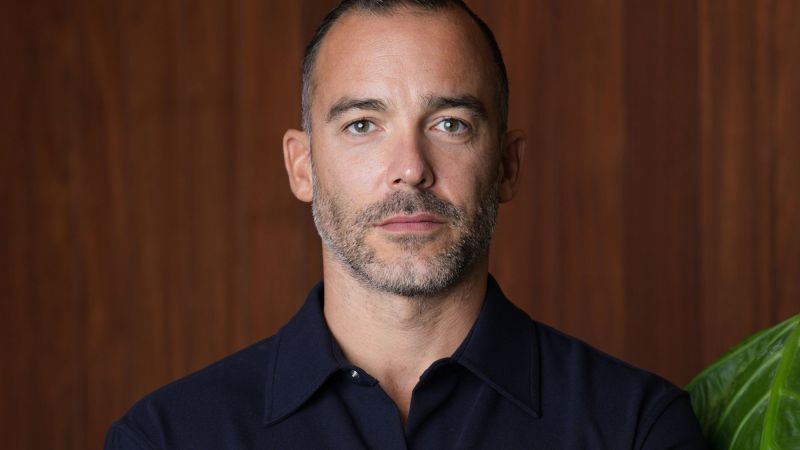
Riviera Dining Group
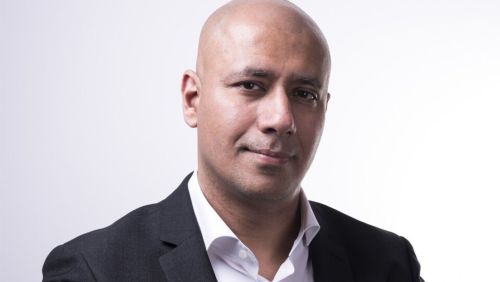
Gregory Galy, founder and CEO
Opinions expressed by Entrepreneur contributors are their own.
You're reading Entrepreneur United Kingdom, an international franchise of Entrepreneur Media.
For some, hospitality is about food. For others, it is about creating a feeling people remember long after they leave. For Riviera Dining Group founder Gregory Galy, that idea began at his mother’s table on the French Riviera and evolved through years spent working across some of the world’s most influential hospitality environments. From becoming president of Fig & Olive at just 28 to building MILA and a growing international hospitality group with his wife and co-founder, Marine, his career has been shaped by an obsession with detail, atmosphere, culture and connection. Now, as RDG looks towards new markets including New York, Las Vegas and Dubai, he explains why the real challenge of growth is not becoming bigger, but becoming better.
What did the French Riviera teach you about the art of making people feel good?
It starts with my mother. She cooked for people the way others plan a party. She was thinking about a dinner long before it happened: what to buy, who was coming, what each person liked. By the time anyone sat down, most of the work of making them happy was already done. In the South of France you grow up with markets around you. My mother took me to the Marché Forville in Cannes, and that’s where the meal started. She cooked with a purpose and with the seasons. She knew who she was cooking for, and she bought what the season was giving that week. I still remember what the tomatoes tasted like. Nobody had to teach me that a meal is decided when you shop for it. I grew up between two towns a few miles apart, and I was lucky with both. When I was a kid, Mougins was the center of the culinary world. It’s a small village, and at one point it had one of the highest concentrations of Michelin-starred restaurants in Europe. Roger Vergé had Le Moulin de Mougins there, and chefs and food lovers came from everywhere. Cannes was the other side: the glamour, the festival, the nightlife. When I was young I worked in Cannes venues like Baoli and Tantra, including for David Barokas, and that’s where I saw what music, atmosphere and the people in a room can do to a dinner, and how it becomes a whole night. I had no plan to make a career of it. Twenty years later, MILA is those two towns put together, plus everything my wife and co-founder, Marine, and I brought back from our travels, from Mykonos to Japan to St Barths.
You left France for America at 23. What did you see in American hospitality that made you want to build your career there?
I didn’t come with a plan. I came at 23 for an experience at Fig & Olive and I assumed I would go home afterwards. What I liked right away was that I could share where I come from. I mean the ingredients, the generosity, and the way a table brings people together in the South. I was proud of it. Giving that to someone who had never been to the Riviera made the job personal. The reason I stayed is Laurent, the founder. He kept giving me jobs I wasn’t sure I could do. I started as an intern, then controller, CFO, VP of operations, and finally president. He saw something in me before I did, and I didn’t want to let him down.
You became president of Fig & Olive at 28. Did that early success give you confidence, or make you more conscious of the risks of getting things wrong?
Both. Going from intern to president of a company of 1,500 people gives you confidence, of course. But Laurent made me take risk seriously from the beginning. He gave me room, and at the same time he made me think through what could go wrong and whether we were ready for it. At 28 I needed that. What I really learned there is how much organization sits behind a good restaurant. A guest comes back expecting exactly the meal and the service they loved last time. To deliver that in different cities with different teams, you need standards, training, and people who take responsibility. You can’t count on a few talented people having a good night. I also learned what culture does. How people treat each other, and whether someone dares to raise a problem, ends up at the guest’s table sooner or later. With 1,500 people, most of what happens, happens when you’re not in the room. It also showed me the limit. As president I had all the problems of an owner, but I was a very small partner, so I had little of the freedom and little of the upside. I wanted to build something that was mine. In 2016 I left.
At what point did you stop thinking of yourself as a restaurateur and start thinking of yourself as a creator of experiences?
I never stopped thinking of myself as a restaurateur. What changed was my understanding of what a restaurant could be. Early on, I was already obsessed with the entire experience: the food, the room, the music, the lighting, the energy, the way people were welcomed and how they felt when they left. Over time, I realized those elements weren’t supporting the restaurant; together, they were the product. That changed the way I thought about hospitality. We weren’t simply designing places to eat. We were creating environments people wanted to belong to, return to and associate with moments in their lives. But I also became very conscious of the danger of prioritizing experience over substance. The food and service have to earn the right for everything else to exist. You can create extraordinary energy for one night, but without operational consistency, there is no lasting brand. So I don’t see “restaurateur” and “creator of experiences” as two different things. For me, modern hospitality is the discipline of bringing all of those elements together and making them work every single night, across our different brands.
Luxury hospitality is ultimately about emotion. What is the feeling you want someone to leave an RDG restaurant with?
At this level, being good is the minimum. I want a guest to feel transported, and we work on that in ways most people never notice. MILA has its own scent. The music starts slow at dinner and builds through the night. The light changes with it. Nobody thinks about those things while they are there. They just wish the evening lasted a little longer. And the next day I want them to tell a friend, “You have to go. Actually, let’s go together.” Word of mouth is the strongest marketing we have, and you only get it when someone has something they want to talk about.
As RDG grows internationally, what is one thing you refuse to let scale change?
The level of care. When we had one restaurant we were all in the room, questioning every detail. Growing internationally can’t become the excuse for losing that. My job now is to build teams who care as much as we did, people who notice when something is off and take it personally enough to fix it. In practice that means promoting from inside. In the last year we promoted twenty leaders across the company.
Beyond the restaurants, what are you ultimately trying to build?
A community. When you look closely, that’s what a good restaurant already is. The same people come back, they bring their friends, they celebrate their birthdays with us. My mother’s table worked like that, and I think a company can too. That’s why we built MM, our members club. It’s for the guests who were already spending a big part of their life with us. A member can have lunch at the beach club at Casa Neos, dinner at MILA, finish the night in the members room, and be known in all three. One guest, many moments of their life. That is our business model, and it’s also just what hospitality has always been. It works the same way inside the company. On opening day I tell every new team that they are not employees, they are ambassadors of a lifestyle and a culture. I ask three things of everyone who joins: attention to detail, pride of ownership, and positive energy. When a team has those, the guest feels it and nobody has to explain it. I want RDG to be a reason people travel. I want it to be the place they build a weekend around, call their friends about, and book before they book the flight. We’re looking at cities like New York, Las Vegas and Dubai. But I don’t want us to be bigger for the sake of being bigger. I want us to be better as we get bigger. The test is simple. One day someone walks into one of our places on the other side of the world and feels what people felt in that first room on Lincoln Road, without knowing who built it. If that happens, we’ll have built a culture, and that’s worth more than a collection of successful restaurants.
For some, hospitality is about food. For others, it is about creating a feeling people remember long after they leave. For Riviera Dining Group founder Gregory Galy, that idea began at his mother’s table on the French Riviera and evolved through years spent working across some of the world’s most influential hospitality environments. From becoming president of Fig & Olive at just 28 to building MILA and a growing international hospitality group with his wife and co-founder, Marine, his career has been shaped by an obsession with detail, atmosphere, culture and connection. Now, as RDG looks towards new markets including New York, Las Vegas and Dubai, he explains why the real challenge of growth is not becoming bigger, but becoming better.
What did the French Riviera teach you about the art of making people feel good?
It starts with my mother. She cooked for people the way others plan a party. She was thinking about a dinner long before it happened: what to buy, who was coming, what each person liked. By the time anyone sat down, most of the work of making them happy was already done. In the South of France you grow up with markets around you. My mother took me to the Marché Forville in Cannes, and that’s where the meal started. She cooked with a purpose and with the seasons. She knew who she was cooking for, and she bought what the season was giving that week. I still remember what the tomatoes tasted like. Nobody had to teach me that a meal is decided when you shop for it. I grew up between two towns a few miles apart, and I was lucky with both. When I was a kid, Mougins was the center of the culinary world. It’s a small village, and at one point it had one of the highest concentrations of Michelin-starred restaurants in Europe. Roger Vergé had Le Moulin de Mougins there, and chefs and food lovers came from everywhere. Cannes was the other side: the glamour, the festival, the nightlife. When I was young I worked in Cannes venues like Baoli and Tantra, including for David Barokas, and that’s where I saw what music, atmosphere and the people in a room can do to a dinner, and how it becomes a whole night. I had no plan to make a career of it. Twenty years later, MILA is those two towns put together, plus everything my wife and co-founder, Marine, and I brought back from our travels, from Mykonos to Japan to St Barths.
You left France for America at 23. What did you see in American hospitality that made you want to build your career there?
I didn’t come with a plan. I came at 23 for an experience at Fig & Olive and I assumed I would go home afterwards. What I liked right away was that I could share where I come from. I mean the ingredients, the generosity, and the way a table brings people together in the South. I was proud of it. Giving that to someone who had never been to the Riviera made the job personal. The reason I stayed is Laurent, the founder. He kept giving me jobs I wasn’t sure I could do. I started as an intern, then controller, CFO, VP of operations, and finally president. He saw something in me before I did, and I didn’t want to let him down.

Patricia Cullen • Features Writer
Entrepreneur Staff