Think Global, Act Local
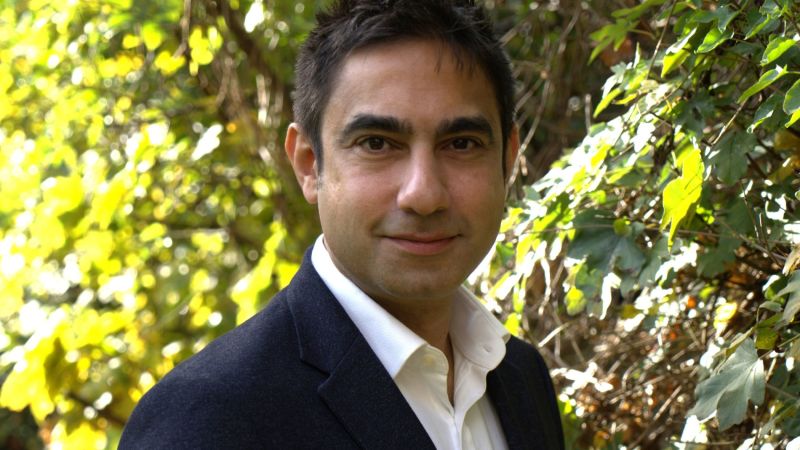
Salman Shaheen explains why global PR success depends on local thinking.
Opinions expressed by Entrepreneur contributors are their own.
You're reading Entrepreneur United Kingdom, an international franchise of Entrepreneur Media.
For Salman Shaheen, building a global business was never the plan. A journalist for a decade before moving into communications, he eventually became Chief Communications Officer at T4 Education, where he learned a crucial lesson about international growth: global success depends on thinking locally. “I was a journalist for a decade, before turning to the dark side,” he says. Based in London, Shaheen already had strong relationships with UK journalists. But T4 Education operated across dozens of markets, so he built a global team of PR experts in around 50 countries. Campaign strategies and messaging were developed centrally, while stories were pitched locally by people who understood their markets. “I’ve learned that there is no one-size-fits-all model if you want to do global PR well,” he says.
The results were significant. In 2024 alone, the team secured almost 4,000 articles for T4 Education in major news outlets, with a combined readership reach of 11.6bn. For Shaheen, the lesson extends far beyond communications. Entrepreneurs expanding internationally can easily assume that what works at home will work elsewhere. “A lot of companies and organisations that may be sitting on a gold mine of potential news stories across many different countries don’t stick the landing because they just put out one generic global press release from their HQ in London or San Francisco,” he says. The answer is localisation: “Telling bespoke stories, tailoring them to all the different individual markets, based on local knowledge, understanding what journalists are looking for in those countries and what’s going to cut through, and then pitching locally with a local PR expert.”
That experience eventually led to Carter Fleet, the global PR business Shaheen now leads. The company emerged almost by accident. Other organisations began approaching T4 Education after seeing what its global communications operation was achieving and asking whether the team could work with them. “Initially, we kept having to say no, because T4 Education wasn’t a PR firm,” he recalls. “But over time, it dawned on us that we’d ended up building a PR firm without ever intending to.” Shaheen eventually partnered with Vikas Pota, founder and CEO of T4 Education and executive chair of the Education Leaders Forum, to turn that unexpected opportunity into a business. Carter Fleet has been selective about the organisations it represents. For Shaheen, effective PR starts with believing in the story. “Despite the reputation of PRs for being soulless, I believe you have to believe in the story you’re telling to tell it well,” he says. “We specialise in telling good stories about good people and good organisations who are doing good, and we make them look good.”
His experience at T4 Education demonstrated how a local story can become an international one when given the right platform. The World’s Best School Prizes uncovered stories including a Polish school educating Ukrainian refugees and helping prepare them to rebuild their country after the war. The team arranged for BBC World and the Telegraph to visit, giving the school a global platform. In Soweto, children danced in the streets when their school won. In Chile, a winning school attracted a visit from the country’s president, who announced a new policy to scale up its work. “By telling these stories, and gaining international media coverage, we are able to spread their best practices and help improve education,” Shaheen says. The challenge of getting noticed has only increased as the media landscape has become more crowded. Shaheen points out that there are now six PR professionals for every journalist, with reporters potentially receiving hundreds of press releases every day. “They are looking for a news story,” he says. “Finding the way in – to make what you’re doing news – is the magic of good PR.” It is also why Shaheen believes relationships will remain valuable as AI changes communications. “Having good contacts who will pick up the phone to you” remains vital, he says. “With all the changes being brought about by AI, that’s something a machine can never replace.”
Carter Fleet is now applying the same principles to its own expansion. The business remains bootstrapped and profitable, with much of its growth coming through word of mouth. In 2026, it worked on global PR for organisations including Cambridge University Press & Assessment’s Partnership for Education team, HP and AIA, with plans to steadily expand its client base and team in 2027. For Shaheen, going global is not simply about getting bigger. It is about knowing what should remain consistent and what needs to change. “In PR, as in journalism, you’re only as good as your last story,” he says. For entrepreneurs looking beyond their home market, his experience offers a simple lesson: global ambition needs local understanding.
For Salman Shaheen, building a global business was never the plan. A journalist for a decade before moving into communications, he eventually became Chief Communications Officer at T4 Education, where he learned a crucial lesson about international growth: global success depends on thinking locally. “I was a journalist for a decade, before turning to the dark side,” he says. Based in London, Shaheen already had strong relationships with UK journalists. But T4 Education operated across dozens of markets, so he built a global team of PR experts in around 50 countries. Campaign strategies and messaging were developed centrally, while stories were pitched locally by people who understood their markets. “I’ve learned that there is no one-size-fits-all model if you want to do global PR well,” he says.
The results were significant. In 2024 alone, the team secured almost 4,000 articles for T4 Education in major news outlets, with a combined readership reach of 11.6bn. For Shaheen, the lesson extends far beyond communications. Entrepreneurs expanding internationally can easily assume that what works at home will work elsewhere. “A lot of companies and organisations that may be sitting on a gold mine of potential news stories across many different countries don’t stick the landing because they just put out one generic global press release from their HQ in London or San Francisco,” he says. The answer is localisation: “Telling bespoke stories, tailoring them to all the different individual markets, based on local knowledge, understanding what journalists are looking for in those countries and what’s going to cut through, and then pitching locally with a local PR expert.”
That experience eventually led to Carter Fleet, the global PR business Shaheen now leads. The company emerged almost by accident. Other organisations began approaching T4 Education after seeing what its global communications operation was achieving and asking whether the team could work with them. “Initially, we kept having to say no, because T4 Education wasn’t a PR firm,” he recalls. “But over time, it dawned on us that we’d ended up building a PR firm without ever intending to.” Shaheen eventually partnered with Vikas Pota, founder and CEO of T4 Education and executive chair of the Education Leaders Forum, to turn that unexpected opportunity into a business. Carter Fleet has been selective about the organisations it represents. For Shaheen, effective PR starts with believing in the story. “Despite the reputation of PRs for being soulless, I believe you have to believe in the story you’re telling to tell it well,” he says. “We specialise in telling good stories about good people and good organisations who are doing good, and we make them look good.”