Entrepreneurs Spend Years Building Wealth. But Are They Building the Life They Actually Want?
Bigger revenue, more employees, and faster growth do not always mean better or stronger business. In my experience, the strongest and most successful businesses are the ones that grow organically, at a slower pace, whilst remaining true to their founder’s value system.
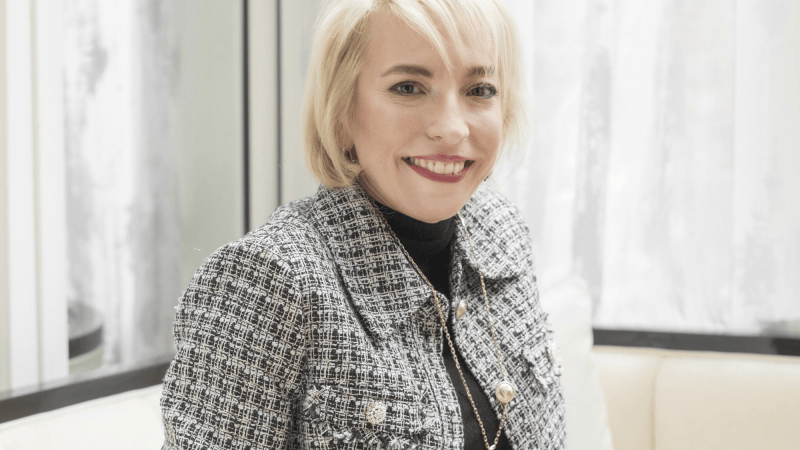
Maria Psarra
Opinions expressed by Entrepreneur contributors are their own.
You're reading Entrepreneur United Kingdom, an international franchise of Entrepreneur Media.
I did not grow up dreaming of becoming an entrepreneur; quite the contrary. Because both of my parents ran their own businesses, I saw firsthand the crushing stress and long hours they endured. As a child and teenager, I wanted no part of that lifestyle. I often wished they had more time to spend with me, and I convinced myself that I would find more happiness and stability as someone else’s employee.
This was, of course, an era before social media began glorifying the hustle. We didn’t yet have algorithms feeding us videos of twenty-something influencers cruising the world on yachts, sipping champagne against endless sunsets, and surrounded by an adoring, impossibly attractive entourage. There were no feeds showcasing overnight successes driving red Ferraris through the streets of Monte Carlo, all supposedly funded by a frictionless entrepreneurial journey before the age of 30. My view of business wasn’t shaped by a digital illusion; it was shaped by reality.
In many ways, my generation was incredibly fortunate to escape this digital mirage. We never mistook a carefully curated illusion for the true reality of entrepreneurship, because the version sold online simply does not exist. A fantasy built on instant gratification, overnight wealth, and endless leisure, completely detached from stress, grit, or perseverance, is entirely unrecognisable to me. It is a version that no actual business owner I have ever met, myself included, has ever witnessed
I founded Iris for three core reasons. First, I possess a strong personality and am fundamentally incapable of pretending to agree with things I do not believe in, let alone acting against my own judgment, a trait that, in my experience, made me the worst employee an employer could ever have. Second, I wanted a business that stood as an authentic extension of who I am, built entirely around my personal value system. Finally, I wanted to build a company designed to support the life I actually want to live, rather than letting the business dictate my life.
Over the years, I have worked alongside countless other founders, and I have found that they almost always share these exact drivers. While not everyone is burdened with an unyielding, uncooperative personality like mine, every successful founder I know is anchored by those last two pillars: a commitment to personal values, and a clear vision for the life they want to build. Tying us all together is a fierce desire to achieve our goals and an unrelenting perseverance along the way.
The brutal truth of this industry is that if you lack a vivid vision for your future,, or if you falter when things inevitably deviate from the script, you simply will not survive. Statistics often remind us that roughly 80% of businesses fail within their first few years, and the root cause is rarely a bad idea. It is a lack of the sheer endurance required to navigate the gap between expectation and reality.
Yet, this very grit can easily morph into a trap, leading founders to sacrifice the exact freedom and lifestyle they set out to achieve. It is incredibly easy to fall into the trap of growth for the sake of growth, a doctrine fed to us by an echo chamber demanding more clients, more staff, and escalating revenue. We are conditioned to believe that if a business isn’t expanding, it is failing. But having operated within organisations that achieved this kind of externally praised, hyper-growth, only to internally fracture and lose their cohesion, I know firsthand that this is neither the only path nor the most successful one.
Bigger revenue, more employees, and faster growth do not always mean better or stronger business. In my experience, the strongest and most successful businesses are the ones that grow organically, at a slower pace, whilst remaining true to their founder’s value system. It is those that feel like a family to the employees and founders, even when an employee chooses to move on one day.
Businesses differ in what they do, and I have always worked in service-based businesses. The first two years of running Iris Wealth Management were extremely difficult. There simply weren’t enough hours to manage operations, advise clients, and maintain a personal life. Eventually, proper structuring and delegation freed up my time, only to bring me to a critical crossroads. Pursue relentless expansion or protect my personal freedom. It is a choice I still face regularly, forcing me to constantly remind myself of my original purpose: to build a business that serves my life, rather than a life that serves my business
Ultimately, every entrepreneur must define what success truly means to them, ideally long before they actually achieve it. Without a clear baseline, you fall into a relentless cycle of chasing the next milestone without ever knowing why. You must understand the exact amount of personal time you are willing to trade for incremental revenue, and honestly assess what that extra revenue will actually buy. There are no right or wrong answers here, only differing life circumstances, wishes, and needs. Yet, beneath it all lies a single, overarching prerequisite: clarity. You must have absolute clarity on what success looks like on both a personal and a business level.
True entrepreneurial success must be measured by a double bottom line. Financial viability and personal fulfillment. For me, that fulfillment isn’t found in a profit margin, but in the freedom Iris affords me to build meaningful financial plans for our clients, to push our team to realise their potential, and to leverage our resources to support those less fortunate.
Most importantly, it gives me the time to be present with the people I love. These are the metrics that actually matter. Before you blindly chase the next milestone, you must choose your own metrics. If your business isn’t actively buying back your freedom and funding a life of purpose, it isn’t succeeding; it is just consuming you.
I did not grow up dreaming of becoming an entrepreneur; quite the contrary. Because both of my parents ran their own businesses, I saw firsthand the crushing stress and long hours they endured. As a child and teenager, I wanted no part of that lifestyle. I often wished they had more time to spend with me, and I convinced myself that I would find more happiness and stability as someone else’s employee.
This was, of course, an era before social media began glorifying the hustle. We didn’t yet have algorithms feeding us videos of twenty-something influencers cruising the world on yachts, sipping champagne against endless sunsets, and surrounded by an adoring, impossibly attractive entourage. There were no feeds showcasing overnight successes driving red Ferraris through the streets of Monte Carlo, all supposedly funded by a frictionless entrepreneurial journey before the age of 30. My view of business wasn’t shaped by a digital illusion; it was shaped by reality.
In many ways, my generation was incredibly fortunate to escape this digital mirage. We never mistook a carefully curated illusion for the true reality of entrepreneurship, because the version sold online simply does not exist. A fantasy built on instant gratification, overnight wealth, and endless leisure, completely detached from stress, grit, or perseverance, is entirely unrecognisable to me. It is a version that no actual business owner I have ever met, myself included, has ever witnessed