From artificial hype to neurosymbolic intelligence
Pebbles Ai uses neurosymbolic AI to help SMEs improve commercial results.
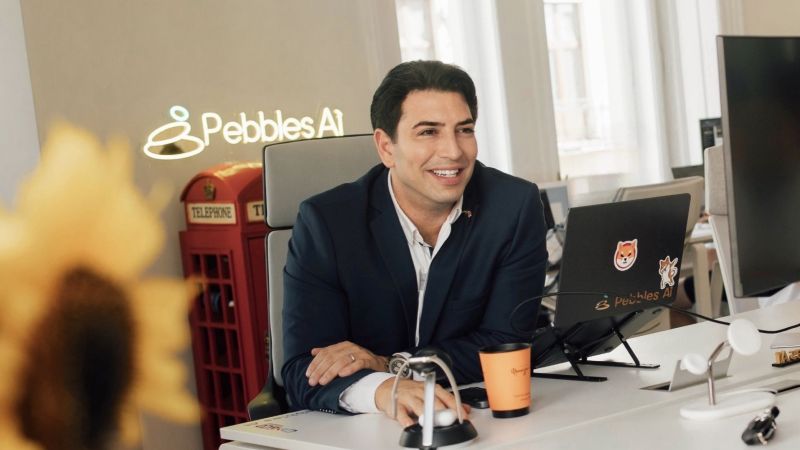
Pebbles Ai
Founder Emin Can Turan
Opinions expressed by Entrepreneur contributors are their own.
You're reading Entrepreneur United Kingdom, an international franchise of Entrepreneur Media.
As businesses struggle to turn AI spending into profit, Entrepreneur UK’s start-up 100 entrant Pebbles Ai has built its platform on a reasoning system of its own.
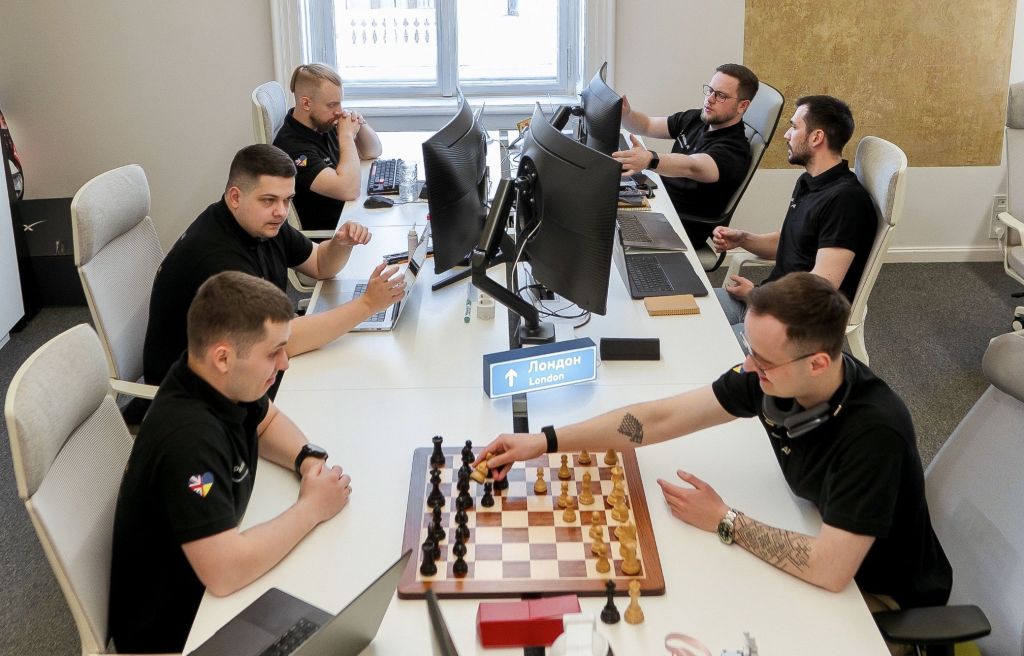
The AI billions are going nowhere. Can a different kind of intelligence change that? MIT’s NANDA initiative found that 95% of organisations had seen no measurable effect on profits from generative AI. Gartner calls this the AI adoption gap. Pebbles Ai says it has spent three years developing a different approach: neurosymbolic AI, which combines generative models with rule-based reasoning. Founder Emin Can Turan’s company sells a Go-to-Market Operating System (GTMOS™) designed to bring strategy, marketing and sales together for small and mid-sized businesses. Pebbles Ai is based in London, with a technology office in Lviv, western Ukraine, and will soon open an office in Singapore, led by Vera Lynn, a former Goldman Sachs executive.
Built for the many, not the few
The idea took shape after a chance conversation with OpenAI’s Sam Altman in London in 2023. “What I understood was that these models were being built to solve problems for the many, not complex problems for the few,” Turan says. “That left the complex industries wide open. A frontier model will give you the best recipe for grandma’s lasagna. What it will not do is create a B2B marketing campaign that actually moves the commercial needle.” Ask a chatbot where to put next year’s marketing budget, he adds, and you get a different answer each time, all of them convincing. “Last time I checked, that is also how horoscopes are written.”
The top 1% do not post their playbooks
According to the Pebbles Ai team, its rules draw on fields including behavioural economics, communication and persuasion science, and they cover more than 1,000 commercial use cases with added heuristics. “The secret sauce in business is not on the internet,” says Dmytro Antoniuk, Chief AI Officer at Pebbles Ai. “It sits in the heads of the top 1% of domain experts, or behind locked doors at the likes of McKinsey and Google.” General-purpose frontier models such as ChatGPT and Claude are trained mostly on public data. “That is why, from what we observe, they and the tools wrapped around them struggle with complex go-to-market workflows.”
Who else has read your pipeline?
There is another risk for businesses: employees putting confidential information into public AI tools. Someone in finance pastes next year’s budget into a free chatbot. Someone in sales uploads the pipeline, customer names and all. “Picture an employee who is charming and well-spoken, but cannot explain a single decision, gives a different answer every time you ask, and opens sensitive company files in Starbucks,” Turan says. “Instead of firing him, we have given him a login and a bigger coffee budget.” Pebbles Ai says it keeps each customer’s data separate and does not use it to train models. “We use science, not customer data,” Turan says. Stephan Mulders, a senior attorney at Blenheim Lawyers in Amsterdam whose doctorate focused on GDPR, says his firm uses the platform for its marketing. “Within minutes I had a concrete target audience analysis without endangering our firm,” he says. “That is exactly what you would get from a consultant working under a strict NDA, and you would normally pay €20,000 for it.”
Smarter, steadier, cheaper than a flat white
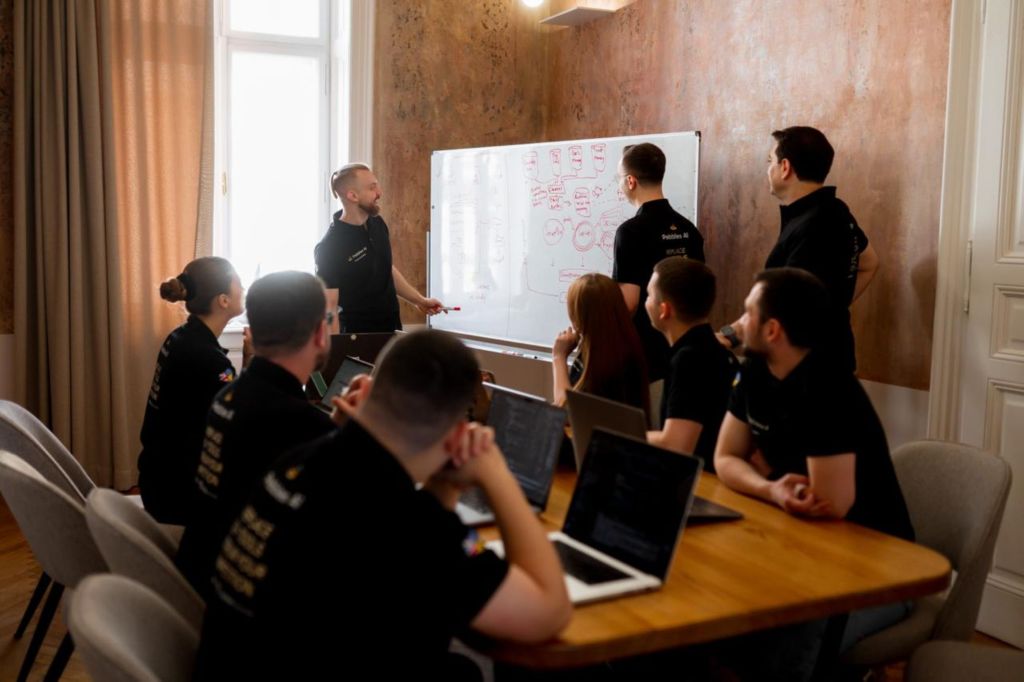
Neurosymbolic AI is not new. In 2024, DeepMind’s AlphaGeometry paired a neural model that proposed solutions to geometry problems with a symbolic system that checked them. It solved 25 of 30 Olympiad geometry problems, close to the average gold medallist’s score. Pebbles Ai says it is the first to apply the same principle to go-to-market. It says it assesses its output for accuracy (truth-alignment), precision (consistency) and efficacy (results). On tasks covered by its rule engine, the team says roughly one answer in 33 is now imprecise. Turan expects that to fall below one in 100 next year. Reliability is one half of the neurosymbolic story. The other is cost. Turan says a market-entry strategy produced with a frontier model costs £52. On Pebbles Ai, he says, it costs £2.15 in a single pass, without cursing at a screen for three hours.
More than a shopping trolley with a Ferrari badge
Turan says he coined the term GTMOS in 2024, and Pebbles Ai has trademarked it. Others have since landed on the same idea. Apollo, the sales platform with millions of users, said in March this year that it aims to build “the leading AI-native operating system for go-to-market teams”. Turan is flattered, and sees it as a sign the category has arrived. His wider point is about the whole market: an operating system is only as good as the technology underneath it. “Big players in the industry want to build an operating system now. Fair enough. But an operating system without a neurosymbolic engine underneath is a shopping trolley with a Ferrari badge. Somebody still has to push it.” In his view, platform capabilities are useless without proper domain-specific neurosymbolic intelligence. What you get instead: strategies built on randomised probability, marketing campaigns that serve up AI slop, and lead generation that burns contact credits on people you think are your target audience, but aren’t. This is why the team at Pebbles Ai took the opposite approach. While everyone was building platform capabilities first, Pebbles Ai focused on building intelligence that can emulate the expertise, skills and judgement of the top 1%. Essentially levelling the playing field by giving small and mid-sized businesses access to worldclass GTM intelligence.
Fluent in Dutch directness
The result, Turan explains, is a reasoning system reliable enough to run go-to-market workflows autonomously, and one that challenges its users instead of telling them what they want to hear. “It is not designed to agree with you. If you are doing something idiotic, it says so,” he says. It is an unfashionable pitch in an industry built on flattery. Turan says this raises the odds of success and cuts the three costs small and mid-sized businesses feel most: wasted time, burned money and missed opportunities. It also cuts a fourth cost they rarely count, which is damage to team morale. “We cannot stroke your ego and make you successful at the same time,” he says. “If you want blind validation, an all-purpose frontier model is your thing. If you want to win, Pebbles Ai is your pick.” The commercial needle starts moving at trypebbles.ai. Grandma’s lasagna not included.
As businesses struggle to turn AI spending into profit, Entrepreneur UK’s start-up 100 entrant Pebbles Ai has built its platform on a reasoning system of its own.
The AI billions are going nowhere. Can a different kind of intelligence change that? MIT’s NANDA initiative found that 95% of organisations had seen no measurable effect on profits from generative AI. Gartner calls this the AI adoption gap. Pebbles Ai says it has spent three years developing a different approach: neurosymbolic AI, which combines generative models with rule-based reasoning. Founder Emin Can Turan’s company sells a Go-to-Market Operating System (GTMOS™) designed to bring strategy, marketing and sales together for small and mid-sized businesses. Pebbles Ai is based in London, with a technology office in Lviv, western Ukraine, and will soon open an office in Singapore, led by Vera Lynn, a former Goldman Sachs executive.
Built for the many, not the few
The idea took shape after a chance conversation with OpenAI’s Sam Altman in London in 2023. “What I understood was that these models were being built to solve problems for the many, not complex problems for the few,” Turan says. “That left the complex industries wide open. A frontier model will give you the best recipe for grandma’s lasagna. What it will not do is create a B2B marketing campaign that actually moves the commercial needle.” Ask a chatbot where to put next year’s marketing budget, he adds, and you get a different answer each time, all of them convincing. “Last time I checked, that is also how horoscopes are written.”

Patricia Cullen • Features Writer
Entrepreneur Staff