From Conflict Zones to Corporate Security: How Crownox Built a Crisis Response Model Shaped by Real-World Conditions

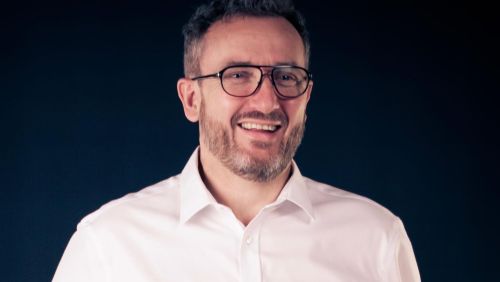
Hussein Edin, Founder of Crownox
Crisis response organizations are often defined by the environments in which they are built. For Crownox, a global security and emergency logistics firm, that foundation was shaped in regions where unpredictability was part of daily operations. Over time, this experience evolved into a model that now supports multinational companies, financial institutions, and large-scale operations navigating complex environments.
Hussein Nasser Eddin, founder of Crownox, explains that the company’s early work was closely tied to supporting press and humanitarian efforts in areas where conditions could shift rapidly. According to him, these environments required teams to operate with limited infrastructure, adapt to changing conditions, and maintain coordination across multiple stakeholders. That early exposure, he notes, influenced how the organization approached both planning and execution as it expanded.
As Crownox grew, its work extended into corporate security, supporting Fortune 500 companies, energy firms, and international organizations operating across the Middle East and North Africa. Nasser Eddin frames this phase as one where the company developed capabilities in executive protection, large-scale event security, and operational support for complex projects. He adds that working with global companies introduced new expectations around structure, communication, and consistency across regions.
This expansion created a turning point in how the company approached infrastructure. According to Nasser Eddin, certain contracts required continuous monitoring, regional coordination, and the ability to respond across multiple countries at any given time. In response, Crownox developed a centralized operations center, established regional teams, and built internal systems to manage logistics and communication in real time. He notes that financial readiness also became a critical component, requiring the ability to mobilize resources quickly when situations evolved.
“These systems were built over time because the work required them,” he explains. “The infrastructure came before the demand reached its current scale.”
That preparation became increasingly relevant as global conditions shifted. From Nasser Eddin’s perspective, recent events redirected the company’s capabilities toward emergency response and cross-border evacuations. In fact, this year Crownox was able to operate across approximately 10 countries over a two to three-week period, successfully moving more than 4,500 people, a milestone accomplished by few in this industry. He explains that organizations operating internationally began to reassess how they manage risk, particularly when large groups of employees needed to move across borders within short timeframes.
“What distinguishes this transition is the combination of environments the company has operated within,” Nasser Eddin says. “Crownox has supported corporate clients in structured settings while also working in regions where conditions are less predictable.” According to him, this dual exposure has shaped how teams approach both planning and execution, particularly when managing individuals with different expectations and circumstances.
“We have worked in environments where precision and structure are expected, and in others where conditions change constantly,” he says. “Understanding both contexts helps inform how decisions are made during complex operations.”
This perspective is reflected in how teams are selected and deployed. Nasser Eddin emphasizes that operations rely on individuals who are vetted and trained rather than assembled at short notice. He explains that maintaining continuity within teams allows for greater consistency in communication and decision-making, particularly when operating under pressure. In some cases, he notes, additional resources are allocated to ensure that experienced personnel are present throughout an operation.
The human element also plays a significant role in how services are delivered. According to Nasser Eddin, individuals involved in these situations may be navigating uncertainty, stress, or unfamiliar environments. He explains that managing these factors requires more than logistical coordination, involving communication that is clear, measured, and responsive to the needs of those involved.
Nasser Eddin adds that maintaining transparency, including around operational decisions and associated costs, contributes to how trust is established. “Trust is developed over time through both experience and consistency,” he notes. “Clients often evaluate a provider based on how they perform during critical moments, particularly when timelines are compressed, and decisions carry immediate consequences, shaping our reputation through repeated interactions rather than isolated outcomes.”
Looking ahead, Nasser Eddin frames the company’s direction as an extension of how it has evolved. He explains that the goal is to expand its capabilities globally while maintaining the systems that have supported its operations to date. This includes strengthening coordination across teams, refining operational processes, and adapting to changing conditions in real time.
The trajectory of Crownox reflects a broader shift within the security landscape, where preparation, coordination, and adaptability are becoming central to how organizations operate globally. According to Nasser Eddin, the ability to respond effectively is shaped long before a crisis occurs, through systems that are built, tested, and refined over time.
“We don’t measure our work by how we respond when something goes wrong,” he says. “We measure it by whether people are already prepared by the time the crisis reaches them.”
Crisis response organizations are often defined by the environments in which they are built. For Crownox, a global security and emergency logistics firm, that foundation was shaped in regions where unpredictability was part of daily operations. Over time, this experience evolved into a model that now supports multinational companies, financial institutions, and large-scale operations navigating complex environments.
Hussein Nasser Eddin, founder of Crownox, explains that the company’s early work was closely tied to supporting press and humanitarian efforts in areas where conditions could shift rapidly. According to him, these environments required teams to operate with limited infrastructure, adapt to changing conditions, and maintain coordination across multiple stakeholders. That early exposure, he notes, influenced how the organization approached both planning and execution as it expanded.
As Crownox grew, its work extended into corporate security, supporting Fortune 500 companies, energy firms, and international organizations operating across the Middle East and North Africa. Nasser Eddin frames this phase as one where the company developed capabilities in executive protection, large-scale event security, and operational support for complex projects. He adds that working with global companies introduced new expectations around structure, communication, and consistency across regions.