Going Global
NatWest insights on scaling UK startups into global markets successfully

NatWest
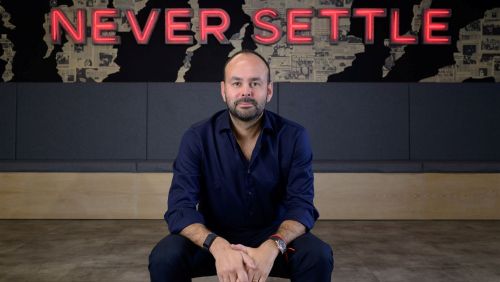
Jenny Edwards heads up NatWest’s new Venture Banking team
Opinions expressed by Entrepreneur contributors are their own.
You're reading Entrepreneur United Kingdom, an international franchise of Entrepreneur Media.
Expanding internationally has become a defining ambition for many UK start-ups – but knowing when and how to take that leap remains one of the most complex decisions founders face. For Jenny Edwards, Head of Venture Banking at NatWest, global expansion is less about a single signal and more about a combination of readiness, discipline, and evidence.
On what it takes to know when a company is ready to scale beyond the UK, Edwards is clear that there is no one trigger. “There isn’t a single signal, it’s usually a combination of factors coming together. Strong product market fit and a repeatable commercial model in the UK are important foundations, but just as critical is evidence that the problem you’re solving exists beyond your home market. We also look for operational readiness, whether the team, infrastructure, and capital are in place to support expansion, and a clear sense of where and why the business can win internationally.”
But even when the timing feels right, international expansion is often where founders make critical mistakes – particularly around how well they understand new markets. “Underestimating localisation. Founders often assume what worked in the UK will translate overseas, but differences in regulation, culture, pricing expectations, and distribution channels can be significant. The biggest mistake is expanding too quickly without deeply understanding the new market – or without local expertise on the ground.”
Despite the risks, many UK founders are increasingly thinking globally from the outset. However, Edwards notes that the most successful companies strike a careful balance between ambition and discipline. “Many founders we work with have a global mindset from day one. Designing products, teams, and infrastructure that can scale internationally. At the same time, there’s a healthy level of caution in the current environment with many founders being more deliberate about when and where they expand. The most effective approach sits somewhere in the middle: being ‘global by design’ in how you build the business, while staying disciplined about timing, expanding when there’s clear evidence you can win.”
At NatWest, she says, several clear trends are emerging among companies that are actively expanding abroad – particularly around capital efficiency, market selection, and partnership-driven growth. “Three trends stand out. First, a shift towards capital-efficient expansion – founders are being more disciplined about when and where they scale. Second, increased focus on nearby or culturally aligned markets as stepping stones, particularly across Europe. Third, a growing use of partnerships—whether distribution, strategic, or financial – to reduce risk when entering new regions. Alongside this, there’s a quiet but growing emphasis on building resilience into international growth plans, particularly across supply chains, with more founders investing in the talent and technology needed to improve forecasting, manage uncertainty, and scale sustainably.”
Beyond funding, she emphasises that NatWest’s role is increasingly about enabling connections and reducing friction for founders entering new markets. “We support founders beyond just capital. That includes access to international banking infrastructure, trade and FX expertise, and local market insights, as well as introductions – to investors, partners, and advisors in the UK and in key regions internationally. Increasingly, our role is to act as a connector, helping founders de-risk expansion by tapping into trusted networks and making practical commercial connections, including to local businesses through organisations such as the British Chambers of Commerce and programmes like the NatWest Accelerator.”
She also highlights the role of international partnerships in helping UK companies enter highly competitive markets such as the United States. “NatWest Venture Banking is also leveraging its IBOS partnership to streamline US expansion with Silicon Valley Bank, A First Citizens Company, enabling clients to tap into the US Innovation Economy ecosystem through seamless onboarding, valuable networks, and tailored support to scale with confidence.”
So what separates companies that succeed globally from those that stall? “Clarity and discipline. The companies that succeed are laser-focused on where they can win – and just as importantly, where they won’t compete yet. They invest early in the right leadership, particularly locally, and they maintain financial discipline as they scale. Those that stall often spread themselves too thin or underestimate the operational complexity of managing multiple markets.” Capital, she adds, does not determine the outcome – but it fundamentally changes the way companies can approach risk. “Capital doesn’t guarantee success, but it buys optionality. It allows companies to invest ahead of revenue in new markets – whether in hiring, marketing, or infrastructure. Crucially, it also provides resilience. International expansion rarely goes exactly to plan, so having the financial headroom to adapt is often what separates success from retreat.”
Yet even with funding and strategy in place, one factor consistently determines whether expansion succeeds or fails. “Hiring the right local leadership. You can have a strong product and a well-funded strategy, but without people who truly understand the market, its customers, nuances, and networks, execution will fall short. It’s often the difference between traction and stagnation.” And for founders feeling pressure to scale quickly, her final reflection cuts against the instinct to move fast at all costs. “Slower can be faster. There’s often pressure to expand quickly to signal growth, but premature expansion can destroy value. Taking the time to deeply understand one or two markets – and getting them right – often leads to stronger, more sustainable global growth than trying to scale everywhere at once.”
Expanding internationally has become a defining ambition for many UK start-ups – but knowing when and how to take that leap remains one of the most complex decisions founders face. For Jenny Edwards, Head of Venture Banking at NatWest, global expansion is less about a single signal and more about a combination of readiness, discipline, and evidence.
On what it takes to know when a company is ready to scale beyond the UK, Edwards is clear that there is no one trigger. “There isn’t a single signal, it’s usually a combination of factors coming together. Strong product market fit and a repeatable commercial model in the UK are important foundations, but just as critical is evidence that the problem you’re solving exists beyond your home market. We also look for operational readiness, whether the team, infrastructure, and capital are in place to support expansion, and a clear sense of where and why the business can win internationally.”
But even when the timing feels right, international expansion is often where founders make critical mistakes – particularly around how well they understand new markets. “Underestimating localisation. Founders often assume what worked in the UK will translate overseas, but differences in regulation, culture, pricing expectations, and distribution channels can be significant. The biggest mistake is expanding too quickly without deeply understanding the new market – or without local expertise on the ground.”

Patricia Cullen • Features Writer
Entrepreneur Staff