How businesses can balance AI innovation with effective riskmanagement
AI adoption surges, forcing businesses to balance innovation with risk

LaunchLemonade
Cien Solon, CEO and founder of no-code AI platform LaunchLemonade
Opinions expressed by Entrepreneur contributors are their own.
You're reading Entrepreneur United Kingdom, an international franchise of Entrepreneur Media.
AI adoption has accelerated across industries and the tension between innovation and risk management has become one of the defining business challenges of 2026. In Allianz’s recent risk report, AI now ranks among the top global corporate risks, and governments and regulators are racing and adapting legislation to put guardrails around the technology. For businesses, they are left to grapple with how they can innovate quickly while managing the real risks it can introduce. Here, five experts examine a different dimension of responsible AI adoption, and how a multi-faceted approach ensures safer yet innovative AI-integrated businesses.
Overcoming AI building fears
Many organisations don’t struggle with AI because of the technology itself, but because of how complex they believe it to be. CEO and Founder of no-code AI platform LaunchLemonade, Cien Solon, highlights a clear behavioural gap: “people are comfortable using plug-and-play AI tools, yet hesitate when it comes to building with them. That hesitation often comes from perceived risk, unclear boundaries and a lack of understanding about how these systems actually work.” Solon specifies that the shift starts by reducing cognitive load. AI development doesn’t need to mean open-ended experimentation or black-box systems. “When organisations introduce clear guardrails, defined use cases and simple design principles, teams gain the confidence to engage. It becomes less about “building AI” and more about improving workflows with well-understood components.” Misuse often stems from misunderstanding, rather than intent. By making AI accessible and structured, organisations can unlock innovation safely. Solon finishes by saying “The goal is to move teams from intimidation to familiarity, because once people understand where AI adds value, they’re far more willing to build with it responsibly.”
Why governance-first AI is the fastest route
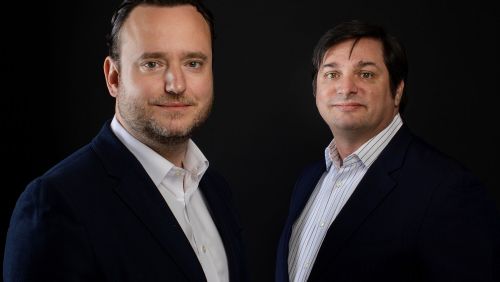
The organisations moving fastest with AI are not those cutting corners but those embedding governance from the outset. Seb Kirk, CEO and Co-founder of AI solutions platform GaiaLens, explains that high-risk AI demands that every outcome is explainable, traceable and auditable. “These are not optional features – they’re the foundation for trust, safety and scalability,” Kirk emphasises. When governance is built into the design process from day one, innovation accelerates because teams can move forward with confidence, rather than constantly revisiting risk, compliance or data quality issues. Kirk highlights how, at scale, success depends less on model performance and more on whether AI can be reliably embedded into core workflows. “Strong governance frameworks, covering data lineage, oversight and accountability, ensure systems remain aligned with business objectives and regulatory expectations. Without them, even technically strong models fail to deliver value.” Ultimately, governance is not a constraint on innovation – it is what makes innovation sustainable. Kirk concludes, ‘By reducing work, increasing trust and enabling measurable ROI, governance-first AI becomes the fastest path from experimentation to real-world impact.”

Managing the human leadership gap
AI is amplifying productivity, but it is also exposing a widening human leadership gap. As leadership coach and author of POTENTIAL-ize, Andrew Bryant highlights, it is the lack of self-leadership, judgement and confidence of the people deploying AI that limits innovation. “AI can amplify leadership, but multiplying something by zero still yields zero.” Bryant goes on to explain how, when balancing innovation and risk management, human accountability, ethical judgment and courage acting under pressure can’t be replaced by AI – “without those qualities, productivity gains risk becoming noise rather than meaningful progress.” Closing this gap requires intentional development. Leaders must build self-awareness, values-based decision-making, and the ability to create environments where people can safely integrate AI into their work. Bryant states: “Strong human leadership births manageable risk and greater innovation – the organisations that succeed with AI will be those with leaders who are invested in developing the irreplaceably human aspects of their people as they adopt AI.”

Maximising Influence in an AI-centric world
Performance coach and negotiation expert Tim Castle explains that balancing the risks and innovative potential of AI comes down to maximising influence amongst team members, fostering a new professional archetype: “the hybrid negotiator.” “Mastering influence today requires blending emotional intelligence, psychology, and AI, without losing human judgment. Over-reliance on AI can dilute confidence and intuition; its real strength lies in cutting through noise, uncovering patterns, and sharpening strategy, but not making final decisions.” Castle reiterates that influence, especially in negotiation, is inherently human. “Trust, connection, and shared understanding are built through experience and emotional awareness, not algorithms.” While AI can generate options and optimise language, it cannot fully grasp nuance, intent, or unspoken motivations, which are often the true drivers of outcomes.
This is where psychology and emotional intelligence matter the most. Reading people, managing perception, and responding with empathy turn insight into impact. Intuition acts as a safeguard, filtering AI outputs and guiding better choices when something feels off. Castle concludes: “The most effective influencers don’t rely solely on AI, as hybrid negotiators, they combine it with human connection, warmth and deliberate presence. They use it to prepare and explore possibilities, then apply human instinct and experience to execute. In a world where information is abundant, influence is scarce, it has evolved and is mastered by combining AI with human emotional resonance, judgment, and trust.”

Managing AI as a strategic capability
Business advantage has come from resources, scale or access to information. With AI, the very basis of competition is reshaped. Business strategist, cybersecurity expert and author of Business Warfare, Paulo Cardoso do Amaral, argues that the real differentiator has always been decision-making, and with AI, this process is accelerated, turning competition into a race not just for data, but for learning. The companies that win will be those that learn, faster, think better and decide earlier. “AI is turning markets into a strategic contest for intelligence superiority, but introduces a paradox,” explains Amaral. “While AI democratises access to explicit knowledge, it simultaneously increases the value of tacit knowledge: judgement, experience and learning that cannot be easily copied.”
This is why risk management cannot be limited to cybersecurity, compliance or model governance. Strategic passivity must also be addressed. The greatest risk is not simply misusing AI, but falling behind in building tacit, hard-to-copy capabilities while competitors do. Therefore, AI innovation itself becomes a strategic risk. “Falling behind loses competitive position and creates a capability gap. Meanwhile, leaders must build the tacit knowledge around AI tools to ensure superior decisions.” Amaral concludes: “AI must be treated as a strategic capability, not just a technical deployment. It demands a balance between innovation and governance, speed and discipline, exploration and risk management.”

Balancing risk and innovation with AI
In an era where AI shapes both opportunity and risk, businesses cannot rely solely on technology to drive success. True innovation emerges when governance, human leadership and strategic thinking work in harmony with AI capabilities. By reducing fear, embedding accountability, maximising influence and treating AI as a strategic asset, organisations can navigate uncertainty while unlocking its transformative potential. Ultimately, the companies that thrive will be those that balance speed with discipline, creativity with oversight, and machine intelligence with human judgement, creating an ecosystem where AI enhances, rather than replaces, what makes their people and decisions truly exceptional.
AI adoption has accelerated across industries and the tension between innovation and risk management has become one of the defining business challenges of 2026. In Allianz’s recent risk report, AI now ranks among the top global corporate risks, and governments and regulators are racing and adapting legislation to put guardrails around the technology. For businesses, they are left to grapple with how they can innovate quickly while managing the real risks it can introduce. Here, five experts examine a different dimension of responsible AI adoption, and how a multi-faceted approach ensures safer yet innovative AI-integrated businesses.
Overcoming AI building fears
Many organisations don’t struggle with AI because of the technology itself, but because of how complex they believe it to be. CEO and Founder of no-code AI platform LaunchLemonade, Cien Solon, highlights a clear behavioural gap: “people are comfortable using plug-and-play AI tools, yet hesitate when it comes to building with them. That hesitation often comes from perceived risk, unclear boundaries and a lack of understanding about how these systems actually work.” Solon specifies that the shift starts by reducing cognitive load. AI development doesn’t need to mean open-ended experimentation or black-box systems. “When organisations introduce clear guardrails, defined use cases and simple design principles, teams gain the confidence to engage. It becomes less about “building AI” and more about improving workflows with well-understood components.” Misuse often stems from misunderstanding, rather than intent. By making AI accessible and structured, organisations can unlock innovation safely. Solon finishes by saying “The goal is to move teams from intimidation to familiarity, because once people understand where AI adds value, they’re far more willing to build with it responsibly.”
Why governance-first AI is the fastest route
The organisations moving fastest with AI are not those cutting corners but those embedding governance from the outset. Seb Kirk, CEO and Co-founder of AI solutions platform GaiaLens, explains that high-risk AI demands that every outcome is explainable, traceable and auditable. “These are not optional features – they’re the foundation for trust, safety and scalability,” Kirk emphasises. When governance is built into the design process from day one, innovation accelerates because teams can move forward with confidence, rather than constantly revisiting risk, compliance or data quality issues. Kirk highlights how, at scale, success depends less on model performance and more on whether AI can be reliably embedded into core workflows. “Strong governance frameworks, covering data lineage, oversight and accountability, ensure systems remain aligned with business objectives and regulatory expectations. Without them, even technically strong models fail to deliver value.” Ultimately, governance is not a constraint on innovation – it is what makes innovation sustainable. Kirk concludes, ‘By reducing work, increasing trust and enabling measurable ROI, governance-first AI becomes the fastest path from experimentation to real-world impact.”