Code, Conflict and Conviction
Emin Can Turan is building reasoning AI between London and Lviv.
Pebbles AI
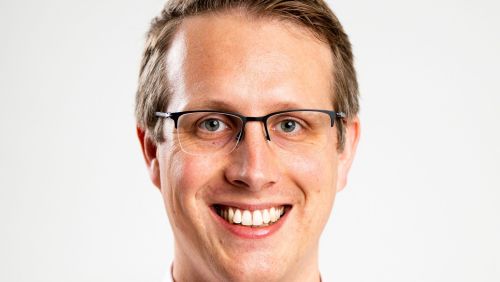
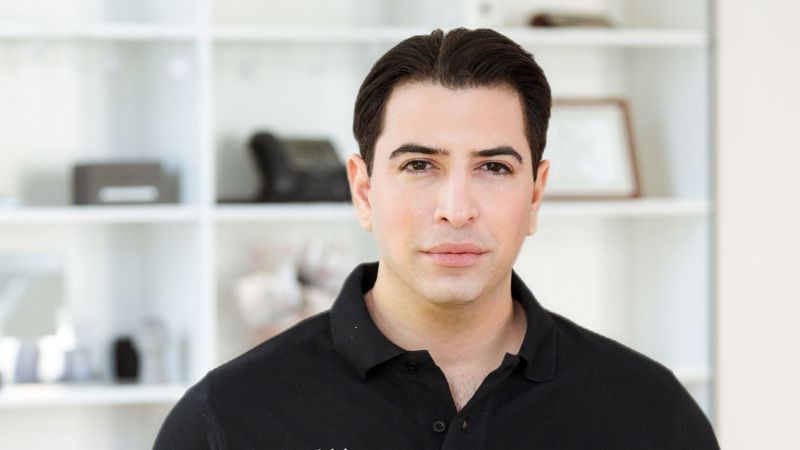
Emin Can Turan, founder & CEO
Opinions expressed by Entrepreneur contributors are their own.
You're reading Entrepreneur United Kingdom, an international franchise of Entrepreneur Media.
Emin Can Turan, founder & CEO of Pebbles AI, has an unusual answer to the question of where he gets his instincts from. His mother was a philosopher, his father a physicist, and there is a long history of military intelligence in the wider family. Now he is building an AI company between London and Lviv, where his team has worked through blackouts and air-raid sirens. Turan is convinced that the next generation of AI will have to do more than produce convincing answers: it will have to reason. We talked about what that means, what war does to a company, and why he thinks small teams can still take on giants.
Can you tell us a little about your background?
I was born in the Netherlands to two academics, my mother in philosophy, my father in physics, so I could be proven wrong empirically and morally at the same table. There is also a long line of military intelligence in the wider family, and the apple, I’m afraid, does not fall far from the tree. Since then I’ve lived in 10 countries, been featured as a primary case study in an Oxford University Press publication, and spent a decade in B2B go-to-market across FAANG, unicorns and decacorns, and early-stage startups. Seeing companies at every stage taught me what the ones that succeed have in common: the recurring human mistakes, the systems you truly need, and how much science-based, systems-level thinking matters. Pebbles is my second venture; the first was a boutique strategy consultancy, effectively a McKinsey for SMEs, which took more than 30 companies to market.
What made you believe Pebbles AI needed to exist?
At its heart, this is David versus Goliath. Big tech and the Tier-1 strategy consultancies can afford the top 1% of talent and diabolically expensive technology to dominate their markets, which quietly squeezes the small and mid-sized businesses that make up most of the economy. The elite go-to-market know-how the giants take for granted should be within reach of every SME, and closing that gap is the whole reason we exist. I saw it from the inside. Across big tech, unicorns and decacorns, and small startups, one thing was always true: everyone was building point solutions. But you cannot move the commercial needle with a point solution, one tool for email, another for outreach. Go-to-market is an interconnected, collaborative effort, management and strategy, marketing, sales, even product, all pulling in the same direction. So we built GTMOS™, an operating system for the entire commercial team to collaborate, cut friction and hit their KPIs. Underneath it sits our neurosymbolic AI. A reasoning system, not a chatbot. Where most point solutions are thin wrappers or template agents over a generic model, ours genuinely reasons. This is also why, step by step, we go from automation toward genuinely reliable autonomous capabilities, at a precision, accuracy and efficacy the best base models cannot match. Not even close.
Who are the people behind Pebbles AI, and what makes the team special?
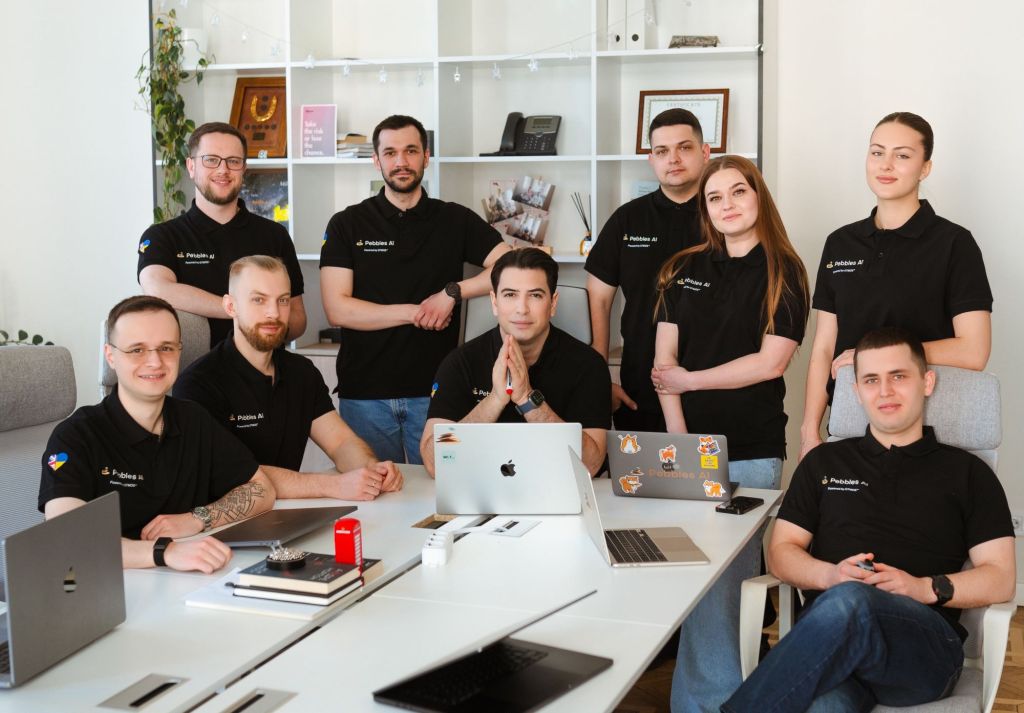
The core engineering group is the whole story here, and they are extraordinary. Our values set the tone: hard work, focus, real camaraderie, and strict meritocracy, where the best idea wins, not the most senior title. The company culture is a cocktail of Dutch directness, British polish and Ukrainian grit. The result is what I can only call a Navy SEAL squad, a small unit of elite operators who out-build teams many times their size. Between them, this group has built centaurs and a unicorn, trained as mathematicians and applied scientists, competed at Olympic level and been headhunted by Google, with pedigrees spanning Cisco, HubSpot and Philips. And it shows in what they build: at public launch, Pebbles reached number 2 out of 1,097 on Product Hunt at launch beating even Kimi K3 (ranked 3), and the top 10% of all time launches to date. Furthermore, some of our investors mentor us closely: from renowned entrepreneurs to senior executives spanning London, Lucerne and Lviv, our own triple-L axis. We are blessed to have such a supportive and intelligent angel group.
How did you build such an exceptional team in Lviv from scratch?
It was brutally hard. When you’re young and unknown, nobody cares about your vision, so at first all you have is an idea. But I also did not ask anyone to join a blank page. Before a single line of code was written, I spent 2 years doing PhD-grade research that became the blueprint for our entire neurosymbolic AI. That IP is one of the real reasons the best people said yes: they could see genuine foundations, laid by domain experts, before they ever arrived. I have taken no salary in over 3 years, everything goes to the team. Each of them is an A-player who also cut their own salary, and in several cases moved countries and left a comfortable big-tech job, to build something truly innovative. Our capital efficiency and discipline shows up in the numbers: over 75,000 hours of validated engineering delivered, roughly £7 of output for every £1 we spend, and is reflected in the company’s value.
What has it been like building a company through a war?
We ship on time, every release cycle, through power cuts, air-raid sirens, and the occasional Shahed drone overhead. 3 years in, we’ve never missed a shipment. These are conditions that forge a team, not break it. A favourite memory: during one raid the team took the shelter, and instead of the drone, worried about the release, kept working, closing tickets from the bunker, shipped on schedule, and had delicious noodles.
Why has the London–Lviv model worked so well?
London brings the commercial polish and the go-to-market instinct; Lviv brings world-class engineering and a work ethic built under conditions most teams will never face. Outside Silicon Valley, the best engineers on earth are in Ukraine, that isn’t sentiment, it’s observable fact. Pair that with London’s commercial nous and you have an unfair advantage. Others have noticed: Google made an exception to grant us a substantial allocation of Google Cloud credits normally reserved for venture-backed scale-ups, and Mountside Ventures, Europe’s leading early-stage accelerator, admitted us as one of just 20 companies from 514 applicants.
Looking back on your journey as a founder, what has surprised you most, and what are you most proud of?
The war is devastating, there is nothing good to say about it, and I would never diminish what it has cost Ukraine and its beautiful people. But building a leading neurosymbolic operating system is its own kind of war, and in truth we have been fighting 2 at once. It is a top-level sport: punch after punch, the rollercoaster ride all founders know too well, regular pain. Yet with an incredible team beside you, you become resilient. What surprised me most is that the war did not weaken us. It made us stronger, more focused, and more united than ever. And if next winter means trading our state-of-the-art set-up for candlelight, Starlink and EcoFlow batteries, so be it.
Emin Can Turan, founder & CEO of Pebbles AI, has an unusual answer to the question of where he gets his instincts from. His mother was a philosopher, his father a physicist, and there is a long history of military intelligence in the wider family. Now he is building an AI company between London and Lviv, where his team has worked through blackouts and air-raid sirens. Turan is convinced that the next generation of AI will have to do more than produce convincing answers: it will have to reason. We talked about what that means, what war does to a company, and why he thinks small teams can still take on giants.
Can you tell us a little about your background?
I was born in the Netherlands to two academics, my mother in philosophy, my father in physics, so I could be proven wrong empirically and morally at the same table. There is also a long line of military intelligence in the wider family, and the apple, I’m afraid, does not fall far from the tree. Since then I’ve lived in 10 countries, been featured as a primary case study in an Oxford University Press publication, and spent a decade in B2B go-to-market across FAANG, unicorns and decacorns, and early-stage startups. Seeing companies at every stage taught me what the ones that succeed have in common: the recurring human mistakes, the systems you truly need, and how much science-based, systems-level thinking matters. Pebbles is my second venture; the first was a boutique strategy consultancy, effectively a McKinsey for SMEs, which took more than 30 companies to market.

Patricia Cullen • Features Writer
Entrepreneur Staff