Inside the Mind of a Beautiful Whirlwind
Zandra Moore reflects on AI, entrepreneurship, role models and resilience.
Zygens
Zandra Moore on building, scaling and starting again
Opinions expressed by Entrepreneur contributors are their own.
You're reading Entrepreneur United Kingdom, an international franchise of Entrepreneur Media.
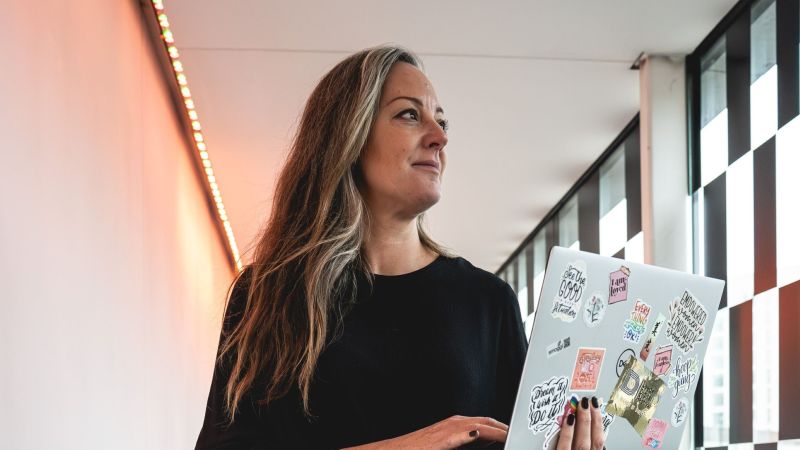
When Zandra Moore talks about her mother, she talks about technology. Not in the way you might expect. There is no grand story of a childhood spent taking computers apart, or of a mother who mapped out a career in technology for her daughter. Moore’s mother left education as a young teen. She found her way into tech because she needed to work, and went on to have a successful career at the dawn of the internet. What Moore remembers most is not what her mother taught her, It is what she showed her. “My mum went to work in tech very early,” she says, “she fell out of education at 14.” She never seemed fazed by the new. When the internet arrived, she embraced it. Later, after being widowed in her 60s, she went online dating. “She is not afraid of the internet,” Moore says. It is a small detail, but it explains a great deal about Moore herself. “I didn’t realise my path into tech and entrepreneurship was that I could see it. I had a role model. Most women don’t.”
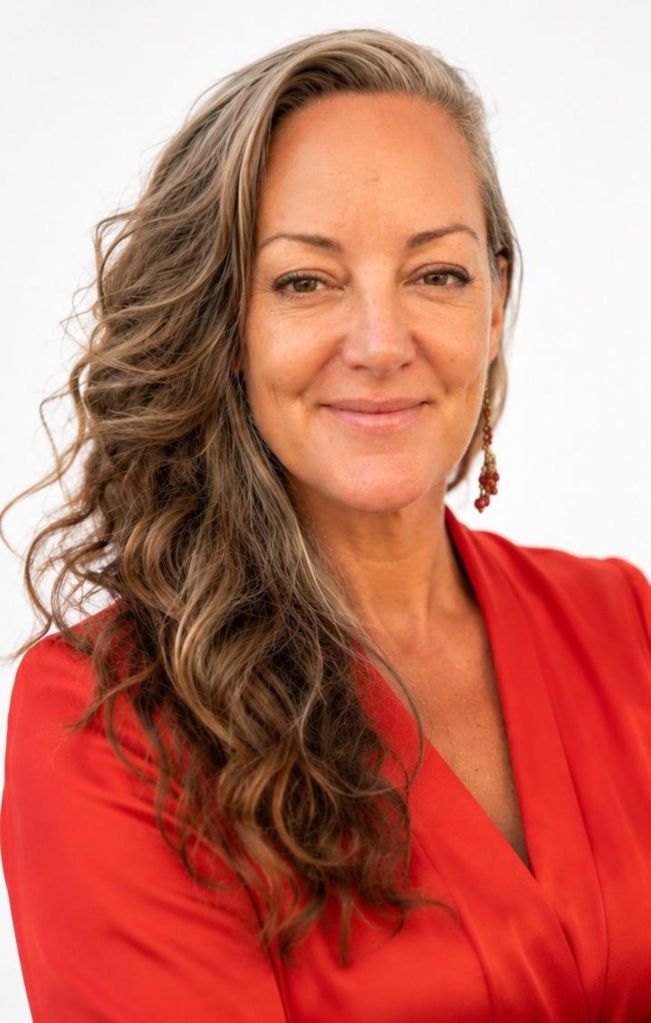
For Moore, possibility was visible from the beginning. Technology was not an intimidating world occupied by other people. It was simply something her mother did. Something that could be understood. Something you could have a go at. “I just didn’t see the risk because I always thought I could do it,” she says. “I could believe in myself because of what I could see.” That belief has taken Moore a long way. She has been self-employed since her twenties, built and scaled technology companies, employed people and made them redundant, expanded businesses and had to scale them back. She has spent much of her career in data, machine learning and SaaS, and now, in what she describes as her “third rodeo”, with Zygens, she is building again. This time, the territory is artificial intelligence.
But Moore’s story is not simply about technology. It is about who gets to imagine themselves building something in the first place – and what happens when they do. She is candid about the advantages she had. “My privilege was having a role model.” For all the talk about encouraging more women into technology and entrepreneurship, Moore believes the problem is not a shortage of ability, it is a shortage of access: to networks, capital, childcare, opportunity and, crucially, to other people who have already done it. “It’s not a lack of capability for women but a lack of access and networks.” That conviction has become part of the work she does alongside building businesses. Moore was involved in the taskforce with Anne Boden, founder of Starling Bank, and went on to establish The Whole Point, a network designed to support women growing and scaling companies. It now has boards across five UK cities. The fact that those networks are outside London is important to Moore. “I’m unapologetically regional, not in London, because I’m a Leeds lass,” she says.
Being outside London can make entrepreneurship harder, she argues. It can be harder to find other women like yourself, harder to access capital, harder to build the right relationships and harder to become visible. But why should women have to leave the places where they are building businesses, employing people and raising families simply to find the networks that might help them grow? Moore’s answer has been to bring the network to them. She believes that the people best placed to overcome an obstacle are often individuals who have actually lived it. Those of us who are at the coalface, who have lived with the problem, understand how to solve it, she says. However, she has little interest in pretending that entrepreneurship is a smooth ascent. Her own experience has included the parts that rarely make it into a founder’s biography: difficult decisions, redundancy, scaling back, changing direction and wondering whether the thing you have poured years into is still the thing worth pursuing. “I’ve been through the mire,” she says. “I’ve grown and scaled a company, I’ve employed lots of people, I’ve had to make people redundant, I’ve had to scale things back, expand them out.” But there is another lesson in all that experience: entrepreneurship can be lonely.
More men start businesses than women, and the numbers become smaller again when you look at women building companies with the appetite and potential to scale. “If you look at that high growth bit, the bit where women have the appetite, the ambition, the will, and the business that can scale, there are so few of us.” Because the hardest business decisions aren’t found in a textbook. They are about people, timing, money, ego and instinct. Sometimes you need someone who’s been there to see what you can’t. “We all need to know when to let go of the things that aren’t good for us,” Moore adds. It is one reason she believes so strongly in peer networks. Coaches can help, but there is a particular honesty that comes from sitting with people who understand the experience because they have lived it themselves. Most of the time, she says, the conversation is about difficult things. “The stuff that’s on our mind, that’s draining our energy, that’s keeping us up at night.”
There is something almost addictive about that pressure. Founders can want to step away from the intensity while simultaneously being unable to imagine doing anything else. Moore knows that feeling. And she knows that sometimes the way forward is not to push harder, but to let something go. She has an almost physical dislike of the word “pivot.” The word makes changing direction sound like an enormous act of corporate manoeuvring. Moore sees it differently. To pivot is just being prepared to let your ego get out of the way.” That may be one of the hardest disciplines of entrepreneurship. Founders become attached to ideas because they have invested so much of themselves in them. They build teams around them. They give them names. They tell other people that this is where they are going. Then something changes. The market moves. The customer changes. The technology makes the original idea less relevant. “You’ve got to be prepared to step back from the decisions you’ve made, the investments you’ve made, the people who might no longer be right, and move towards what is.”
Moore has had to do that herself. Her previous company, Panintelligence, grew from a management buyout into a data and machine-learning business, and Moore spent years working at the intersection of software, data and prediction. Then generative AI arrived and the market began moving again. Rather than watch the shift from the sidelines, she stepped into it. “I wanted to be on the AI side of the conversation,” she says. That decision led to Zygens, her latest venture, focused on helping organisations understand where AI can genuinely create value rather than simply adding another piece of technology to the pile. Moore calls some of what she sees “AI theatre”. It reminds her of the early internet.Back then, businesses were told they needed websites. Many built them without really understanding why. They had a digital presence, but not necessarily a digital business. Moore remembers those early days vividly because she watched them unfold at home with her mother. “I remember sitting with my mum the first day we got the modem in the house, watching the screen for the ICI chemical polymers just slowly appear.” Then came the page: white background, blue URLs and a pixelated logo. “It was just hyperlinks to another page with some text on it, a bit like Wikipedia for you today.” The technology was primitive. The possibilities were not.
Moore sees AI going through a similar stage now. People are experimenting. Companies are trying things because they have been told they should. There is plenty of noise, and not everything being built will matter. But that is how technological revolutions work. The maturity comes later, when people stop asking what the technology can do and start asking what they actually need it to do. That is the thinking behind Zygens. Moore starts with the business strategy, then the problems standing in its way, then the potential use cases. Only after that does she consider the technology. The question is not simply whether AI can be applied. It is whether applying it will drive value.
For Moore, the question goes beyond AI: is this still working, is the team still right, and is what we’re doing actually creating value? That, she says, is where entrepreneurship is less about bravado and more about judgement. For women, there are still added barriers, but the fundamental difficulties of building a company are not gender-specific. “I think sometimes we need to separate the challenges of gender from the truth of building a business,” she says. Cash flow does not care who you are. Markets change for everyone. Every founder eventually has to make a decision they would rather avoid. What differs is who has someone to call when that happens. Moore believes that bringing more people into those conversations – women, people from minority backgrounds, people without inherited wealth or elite educational networks – is not simply a question of fairness. It is an economic one. “If people that aren’t already in those circles are not in the same rooms, that slows our economy down.” That is why the networks matter. And why role models matter. Moore knows what it means to see someone like yourself doing the thing you had not yet imagined doing. She also knows the responsibility that comes with becoming that person for someone else.
Women who become successful are often encouraged to be more visible, more vocal, more available. They are expected to speak, mentor, advocate and inspire the next generation, even while they are trying to run their own companies. Moore feels that pull herself. “We have a massive compulsion to show up and be role models and be visible because we know that’s part of the problem.” But visibility has a cost. “If you want more women scaling companies, we also need to not put loads of pressure on the women that are scaling companies.” If we want more women to build ambitious companies, we cannot make being a role model another full-time responsibility.
There is a generosity to Moore’s thinking. “Legacy’s really important,” she says, “it’s not about money, it’s about putting the ladder down, making it easier for others to climb up.” Like mother, like daughter. Her mother showed her what was possible; Moore has spent her career following that example, from the early internet to the leading edge of AI. Technology keeps changing. Moore keeps moving. Her mother always called her a “beautiful whirlwind”. It is hard to think of a better description. At 50, Moore is already onto her next company, working in a field that is changing almost by the week. She laughs about the chaos of it. Then she gets back to work.
When Zandra Moore talks about her mother, she talks about technology. Not in the way you might expect. There is no grand story of a childhood spent taking computers apart, or of a mother who mapped out a career in technology for her daughter. Moore’s mother left education as a young teen. She found her way into tech because she needed to work, and went on to have a successful career at the dawn of the internet. What Moore remembers most is not what her mother taught her, It is what she showed her. “My mum went to work in tech very early,” she says, “she fell out of education at 14.” She never seemed fazed by the new. When the internet arrived, she embraced it. Later, after being widowed in her 60s, she went online dating. “She is not afraid of the internet,” Moore says. It is a small detail, but it explains a great deal about Moore herself. “I didn’t realise my path into tech and entrepreneurship was that I could see it. I had a role model. Most women don’t.”
For Moore, possibility was visible from the beginning. Technology was not an intimidating world occupied by other people. It was simply something her mother did. Something that could be understood. Something you could have a go at. “I just didn’t see the risk because I always thought I could do it,” she says. “I could believe in myself because of what I could see.” That belief has taken Moore a long way. She has been self-employed since her twenties, built and scaled technology companies, employed people and made them redundant, expanded businesses and had to scale them back. She has spent much of her career in data, machine learning and SaaS, and now, in what she describes as her “third rodeo”, with Zygens, she is building again. This time, the territory is artificial intelligence.
But Moore’s story is not simply about technology. It is about who gets to imagine themselves building something in the first place – and what happens when they do. She is candid about the advantages she had. “My privilege was having a role model.” For all the talk about encouraging more women into technology and entrepreneurship, Moore believes the problem is not a shortage of ability, it is a shortage of access: to networks, capital, childcare, opportunity and, crucially, to other people who have already done it. “It’s not a lack of capability for women but a lack of access and networks.” That conviction has become part of the work she does alongside building businesses. Moore was involved in the taskforce with Anne Boden, founder of Starling Bank, and went on to establish The Whole Point, a network designed to support women growing and scaling companies. It now has boards across five UK cities. The fact that those networks are outside London is important to Moore. “I’m unapologetically regional, not in London, because I’m a Leeds lass,” she says.

Patricia Cullen • Features Writer
Entrepreneur Staff