The Future of Healthcare Is Predictive
Predictive healthcare uses AI and wearables to anticipate illness before symptoms emerge.
NeuroX
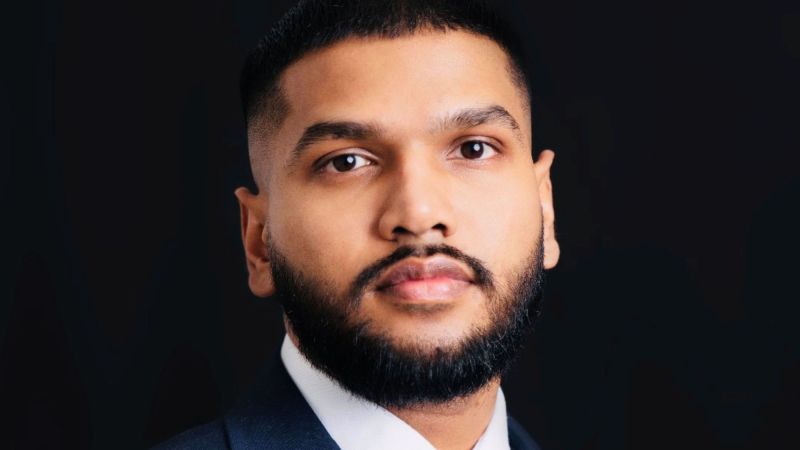
Anoop Antony is a neuroscientist and founder & CEO of NeuroX and Neve Intelligence
Opinions expressed by Entrepreneur contributors are their own.
You're reading Entrepreneur United Kingdom, an international franchise of Entrepreneur Media.
For two years, I ran a clinical EEG practice. Patients would come to me after something had already gone wrong: a seizure, a head injury, a cognitive decline that had progressed far enough to finally demand attention. My job was to read the signal after the event, to explain, retrospectively, what the brain had been doing when things fell apart. It didn’t take long to realise the more interesting question was the one nobody was asking: what if we’d been reading that signal all along? What if the warning had been there, quietly, weeks or months before the event that brought someone into my clinic? That question is, in miniature, the shift now underway across the whole of healthcare. We are moving from a system built to react to illness towards one built to anticipate it, and the technologies making that possible are neuroscience, wearable sensing, and the kind of data fusion that lets us see patterns no single measurement could reveal on its own.
The reactive model is running out of road
Modern medicine has always been extraordinary at treatment and mediocre at prediction. We are world-class at responding to a heart attack, a stroke, a breakdown, and comparatively poor at telling someone, with any real confidence, that they were heading towards one. Even preventative medicine, as currently practised, tends to mean population-level guidance: eat less of this, exercise more of that, get screened at this age. Useful, but blunt. It says almost nothing about you, specifically, this week. The reason is simple: until recently, we didn’t have continuous access to the data that would let us say something specific. A blood test is a snapshot. A GP appointment is a snapshot. Even an annual health check is, at best, a single high-resolution photograph of a process that is constantly moving. You cannot predict a trajectory from one photograph. You need the video.
What’s changed is the video
Wearables have quietly solved a huge part of this problem. Heart rate variability, sleep architecture, movement patterns: these used to require a hospital visit and now sit passively on someone’s wrist, updating by the second. Consumer EEG, which not long ago was confined to research labs and clinical suites, is now light enough and cheap enough to sit comfortably on someone’s head for a 90-second reading in their own home or on the sidelines of a training pitch. Individually, each of these signals is interesting but limited. Heart rate variability alone can tell you about autonomic stress, but not why. EEG alone can tell you about cognitive load, but not how sustainable it is. The real predictive power comes from fusing them, from building a system that treats a person’s neural activity, their autonomic nervous system, and their behaviour as three views of the same underlying story, cross-referenced against each other in something close to real time. This is where I think the genuinely interesting innovation is happening: not in any single sensor, but in the architecture that combines them. A system that can say, with some precision, “your subjective sense of alertness and your objective neural signal are starting to diverge, that gap is often what precedes fatigue-related decline” is doing something no wearable or EEG device could do in isolation. It’s not measuring more; it’s understanding differently.
Prediction only matters if it’s personal
The other shift, and arguably the more important one, is the move away from population norms and towards the individual baseline. Most existing health metrics tell you how you compare to an average person of your age and sex. That’s a reasonable starting point, but it’s also nearly meaningless if what you actually want to know is whether you, specifically, are drifting from your normal. A resting heart rate of 58 might be a red flag for one person and an entirely unremarkable Tuesday for a trained athlete. The same is true, more subtly, of neural and cognitive metrics: what matters is not where you sit on a bell curve of strangers, but whether today’s version of you looks like last month’s version of you, and if not, why. Building genuinely personalised baselines, ones that update continuously as more data arrives, and that get more accurate over time rather than staying fixed, is, to me, the real frontier of predictive healthcare. It’s a harder engineering problem than population benchmarking, but it’s the only version of prediction that actually respects how different one person’s normal is from another’s.
Where this goes next
This is the territory I’ve spent the last few years building in, on two different fronts. Through NeuroX, our neurofeedback clinics, we’ve seen firsthand how continuous neural monitoring can catch patterns in conditions like ADHD, stress and insomnia long before they’d otherwise surface in a conversation with a clinician. And through Neve, we’ve been applying the same underlying philosophy to elite athletes: fusing neural, autonomic and behavioural data into an individual baseline, so a divergence from someone’s own normal shows up as a signal worth acting on, rather than getting lost in a population average. Different contexts, same conviction: the earlier and more personal the signal, the more useful it becomes. I don’t think the endpoint of this shift is a world of anxious self-quantification, where everyone is drowning in numbers they don’t know what to do with. Quite the opposite. The best predictive systems will do more interpreting and less reporting, turning a wall of raw data into something closer to a sentence a good clinician or coach might say to you: you seem more fatigued than usual this week, and it’s showing up before you’d notice it yourself. That’s the real promise of predictive healthcare: not more data, but earlier, more personal, more human insight from the data we’re already collecting. The clinics of the future won’t just be places you go when something’s wrong. Increasingly, they’ll be systems working quietly in the background of daily life, occasionally tapping you on the shoulder before you’d have thought to ask. Having sat on both sides of that transition, as a clinician reading signals after the fact and now as someone building systems to read them before the fact, I’m convinced this is one of the most consequential shifts healthcare will go through in the next decade. Not because the technology is dramatic, but because it finally lets medicine ask the question it was always meant to ask: not “what happened?” but “what’s about to?”
For two years, I ran a clinical EEG practice. Patients would come to me after something had already gone wrong: a seizure, a head injury, a cognitive decline that had progressed far enough to finally demand attention. My job was to read the signal after the event, to explain, retrospectively, what the brain had been doing when things fell apart. It didn’t take long to realise the more interesting question was the one nobody was asking: what if we’d been reading that signal all along? What if the warning had been there, quietly, weeks or months before the event that brought someone into my clinic? That question is, in miniature, the shift now underway across the whole of healthcare. We are moving from a system built to react to illness towards one built to anticipate it, and the technologies making that possible are neuroscience, wearable sensing, and the kind of data fusion that lets us see patterns no single measurement could reveal on its own.
The reactive model is running out of road
Modern medicine has always been extraordinary at treatment and mediocre at prediction. We are world-class at responding to a heart attack, a stroke, a breakdown, and comparatively poor at telling someone, with any real confidence, that they were heading towards one. Even preventative medicine, as currently practised, tends to mean population-level guidance: eat less of this, exercise more of that, get screened at this age. Useful, but blunt. It says almost nothing about you, specifically, this week. The reason is simple: until recently, we didn’t have continuous access to the data that would let us say something specific. A blood test is a snapshot. A GP appointment is a snapshot. Even an annual health check is, at best, a single high-resolution photograph of a process that is constantly moving. You cannot predict a trajectory from one photograph. You need the video.

Anoop Antony • Founder & CEO of NeuroX and Neve Intelligence
Anoop Antony is a neuroscientist and founder & CEO of NeuroX and Neve Intelligence. Combining... Read more