Penfolds celebrates 75 years of Grange
Penfolds marks Grange anniversary celebrating heritage, innovation and enduring winemaking excellence.
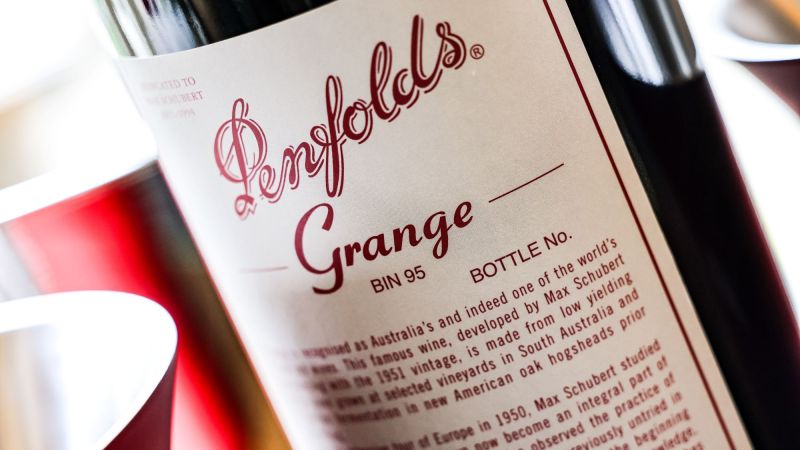
Penfolds Grange wine
Opinions expressed by Entrepreneur contributors are their own.
You're reading Entrepreneur United Kingdom, an international franchise of Entrepreneur Media.
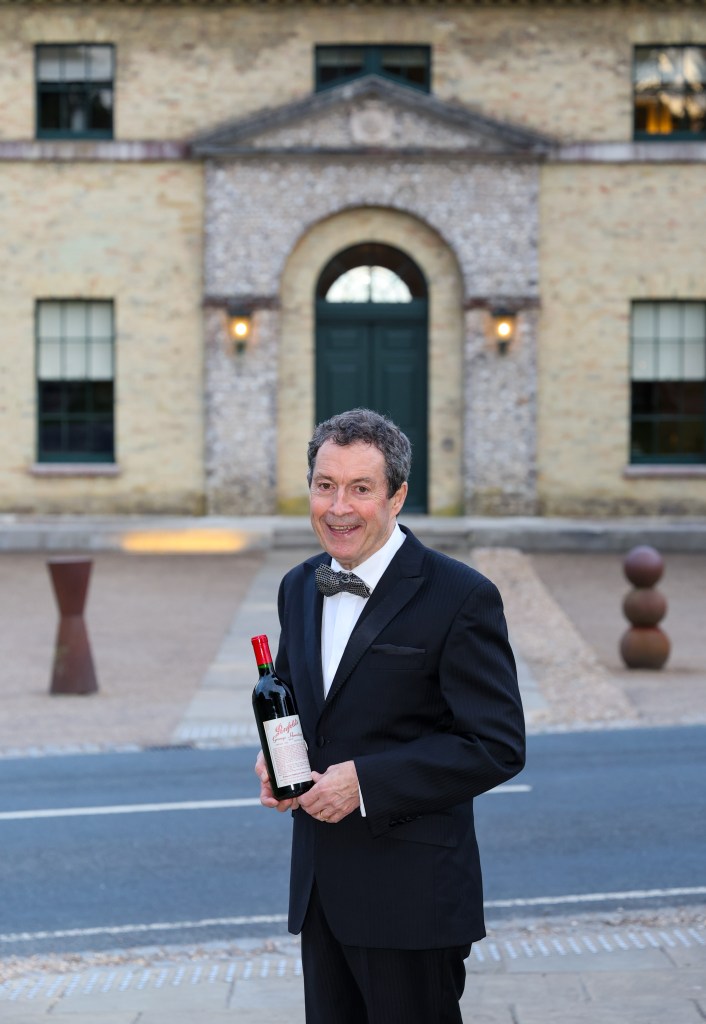
At Hound Lodge on the Goodwood Estate in Sussex, Peter Gago reflects on a wine business that has scaled, adapted and endured across nearly two centuries, as Penfolds marks 75 years of Grange, its iconic flagship wine, Grange, regarded as one of the world’s most collectable wines. Chief winemaker since 2002, he is only the fourth person to hold that role since Grange was created in the early 1950s. That continuity places him within one of the longest unbroken lines of stewardship in global winemaking. Penfolds itself dates to 1844, founded in South Australia by Dr Christopher Rawson Penfold, an English physician who emigrated during the early colonial period. As Dr. Christopher Rawson Penfold hailed from Sussex himself, it’s a fitting location for the esteemed wine producer to be celebrating Grange’s 75th anniversary and reflecting on the brand’s journey since that voyage from England to South Australia 182 years ago.

A wine made against resistance
The defining wine in Penfolds’ history, Grange, was created against internal resistance. In the early 1950s, winemaker Max Schubert developed an experimental style inspired by the Great Chateaux of Bordeaux, but unlike anything being made in Australia at the time. It was designed for long ageing rather than immediate release. There was scepticism at first and after a few years, Max was told by the board to stop making his experimental wine, however he continued regardless in secret. For several years, Grange was made without approval, with barrels and production kept out of sight. The risk was dismissal. “He could hide the barrels, he could hide the bottles,” Gago says. “But he couldn’t hide invoices for new oak.” Three early vintages – 1957, 1958 and 1959 – emerged from that period. In 1962, the earliest vintages of Grange won great acclaim at the Sydney Wine Show, after which the board instructed Max to recommence production. It was then he revealed it had actually never stopped.
Structure over brand identity
Penfolds now produces wines from Australia, France, the United States and China, across a wide price spectrum. At the top end, Gago describes the business less as a brand than as an inherited system. “I don’t refer to Penfolds as a brand,” he says. “I refer to it as a culture.” The distinction matters: brands are repositioned, while cultures persist. Grange is made to a defined stylistic idea rather than a shifting brief, with consistency across vintages prioritised over reinvention. The emphasis is on recognisable character in every release, regardless of year or origin. Gago repeatedly returns to time as the defining variable in wine. “The world of wine seduces you,” he says. “We call it the grip of the grape.” Wine is made in one moment but judged in another, often years later. Value is realised slowly, not immediately. “Immediate gratification? Not really,” he says. He describes wine as a “drinking investment” – not financial speculation, but experience unfolding over years. Bottles evolve, and so does perception. “You don’t start with complexity,” he says. “You develop it.”
Expansion and controlled experimentation
In keeping with Penfolds’ desire to always push the boundaries in pursuit of excellence, Penfolds has expanded its footprint under Gago’s leadership, including production in France and collaborations with a ground-breaking fine wine collaboration with Domaine Paul Jaboulet Aîné, which produces the iconic Syrah expression, La Chapelle, in the Northern Rhône Valley. The collaboration has seen Penfolds and Jaboulet combine their two flagship fine wines – arguably the greatest Shiraz from the Southern hemisphere, Grange, and the the greatest Syrah from the Northern hemisphere, La Chapelle – creating a fine wine like no other. Such a bold move could have been seen as a risk but the response from wine critics the world over has been overwhelmingly positive. These ventures are framed internally as extensions rather than departures. “We now have bookends,” Gago says. “Champagne at one end, fortified wines at the other.” Between them sits a portfolio designed to explore different expressions of structure, ageing potential and place. Another of the more experimental initiatives is G3, G4 and G5 – multi-vintage blends of Grange combining three, four and five vintages in a single release, creating true collectors’ items that upon opening in the years to come, will be fascinating to try as their complexity deepens.
A shift in global recognition
A defining moment in Penfolds’ international profile came in 1995, when the 1990 Grange was named Wine of the Year by Wine Spectator. The impact was immediate: prices shifted, demand expanded and Australian fine wine gained greater visibility in global markets. “It put Australia on the global map,” Gago says. The recognition did not create the reputation but amplified it internationally. Within the company, reputation had already been built over decades of internal consistency. Today, time is formally recorded through The Rewards of Patience, a publication now in its ninth edition. Regarded as the ultimate form guide for Penfolds wines, a new edition of the Rewards of Patience is published every 5 years and contains up-to-date tasting notes for every back vintage of every Penfolds wine ever made. The tasting notes are provided by leading wine critics from across the world who taste the wines alongside Penfolds winemakers every 5 years and share their independent assessment. Their notes are collated and published in each new edition, giving Penfolds wine collectors the valuable knowledge of how the different vintages of Penfolds wines they are cellaring are faring; whether they should be opened and enjoyed soon, or if they have further ageing potential.
Continuity as structure
At Penfolds, innovation sits within continuity rather than against it. From Schubert’s pioneering work creating Grange in the 1950s to the recent and rare multi-vintage releases of Grange (and Yattarna, Penfolds’ flagship white wine), experimentation exists alongside a consistent expectation of style and quality in the glass. For Gago, the aim is not reinvention but recognisable character across wines that may not be opened for decades. He calls it the Penfolds House Style. It is a model built around patience – and the belief that what is poured today is part of a story still unfolding.
At Hound Lodge on the Goodwood Estate in Sussex, Peter Gago reflects on a wine business that has scaled, adapted and endured across nearly two centuries, as Penfolds marks 75 years of Grange, its iconic flagship wine, Grange, regarded as one of the world’s most collectable wines. Chief winemaker since 2002, he is only the fourth person to hold that role since Grange was created in the early 1950s. That continuity places him within one of the longest unbroken lines of stewardship in global winemaking. Penfolds itself dates to 1844, founded in South Australia by Dr Christopher Rawson Penfold, an English physician who emigrated during the early colonial period. As Dr. Christopher Rawson Penfold hailed from Sussex himself, it’s a fitting location for the esteemed wine producer to be celebrating Grange’s 75th anniversary and reflecting on the brand’s journey since that voyage from England to South Australia 182 years ago.
A wine made against resistance
The defining wine in Penfolds’ history, Grange, was created against internal resistance. In the early 1950s, winemaker Max Schubert developed an experimental style inspired by the Great Chateaux of Bordeaux, but unlike anything being made in Australia at the time. It was designed for long ageing rather than immediate release. There was scepticism at first and after a few years, Max was told by the board to stop making his experimental wine, however he continued regardless in secret. For several years, Grange was made without approval, with barrels and production kept out of sight. The risk was dismissal. “He could hide the barrels, he could hide the bottles,” Gago says. “But he couldn’t hide invoices for new oak.” Three early vintages – 1957, 1958 and 1959 – emerged from that period. In 1962, the earliest vintages of Grange won great acclaim at the Sydney Wine Show, after which the board instructed Max to recommence production. It was then he revealed it had actually never stopped.
Structure over brand identity
Penfolds now produces wines from Australia, France, the United States and China, across a wide price spectrum. At the top end, Gago describes the business less as a brand than as an inherited system. “I don’t refer to Penfolds as a brand,” he says. “I refer to it as a culture.” The distinction matters: brands are repositioned, while cultures persist. Grange is made to a defined stylistic idea rather than a shifting brief, with consistency across vintages prioritised over reinvention. The emphasis is on recognisable character in every release, regardless of year or origin. Gago repeatedly returns to time as the defining variable in wine. “The world of wine seduces you,” he says. “We call it the grip of the grape.” Wine is made in one moment but judged in another, often years later. Value is realised slowly, not immediately. “Immediate gratification? Not really,” he says. He describes wine as a “drinking investment” – not financial speculation, but experience unfolding over years. Bottles evolve, and so does perception. “You don’t start with complexity,” he says. “You develop it.”

Patricia Cullen • Features Writer
Entrepreneur Staff