What happens when the Games are over?
From London 2012 to Trivandi, James Bulley shares hard-earned lessons.
Opinions expressed by Entrepreneur contributors are their own.
You're reading Entrepreneur United Kingdom, an international franchise of Entrepreneur Media.
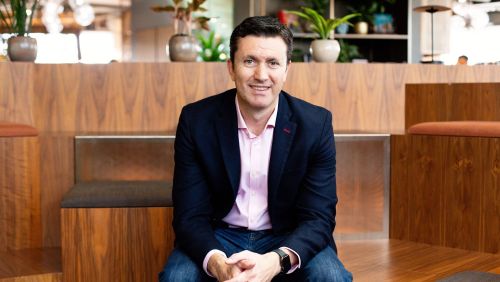
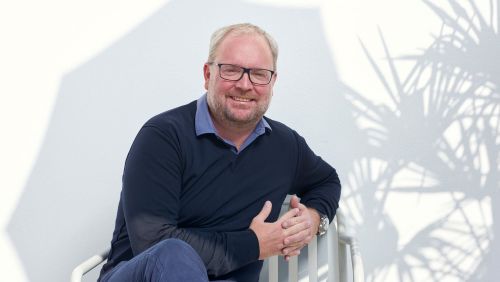
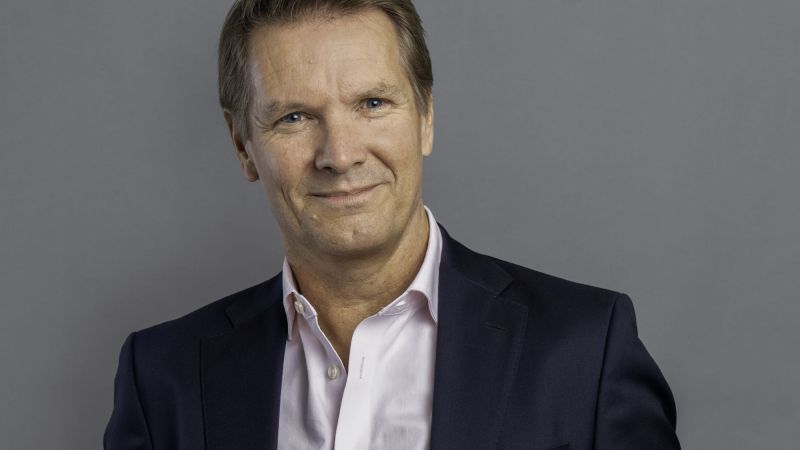
James Bulley OBE knows what it takes to deliver an event on a global scale. After helping lead venues and infrastructure for London 2012, he could have taken a more conventional route into the corporate world. Instead, he and his former Olympic colleagues Paul May and Jon Branson started Trivandi. Fourteen years later, the company works across some of the world’s biggest events and developments. But Bulley’s story is less about the glamour of mega-events and more about what happens behind them: starting with very little, competing against much bigger companies, learning from losing bids and building a business around people and purpose. Here, he reflects on why he walked away from the obvious next step, what London 2012 taught him about doing things differently, and the lessons he still passes on to his children.
What inspired you to start your business?
I’d just finished my role as director of venues and infrastructure for the London 2012 Olympic and Paralympic Games, and I had a few options in front of me. I could have joined one of the Big Four firms as a partner, and I also had an offer to become the CEO of an airport. But London 2012 taught me that I liked working in a less corporate environment and having a real purpose behind what I was doing. I wanted to recreate that in my next role. When we were planning London 2012, we reached out to people around the world who had worked on Games in Beijing, Athens, Sydney and even as far back as Atlanta. They would tell us how they had delivered the event in those cities, rather than how that experience might apply to London. We could see there was a gap for an organisation that could adapt major and mega events to their local context. London 2012 was also the first time an Olympics had properly asked host cities to think about legacy, and it made guest experience a real priority by treating spectators as customers. Different parts of the programme were also delivered by teams from other parts of the world, but we strongly felt that work should be done by local people. That eventually led to us setting up the Trivandi Academy – to train local people to do what we do. We knew from all of that experience that these events could be delivered in a better way. So Paul May, Jon Branson – who I worked with at London 2012 – and I started talking about setting up a business together. We wanted to share what we had learned through the Olympics and make sure the company was values-based. That became the thread running through our work at Trivandi: combining event delivery with guest experience and a lasting legacy.
What was your biggest challenge and how did you overcome it?
The biggest challenge when we entered the major and mega events business was the competition. These services were usually delivered by very large companies, whether on the advisory or design side. Many of them had some involvement in London 2012 and had delivered one aspect of the Games, but they were presenting it as if they had delivered the whole event. Paul, Jon, and I had seen the whole thing through, from concept to legacy. But trying to get that message across against much larger marketing machines and stronger brand names was really difficult. We would explain that we were the ones who had delivered London 2012, but we were often lost in the noise. As an SME, we had very little credibility in the world of billion-dollar projects. We needed to build a track record, a reputation and brand awareness. That was tough at first, but in year three of the business we won the outsourced delivery contract for the Ashgabat 2017 Asian Indoor and Martial Arts Games. That really put us on the map, because we hired 750 people to deliver a mega event. Around the same time, we also won a contract to deliver the initial operational plans for the Dubai World Expo. Before that, we had advisory roles on the Glasgow 2014 Commonwealth Games and the Rio 2016 Olympic Games, and together those projects gave us the foundation to build much stronger brand awareness. From there, we managed to differentiate ourselves from the engineers, architects and advisory firms that could deliver individual services for major events, but not all of them. We established ourselves as a one-stop shop, closing the gap between strategy and delivery. That resonated strongly in the market. If you look at the Saudi Arabia market, for example, they want the people who can actually make things happen – implement events and venues not just write a strategy and manual.
How did it secure initial funding?
We didn’t go out looking for funding. We funded ourselves with what we had earned from London 2012 and used the connections we had made through the event. That meant a bit of begging and borrowing, and we didn’t pay ourselves in the first year of Trivandi. We based ourselves in a small unit in Canary Wharf, where they used to make barrels for the docks, and kept our outgoings as low as we could. I would do it exactly the same way if I had to start again. There were moments I can remember walking to work with a hole in my shoe, and Paul had a broken seam on his jacket
elbow. We couldn’t afford a sofa or a TV for the office. We went to Dubai and shared a $27 hotel room when we were trying to win work in the Gulf. That’s what makes where we are today so great. We’re lucky that we can stay in nicer hotels, sometimes fly business class, and can replace our clothes when needed. But you look back and it’s incredibly grounding – that experience puts everything in perspective today.
How do you handle failure or setbacks?
One of the biggest failures we come up against is not winning bids. Huge amounts of work, time, and effort go into submitting proposals for the events we work on. At the outset we won one in every eight or nine projects; now our win rate is more than half of the bids we submit for. Learning what to go for – and what not to spend time on – is a difficult process, and it’s easy to get downhearted by failures. Now we deal with losses in the same way we deal with wins. If we’re unsuccessful, we acknowledge the people who worked on the bid and thank them for all the effort they put in. We analyse why we failed and try to learn from it. Likewise, if we win, there’s no popping bottles of champagne or big parties. We thank the people who worked on the bid, then we knuckle down and get on with the work. You need that steady leveller. There’s no massive
gloom and no over-exuberance. There are always other setbacks too. We’ve made mistakes with hiring, and had some false starts on business initiatives from time to time. In each case, you try to deal with the situation, pivot quickly and learn from the experience and become much smarter about what to work on, who to work with and how to deliver products and services the market needs.
What advice would you give to someone starting their own business?
Anyone starting their own business needs to understand that it becomes your life. A lot of people branch out on their own because they want their work to suit their lifestyle, they don’t want a boss, or they don’t want to have to deal with corporate bureaucracy. But being a business owner doesn’t necessarily give you freedom – and it’s not for everyone. If you want to be successful, you have to be available 24/7 and prepared to do whatever it takes. Your business becomes a way of life, which means digging deep and persevering no matter what gets thrown at you. When I was on holiday recently, there were a couple of big moments for the business. I had to be prepared to drop everything, step away from my family, and take care of those situations. It’s also worth remembering that you need to be multifaceted in your skills. You can develop the best technology, product or service, but you still need to be able to sell it to people, whether they are customers, investors or lenders. That means being able to speak to and influence different groups of people in a way that makes them buy into you and what you are trying to achieve.
How do you stay motivated during tough times?
Having a business partner has really helped. Paul is like a brother to me. We enjoy each other’s company, we can spend a full day together without getting sick of one another, and you stay motivated by having someone to share the good and difficult times with. When you get emotionally charged over something, it also helps to have someone to share it with and talk it through with a bit of humour and banter. I’m a super-driven person. As an entrepreneur, you need incredible drive and you need to feel ready to tackle whatever the world throws at you every time you jump out of bed in the morning. In 14 years of doing this job, there hasn’t been a single day when I didn’t want to get up and face what I had on. Having a good team around you also helps. I like marketing, finance and sales, and I don’t even mind what many people would consider dull legal issues. But there are other aspects of running a business that I find mundane and don’t want to get involved in. Paul and I have found a way of divvying things up, and we have good people who can take responsibility for everything else.
Share your tips for achieving success…
There are a couple of things I always say to my kids. They’re more life lessons than advice for business owners, but are just as relevant. Firstly, never burn bridges. It’s a small world and in our industry it’s an even smaller ecosystem of people. There’s no point in upsetting someone you will inevitably come across again. So don’t leave a relationship in a bad place – do what you can to turn it back around. Secondly, be the best listener in the room. I came up through the construction industry and saw a real mix of people, some of whom were incredibly inspirational. Pick out those individuals, follow what they say and it will help you along. The same applies to
entrepreneurs. You can’t and won’t know everything, so be willing to listen properly and take
advice. For business owners specifically, you have to make sure you reward your people. They are
often taking a risk by joining your team – particularly in the early stages. That needs to be
recognised through shares or profit sharing. Whatever way you decide to do it, they need to
be invested in the company. On the other side of that, if you take investment, treat that money like it’s your own. I’ve seen many cases where entrepreneurs take investors’ funding and spend it on meetings in the USA that could be done over Teams, networking events they otherwise wouldn’t pay for, or flashy offices in central London. Much of that ends up being a waste. Related to that, it’s really important to set values that align your team from early on. We’re a values based company and we rigorously hold our people to those standards. It makes sure everyone is on the same page and keeps the team delivering good work. Finally, you need to take regular breaks. Entrepreneurs often load themselves up and work crazy hours because it feels like the natural thing to do. But you can easily end up working all the time, and that leads to burnout. I try to take a break every month to reset and give myself time to recuperate.
James Bulley OBE knows what it takes to deliver an event on a global scale. After helping lead venues and infrastructure for London 2012, he could have taken a more conventional route into the corporate world. Instead, he and his former Olympic colleagues Paul May and Jon Branson started Trivandi. Fourteen years later, the company works across some of the world’s biggest events and developments. But Bulley’s story is less about the glamour of mega-events and more about what happens behind them: starting with very little, competing against much bigger companies, learning from losing bids and building a business around people and purpose. Here, he reflects on why he walked away from the obvious next step, what London 2012 taught him about doing things differently, and the lessons he still passes on to his children.
What inspired you to start your business?
I’d just finished my role as director of venues and infrastructure for the London 2012 Olympic and Paralympic Games, and I had a few options in front of me. I could have joined one of the Big Four firms as a partner, and I also had an offer to become the CEO of an airport. But London 2012 taught me that I liked working in a less corporate environment and having a real purpose behind what I was doing. I wanted to recreate that in my next role. When we were planning London 2012, we reached out to people around the world who had worked on Games in Beijing, Athens, Sydney and even as far back as Atlanta. They would tell us how they had delivered the event in those cities, rather than how that experience might apply to London. We could see there was a gap for an organisation that could adapt major and mega events to their local context. London 2012 was also the first time an Olympics had properly asked host cities to think about legacy, and it made guest experience a real priority by treating spectators as customers. Different parts of the programme were also delivered by teams from other parts of the world, but we strongly felt that work should be done by local people. That eventually led to us setting up the Trivandi Academy – to train local people to do what we do. We knew from all of that experience that these events could be delivered in a better way. So Paul May, Jon Branson – who I worked with at London 2012 – and I started talking about setting up a business together. We wanted to share what we had learned through the Olympics and make sure the company was values-based. That became the thread running through our work at Trivandi: combining event delivery with guest experience and a lasting legacy.
What was your biggest challenge and how did you overcome it?
The biggest challenge when we entered the major and mega events business was the competition. These services were usually delivered by very large companies, whether on the advisory or design side. Many of them had some involvement in London 2012 and had delivered one aspect of the Games, but they were presenting it as if they had delivered the whole event. Paul, Jon, and I had seen the whole thing through, from concept to legacy. But trying to get that message across against much larger marketing machines and stronger brand names was really difficult. We would explain that we were the ones who had delivered London 2012, but we were often lost in the noise. As an SME, we had very little credibility in the world of billion-dollar projects. We needed to build a track record, a reputation and brand awareness. That was tough at first, but in year three of the business we won the outsourced delivery contract for the Ashgabat 2017 Asian Indoor and Martial Arts Games. That really put us on the map, because we hired 750 people to deliver a mega event. Around the same time, we also won a contract to deliver the initial operational plans for the Dubai World Expo. Before that, we had advisory roles on the Glasgow 2014 Commonwealth Games and the Rio 2016 Olympic Games, and together those projects gave us the foundation to build much stronger brand awareness. From there, we managed to differentiate ourselves from the engineers, architects and advisory firms that could deliver individual services for major events, but not all of them. We established ourselves as a one-stop shop, closing the gap between strategy and delivery. That resonated strongly in the market. If you look at the Saudi Arabia market, for example, they want the people who can actually make things happen – implement events and venues not just write a strategy and manual.