How Bitcoin Mining Is Evolving Into a New Financial Ecosystem
We want Bitcoin to become money. For that to happen, payments have to work in native Bitcoin, with users paying in the original asset quickly and without fees

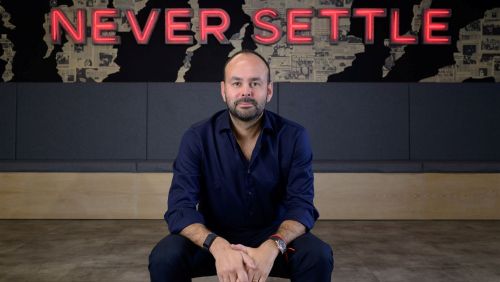
Kirill Solovev, Founder and Chairman of the Board of GoMining
You're reading Entrepreneur United Kingdom, an international franchise of Entrepreneur Media.
You founded GoMining before Bitcoin mining became a mainstream investment category. Looking back, what convinced you that mining, rather than trading or investing, was the best way to build a long-term Bitcoin business, and how has your vision evolved since those early days?
The answer is straightforward. Mining is a leveraged bet on Bitcoin. If you believe in Bitcoin, it’s more profitable to mine it than to buy it. Trading is hard to even call investing. It’s essentially competing against other people just like you. So over the long run, we believed Bitcoin was better mined than bought. That’s how we answered this question for ourselves.
On top of that, you end up with two assets: the Bitcoin itself and the mining hardware, which is essentially a call option on Bitcoin. It holds value of its own and generates yield. Everyone forgets this. Today people only see value in the Bitcoin itself, but at some point this infrastructure will be worth something in its own right. For us, that’s an important part of the story.
GoMining has grown from a mining platform into a broader Bitcoin ecosystem with payments, wallets, and other financial products. What have been the biggest lessons you’ve learned from serving millions of Bitcoin users, and how have those insights shaped your product roadmap?
The biggest lesson was seeing that our users weren’t withdrawing their Bitcoin. They wanted to do more with it. So we started building a much broader product line, where users can buy Bitcoin, store it, invest it, earn yield, borrow against it, and spend it.
In essence, we want to build a super app, and we’re doing it piece by piece. Today, mining is still the biggest part of our business because we’ve built a genuinely unique solution for the market, but our goal is to grow in all the other directions as well.
GoBTC Pay aims to make Bitcoin practical for everyday commerce without relying on traditional Layer 2 approaches. As you continue developing the protocol, what do you see as the biggest technical or ecosystem challenges that still need to be solved before Bitcoin payments become truly mainstream?
We want Bitcoin to become money. For that to happen, payments have to work in native Bitcoin, with users paying in the original asset quickly and without fees.
The first challenge is regulation, which is largely a licensing issue. We’re launching market by market, starting with the US and then Europe, because there’s no way to do this properly without the right licenses.
The second challenge is compliance. We still need to KYC our clients because we’re very cautious about fraudulent traffic. We want crypto to be safe and Bitcoin payments to be associated with everyday life, not the Darknet. Fast and clean merchant onboarding is part of that challenge too.
The third challenge is user behavior. That’s more of a marketing challenge, and even a philosophical one. People have to want to pay with Bitcoin, and right now it still feels unfamiliar. But I believe it’s coming, so we’re building for the future.
So to answer the question directly, the biggest challenges are the legal work required in every region to make Bitcoin a fully legitimate, mainstream payment method, along with KYC and fast merchant onboarding to ensure the traffic running through the network is genuinely clean.
You’re asking merchants, wallets, banks, and fintech platforms to participate in the same payment network. Which partners do you believe will play the biggest role in accelerating Bitcoin payments over the next few years, and what incentives will convince them to join?
Our view is that it’s better to be allies and grow together than fight over the same pie. That’s why we offer merchants, wallets, and payment partners genuinely attractive terms by sharing transaction fees with them. We believe they’ll want to give their users this payment method.
GoBTC Pay plugs into any neobank, exchange, or non-custodial wallet, and users never have to leave the wallet they’re already using. Partners simply give their users the same convenience they have today paying by card, but with Bitcoin.
There’s another powerful incentive. Many of these players already hold Bitcoin themselves. For Bitcoin to grow, people have to pay with it. So everyone who holds Bitcoin has a stake in making payments successful.
Most mining companies focus on producing more Bitcoin. GoMining is building payment infrastructure on top of its mining business. Do you think this combination of mining and financial infrastructure will become the new model for the industry, or do you expect most miners to remain infrastructure providers only?
I’d put it even more strongly. Mining is a road to nowhere without payments.
Mining without transactions makes no sense. It only becomes meaningful when there are many transactions and real competition for block space. That’s why we want Bitcoin to become money. More transactions mean a growing, thriving mining business.
Otherwise, with the block subsidy being cut in half every four years, the future of mining companies is far less bright than it could be. So yes, I believe mining combined with financial infrastructure is where the industry has to go.
6. AI is reshaping data centers, energy markets, and global computing infrastructure. As AI companies increasingly compete with miners for power and capacity, how do you see the relationship between AI and Bitcoin mining evolving over the next decade? Could AI ultimately strengthen the mining industry rather than weaken it?
There’s an unspoken rivalry between AI and mining, but in reality they’re two sides of the same coin. AI turns energy into computation to solve problems, while mining solves problems to find blocks and process transactions. AI and mining have much more in common than people think.
I believe it will all converge around energy. We’ll see joint products emerge, and AI agents will pay in Bitcoin without transaction fees. That’s where I think the future is headed.
To us, AI is much more of an ally than an adversary. Right now people rush in one direction and then the other, but eventually things will balance out and better products will emerge from that. So yes, I believe AI will ultimately strengthen the mining industry, not weaken it.
7. The Bitcoin infrastructure landscape is changing rapidly, with miners, payment companies, institutional custodians, and wallet providers all competing to shape the ecosystem. Which part of the Bitcoin infrastructure stack do you believe remains the most undervalued today, and why?
Many companies are trying to build Bitcoin infrastructure. In my view, the most undervalued piece is compound yield on Bitcoin. That’s a big story.
The second is AI-driven transactions on Bitcoin, where AI agents execute payments directly on the network.
The third is what we’re building ourselves, a Bitcoin-centric marketplace.
And fourth, of course, GoBTC Pay, which enables native Bitcoin payments on Layer 1. As miners, we see that as one of our core missions.
8. Bitcoin has already established itself as a store of value, but its next phase is still being debated. Looking five to ten years ahead, what do you think will define Bitcoin’s success: becoming a global payment network, serving as the backbone of AI-driven commerce, or evolving into something entirely different?
Bitcoin is money. For it to truly become money, people have to start paying with it, whether that’s through AI agents or in everyday life. It has to be accepted, and over the long run I believe it will replace traditional currencies.
That’s what we’re building our infrastructure around, helping Bitcoin evolve into real money. The moment people start paying with it, its value will rise dramatically, along with the value and importance of the infrastructure behind it.
The information provided and the interview above is for educational and informational purposes only and does not constitute financial, legal, or tax advice. Investing involves risk, including the potential loss of principal. Past performance is not indicative of future results. Always consult a qualified professional or conduct your own due diligence before making any investment decisions.
You founded GoMining before Bitcoin mining became a mainstream investment category. Looking back, what convinced you that mining, rather than trading or investing, was the best way to build a long-term Bitcoin business, and how has your vision evolved since those early days?
The answer is straightforward. Mining is a leveraged bet on Bitcoin. If you believe in Bitcoin, it’s more profitable to mine it than to buy it. Trading is hard to even call investing. It’s essentially competing against other people just like you. So over the long run, we believed Bitcoin was better mined than bought. That’s how we answered this question for ourselves.
On top of that, you end up with two assets: the Bitcoin itself and the mining hardware, which is essentially a call option on Bitcoin. It holds value of its own and generates yield. Everyone forgets this. Today people only see value in the Bitcoin itself, but at some point this infrastructure will be worth something in its own right. For us, that’s an important part of the story.
Entrepreneur UK
Entrepreneur Staff