How a Childhood Health Crisis Shaped Anthony Dann’s Mission to Change Healthcare
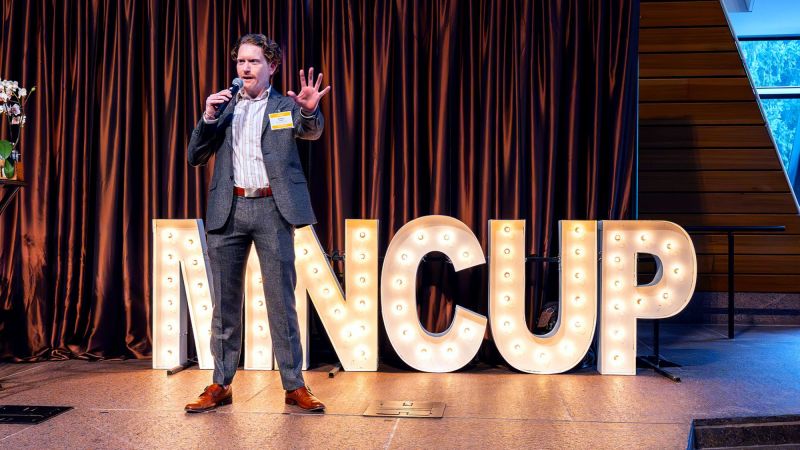
Anthony Dann
You're reading Entrepreneur United Kingdom, an international franchise of Entrepreneur Media.
Changing an industry as large as healthcare requires more than identifying a business opportunity. It demands a reason to persist when progress is slow, systems are complicated, and the outcome remains uncertain. For Anthony Dann, founder and CEO of Biometrica Health, that reason began decades before he became an entrepreneur. His relationship with healthcare started as a child whose survival depended on physicians finding an answer others had missed.
Born in London, Dann became seriously ill early in life. His family later moved to Brazil and eventually Minnesota, while an unexplained condition followed him across three continents. Episodes of severe vomiting, dehydration, and internal bleeding repeatedly sent him to emergency rooms. During one ambulance journey, Dann says his heart stopped. After another hospitalization, he overheard doctors tell his parents that he would only survive another year or two.
His mother subsequently began homeschooling him. Dann did not initially know the full reason, although he understood enough to recognize the fear surrounding his health. Instead of allowing an uncertain future to consume his attention, he says he learned to concentrate on what could be accomplished that day.
“I focused on getting through the day in front of me,” Dann says. “Years later, I realized that same mindset would become essential in entrepreneurship.”
A diagnostic test eventually revealed an abnormality that led the Mayo Clinic to take his case. Following further testing, surgeons performed exploratory surgery and identified an intestinal obstruction that had contributed to years of medical crises. The procedure changed the trajectory of his life. Dann recovered faster than anticipated, completed high school in roughly two years, went on to study entrepreneurship at university, and even joined the rowing team. Fifteen years later, his professional path would even bring him back to work with Mayo Clinic.
That experience also shaped how Dann thinks about information in medicine. He explains his survival as a consequence of clinical information finally reaching the appropriate specialists at the critical moment. “Getting the right information into the right hands at the right time saved my life,” he says. “That experience has stayed with me because every patient represents a life with a family, relationships, and possibilities extending far beyond a medical chart.”
Dann later co-founded a healthcare finance company, moved into consulting, and advised medical technology startups before founding Biometrica Health. The company provides an end-to-end digital platform supporting remote patient monitoring, remote therapeutic monitoring, and chronic care management. According to Dann, its device-agnostic model combines technology with a contact center and operational support intended to help healthcare providers incorporate remote care into existing workflows.
The broader economics have made that mission increasingly consequential. According to a recent American Hospital Association report, national health spending was projected to reach $5.7 trillion in 2025, up 7.3% from the previous year. By 2034, CMS expects spending to approach $9 trillion. For Dann, that trajectory strengthens the case for reconsidering how healthcare resources are deployed before chronic conditions develop into more serious and costly events.
He believes prevention and personal ownership of health will become increasingly important as healthcare costs rise. Remote monitoring, in his view, can help clinicians remain connected to patients between traditional visits and identify information that may warrant earlier attention. His argument is ultimately broader than any individual technology. Healthcare, he says, also happens through conversations about medication adherence, exercise, sleep, diet, and the everyday decisions that influence long-term health.
The resilience behind that philosophy reaches back to the childhood days when Dann could control little beyond how he approached the next 24 hours. He says building a venture-funded healthcare company and expanding it across multiple states has repeatedly required the same discipline. “There were moments when the entrepreneurial journey felt overwhelming, so I returned to what I learned as a child,” Dann says. “You focus on the battle in front of you, keep moving, and trust that enough difficult days overcome the larger challenge.”
But changing the very foundations of an industry as large as healthcare is no easy feat. To fill this void, Biometrica Health has worked alongside partners and investors, and continues to build such relationships. “These relationships allow us to grow from strength to strength, not only as a business, but as a solution for the industry, the economy, and most importantly, for human lives,” Dann adds.
For Dann, surviving an uncertain childhood ultimately became preparation for solving difficult problems as an adult. The lesson he carried into entrepreneurship is straightforward. Meaningful change rarely arrives all at once. Sometimes it begins with finding the strength, information, and determination required to change what happens next.
Changing an industry as large as healthcare requires more than identifying a business opportunity. It demands a reason to persist when progress is slow, systems are complicated, and the outcome remains uncertain. For Anthony Dann, founder and CEO of Biometrica Health, that reason began decades before he became an entrepreneur. His relationship with healthcare started as a child whose survival depended on physicians finding an answer others had missed.
Born in London, Dann became seriously ill early in life. His family later moved to Brazil and eventually Minnesota, while an unexplained condition followed him across three continents. Episodes of severe vomiting, dehydration, and internal bleeding repeatedly sent him to emergency rooms. During one ambulance journey, Dann says his heart stopped. After another hospitalization, he overheard doctors tell his parents that he would only survive another year or two.
His mother subsequently began homeschooling him. Dann did not initially know the full reason, although he understood enough to recognize the fear surrounding his health. Instead of allowing an uncertain future to consume his attention, he says he learned to concentrate on what could be accomplished that day.
Entrepreneur UK
Entrepreneur Staff