From Energy Incentives to Action: How Students for Sustainable Enterprise Helps Small Businesses
SSE’s scenario tool can then test potential improvements before a business spends money. As different operational or equipment changes are considered, energy use, utility costs, carbon impact, and simple payback are updated together. This allows SSE to compare current energy use with what the business would likely have used under similar weather and operating conditions in the absence of the proposed change.
Students for Sustainable Enterprise (SSE)
You're reading Entrepreneur United Kingdom, an international franchise of Entrepreneur Media.
For many small-business owners, an energy bill is simply another cost to manage at the end of the month. It may show higher charges during a heat wave, a steady rise in electricity use, or a line item that is difficult to interpret. What it rarely provides is a clear answer to a more useful question: What can the business do about it?
California offers a wide range of support for energy efficiency and carbon reduction. Utility incentives, local grants, state tax incentives, county programs, and other public funding sources can help businesses improve equipment, reduce energy use, and lower the cost of certain upgrades.
Yet these opportunities may remain out of reach for the independent businesses that could benefit most from them.
Students for Sustainable Enterprise (SSE) is working to change that. The South Bay student-run organization helps small businesses understand their energy and water use, identify relevant incentives, assess potential improvements, and navigate the filing process.
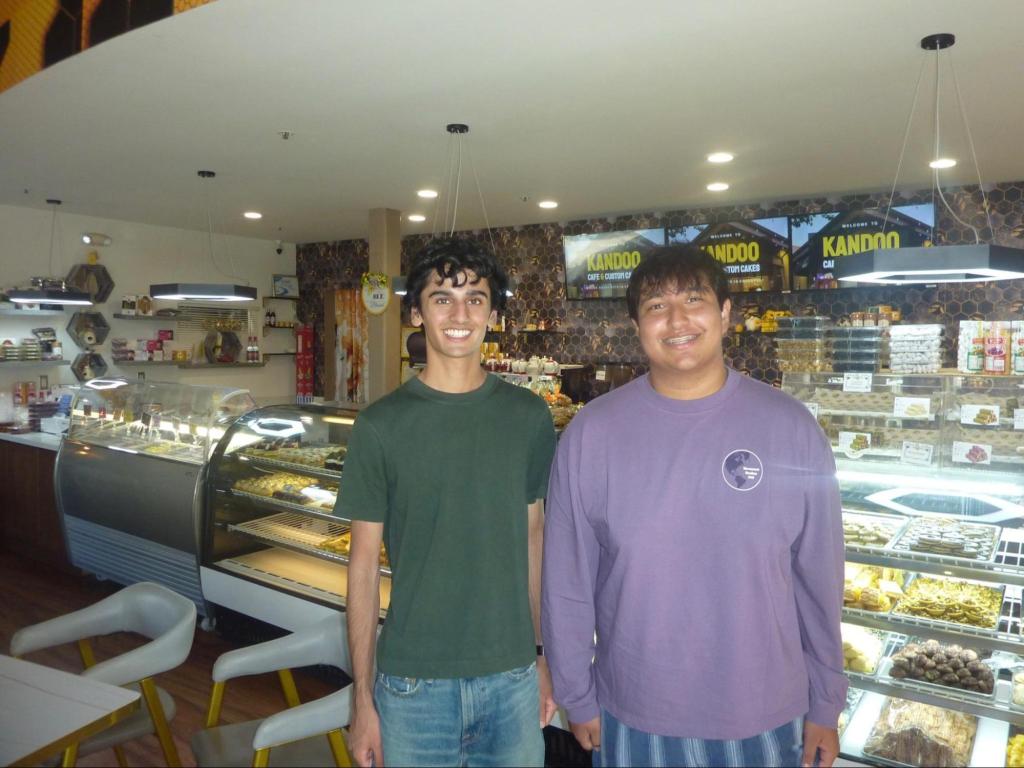
Co-founded by current Monta Vista High School seniors Shreyas Chatterjee and Roshan Saxena, who also serve as executive directors, SSE is designed for small local businesses that may have real opportunities to reduce costs but limited time to investigate every available program.
SSE’s goal is straightforward: make existing climate and energy funding easier for local businesses to use.
Why Incentives Often Go Unused
A rebate or grant does not create an impact simply because it exists. A business owner still has to find the program, understand the eligibility rules, determine whether a project qualifies, gather documents, compare costs, and complete the application.
For a business with a dedicated facilities manager or sustainability team, that work may be manageable. However, for a small owner-operated company with a limited workforce, it can feel like a second job.
Chatterjee first encountered this problem through a neighborhood garden center he had known since childhood. Having grown up visiting the business and knowing its owner from a young age, he saw more personally how rising water bills were putting pressure on its operations. He began looking into available assistance and found that useful programs existed, but identifying the right opportunity and meeting its requirements could be difficult.
Saxena encountered a similar question at a local aquarium shop where he bought supplies for his paludariums, small habitats combining land and water. When the owner explained that some equipment was expensive to operate but difficult to replace without knowing the potential savings or available assistance, Saxena began looking into what options could realistically work for the shop.
When Chatterjee and Saxena compared what they had found, they realized that different businesses were running into the same barrier: support existed, but the path to using it was unclear. That became a starting point for Students for Sustainable Enterprise.
Incentives are often spread across utility websites, local government pages, state agencies, and program administrators. Requirements can differ by location, building type, equipment, business activity, and project timing. Some incentives are available before an upgrade begins, while others require specific documentation after installation. Deadlines and funding levels can also change.
Then there is the question of whether an upgrade is worthwhile. For instance, replacing old lighting, updating HVAC controls, improving refrigeration, or adjusting operational schedules may sound useful. But an owner needs to know whether a change fits the building, whether it will interrupt business operations, what it will cost, how much energy it may save, and how long it may take to pay back.
These decisions are especially difficult when energy use is shaped by changing weather, varied hours, seasonal demand, equipment conditions, and the everyday realities of running a business.
Understanding these complexities, SSE helps owners navigate the research and filing process while allowing them to remain involved in the final decision. Chatterjee and Saxena work directly alongside the rest of the SSE team on assessments, program research, and filing support.
How SSE Helps Turn Incentives Into Practical Business Benefits
Starting With Real Energy Use
The organization begins by understanding each business’s operating reality. Saxena and Chatterjee work with the rest of the SSE team across small-business support and broader climate initiatives, bringing those perspectives into a shared assessment process. Rather than looking only at energy and water data, the process considers how each business actually functions, including its utility bills, building systems, equipment, hours of operation, occupancy patterns, local utility rates, and location.
That broader view comes from speaking directly with owners about the constraints they face and how each site operates day-to-day. The analysis is not treated as purely technical; it is tied to the decisions, schedules, equipment, budgets, and operational demands that shape an owner’s choices.
For instance, a café may use a lot of electricity for refrigeration, cooking, lighting, and long operating hours. A salon may have a different profile shaped by HVAC use, lighting, dryers, and customer traffic. Meanwhile, a workshop or repair business may have motors, tools, ventilation needs, or production cycles that affect demand.
SSE organizes this analysis around four categories: place, building, operations, and economics. “Place” includes weather, local rates, and program geography. “Building” includes systems such as HVAC, lighting, refrigeration, motors, and controls. “Operations” covers factors such as opening hours, occupancy, seasonal changes, and production patterns. “Economics” includes tariffs, project cost, maintenance, equipment life, and available funding.
Having this broader view matters because a generic recommendation may not be useful. SSE believes that everything starts with the right information and the business owner’s real operating constraints.
“We can run the numbers, but the owner knows what can actually work in the space,” Chatterjee says. “If we do not listen to that, the recommendation is not useful.”
Matching Businesses With Relevant Programs
Once SSE understands a business’s energy profile and potential opportunities, it can help narrow the search for financial support. The organization identifies a range of possible funding pathways, including utility incentives, state tax incentives, California Energy Commission programs, USDA programs, county grants, and city incentives.
To make this work more consistent as the organization grows, SSE has also begun building a database of grants, eligibility rules, and application steps. The database gives the team a more organized way to track available programs, compare requirements, and identify the information a business may need before starting an application.
Chatterjee and Saxena say the point is not to present every program a business could find online. A program that is valuable for one site may not apply to another, even if both are in the same region. The goal is to create a shorter, more understandable path based on the business’s circumstances.
This is where SSE acts as a translator. It helps owners understand which opportunities may be relevant, what information will likely be needed, and how an incentive could affect a project’s economics.
SSE uses this growing resource to help make the process more repeatable while still assessing each business on its own circumstances. Program eligibility can vary significantly, so the database does not replace individual review. Instead, it helps SSE organize the research needed to connect a business with the most relevant opportunities.
The same emphasis on turning ideas into action extends to SSE’s ecopreneurship competition for young founders. Chatterjee takes a central role in working with participating teams, helping students refine sustainability-focused ideas and develop a credible path toward a pilot. The broader vision is to make sustainable entrepreneurship feel more accessible to young people by giving them the support to bring an idea off the page and into their communities.
Chatterjee and Saxena work closely with students as they test the science and economics behind their concepts and strengthen their approach. In this way, the competition reflects SSE’s wider goal of helping the next generation turn sustainability ideas into impactful ventures.
Ranking the Changes That Matter
Saxena led the development of the physics-guided ensemble model at the core of SSE’s analytical approach. It combines forecasting, building science, and project economics to identify and rank the changes most likely to matter. Chatterjee and Saxena then use those findings to weigh potential improvements and connect the strongest options with relevant funding pathways.
SSE’s scenario tool can then test potential improvements before a business spends money. As different operational or equipment changes are considered, energy use, utility costs, carbon impact, and simple payback are updated together. This allows SSE to compare current energy use with what the business would likely have used under similar weather and operating conditions in the absence of the proposed change.
“The model gives us a consistent way to compare the options,” Saxena says. “But the result still has to make sense to the owner who would have to act on it.”
This process helps avoid misleading conclusions based on a simple before-and-after utility bill comparison and keeps the analysis grounded and flexible. In return, recommendations are designed to be technically and economically practical while taking into account the building and the people running the business.
Navigating Climate Funding at the Local Level
An incentive is only useful if a business can pursue it successfully. With this, SSE’s work remains rooted in the original concern that prompted its creation: a small business should not miss out on available support simply because its owners are busy or navigating a complex funding system.
By combining youth-led research, technical analysis, owner interviews, and a growing resource base of funding information, SSE aims to provide a more practical route into those opportunities. The exact requirements will vary by program, but the purpose remains the same: reduce the administrative burden that causes many businesses to abandon the process.
Working toward its vision of expanding access to climate funding for local businesses, SSE says it has helped numerous small businesses identify substantial potential savings, reduce electricity use significantly—by an amount comparable to the annual electricity use of 90 California homes—and avoid a meaningful amount of CO₂ emissions.
This outcome illustrates that when smaller businesses can access support, they may be better positioned to reduce operating costs, modernize aging systems, and participate in energy and climate programs that have been out of reach.
Please visit SSE’s website for more information on their initiatives.
For many small-business owners, an energy bill is simply another cost to manage at the end of the month. It may show higher charges during a heat wave, a steady rise in electricity use, or a line item that is difficult to interpret. What it rarely provides is a clear answer to a more useful question: What can the business do about it?
California offers a wide range of support for energy efficiency and carbon reduction. Utility incentives, local grants, state tax incentives, county programs, and other public funding sources can help businesses improve equipment, reduce energy use, and lower the cost of certain upgrades.
Yet these opportunities may remain out of reach for the independent businesses that could benefit most from them.
Entrepreneur UK
Entrepreneur Staff