Why Human Intelligence Still Matters in Global Business
Carlos Martinez explains how TBY is connecting global business leaders.
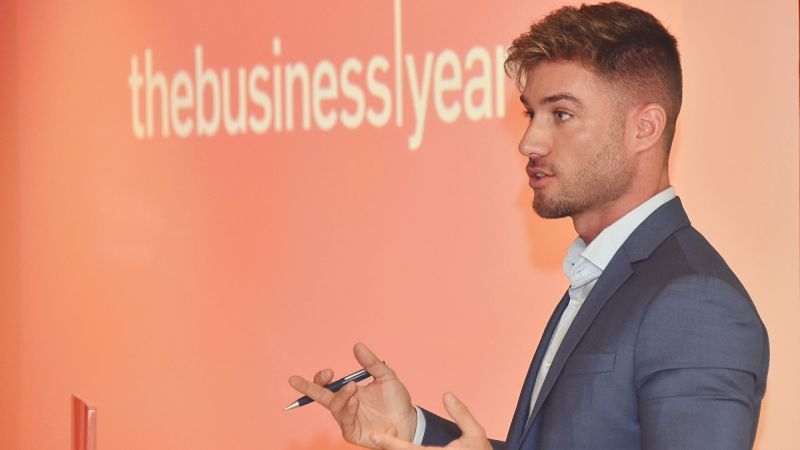
The Business Year
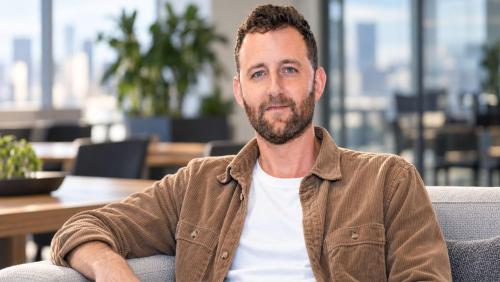
Carlos Martinez, CEO of The Business Year
Opinions expressed by Entrepreneur contributors are their own.
You're reading Entrepreneur United Kingdom, an international franchise of Entrepreneur Media.
What does it take to build a business that can grow far beyond its original market? For Carlos Martinez, CEO of The Business Year, the answer has been a combination of people, relationships, adaptability and a willingness to evolve. What began as a publishing business has grown into a global media, intelligence and events company operating across more than 30 markets. As TBY continues to expand internationally, Martinez shares the lessons behind that growth, from navigating AI and changing customer expectations to building trusted networks and spotting opportunities in new markets. We speak to Martinez about what it really takes to build, scale and future-proof a business in a rapidly changing world.
The Business Year has spent more than 15 years building a global media and events business. How would you describe the company you are building today?
For over 17 years, The Business Year has delivered first-hand insights across more than 30 dynamic markets. While our foundation was built on print reports, we have evolved, expanding into digital intelligence and, today, high-level events that connect businesses and our network of investors and c-suit leaders more directly than ever. One of our biggest strengths is our people. We have a diverse, international team with knowledge of different markets, journalistic skills, and, most importantly, strong relationships with local business and institutional leaders. Those relationships, which take years to build, are becoming even more important today. There is more information available than ever before, but having access to the right people, asking the right questions, and understanding the local context is something that cannot be easily replicated. I see the future of TBY in combining our global reach with our local knowledge and our network of decision-makers.
With a presence across multiple regions, what is driving the next phase of The Business Year’s international growth?
There is a very interesting paradox in the media today. We have more information than ever, but finding information that is relevant, reliable, and truly useful is becoming more difficult. AI-generated content is everywhere and an LLM can give you information in seconds, but it doesn’t necessarily give you the right context and lacks the human touch. This presents a clear opportunity. We tell the stories of markets driven by real progress: active investment, emerging sectors, infrastructure development, economic reform, and shifting international relationships. Our growth is not only about adding more countries to our portfolio, but also identifying where there is something important happening and then building a strong local network around that. In 2026, we opened new markets including Guatemala, Uruguay, and Libya, while also developing sector-focused reports around areas such as data centers, the UK-GCC free trade agreement, and the Bahrain finance sector. We are also expanding in Asia, where we see significant potential as the global geopolitical landscape continues to change. Of course, geopolitical instability affects international businesses, particularly companies working across multiple regions, and we are not immune. The conflict in the Middle East has affected us and all companies based in the Gulf one way or another. But TBY is a highly agile company and we can shift our focus when the situation requires it and that makes us stronger. Despite the instability in the region, companies are still investing, governments are still looking for partners, and capital is still moving between markets.
How is the B2B media model changing, and where do you see the biggest opportunities for The Business Year?
I think the B2B media model is changing quite rapidly. There is so much content today that simply producing more is not enough. Our audience is asking for information that is more specific to their sector, their market, and their business interests. This is why we are investing more in special reports and intelligence products. We can take the knowledge we have built across more than 30 markets and go deeper into specific sectors, investment themes, and industries. Data centers are one example, but there are many other sectors where we can bring our global knowledge and local access to bear and create a platform for dialogue. At the same time, I think the next step is moving from an audience to a network. The people we interview are not just names in our publications. They are CEOs, ministers, investors, and business leaders who are part of the same ecosystems as our readers. Our events are one way of building that network. We are also working on a new platform that will allow selected members of our community to connect and exchange information directly.
What role do high-level events play within that wider strategy?
Events play a very important role because they are a natural extension of what we have been doing for over 17 years. For over a decade, our teams have been interviewing the people shaping economies: CEOs, ministers, investors, and institutional leaders. At some point, it became natural to bring these people into the same room. We don’t see them simply as conferences. They create a space for conversations between people who may not otherwise meet, and they also give us a much deeper understanding of the markets we cover. Over the past 12 months, we have organized events in markets including Bahrain, Oman, Kuwait, Mexico, Mozambique, the Democratic Republic of Congo, Qatar, Guatemala, Costa Rica, and Panama, among others. We are now taking this one step further with regional events, connecting several markets around common topics. Our next major regional initiative will take place in Panama in 2Q2027, bringing together leaders and institutions from across Latin America. For me, the most interesting part is actually what happens after the event. The conversations create new relationships, new information, and sometimes new business opportunities. That is what makes events such an important part of the future of TBY.
The UK–GCC Strategic Dialogue comes at an important moment following the conclusion of the Free Trade Agreement. Why was now the right time to launch this platform?
In May 2026, the UK and the GCC signed a free trade agreement. Implementation is the next phase, and the UK-GCC Strategic Dialogue will play a major role in shaping what comes next. Convening at Guildhall in London this October 20, the event, held under the patronage of the GCC General Secretariat, will gather key UK and GCC figures from government and business for a day of debate, discussion, and dialogue. The timing of the event couldn’t be better and is no accident. UK-GCC trade ties are about to soar. And we’ll be there to get the right people talking.
With government figures, sovereign investors, and corporate leaders coming together, what do you hope the Dialogue will achieve beyond the conversations taking place on the day?
Signing a free trade agreement is just the first step. Implementation is key, and without sustained and meaningful dialogue, the potential benefits of the arrangement could be lost. Launching alongside the event is a special report. At over 200 pages in length and featuring news, interviews, and analysis, it is the most comprehensive guide of the current state of UK-GCC trade ties available and, we suspect, will be key reading for any UK or GCC investor thinking of doing cross-border business.
Looking beyond October 20, what would you like the UK–GCC Strategic Dialogue to become?
We envision the UK-GCC Strategic Dialogue becoming a key milestone on the road to the implementation of the UK-GCC free trade agreement. Beyond that, this event is just the first in a series of cross-border events we have planned under the Strategic Dialogue theme. The UK-GCC Strategic Dialogue is a flagship initiative for TBY and our most ambitious endeavor to date. We’re excited to welcome our guests and present this platform for dialogue and progress to the UK-GCC business community. It really feels like the culmination of over 15 years of work building ties with the movers and shakers across the Gulf region and generating trust in our platform. And with events now a key element of our business, there could be no better way to celebrate everything we have achieved than the successful delivery of the UK-GCC Strategic Dialogue. We’re excited to share what comes next.
What does it take to build a business that can grow far beyond its original market? For Carlos Martinez, CEO of The Business Year, the answer has been a combination of people, relationships, adaptability and a willingness to evolve. What began as a publishing business has grown into a global media, intelligence and events company operating across more than 30 markets. As TBY continues to expand internationally, Martinez shares the lessons behind that growth, from navigating AI and changing customer expectations to building trusted networks and spotting opportunities in new markets. We speak to Martinez about what it really takes to build, scale and future-proof a business in a rapidly changing world.
The Business Year has spent more than 15 years building a global media and events business. How would you describe the company you are building today?
For over 17 years, The Business Year has delivered first-hand insights across more than 30 dynamic markets. While our foundation was built on print reports, we have evolved, expanding into digital intelligence and, today, high-level events that connect businesses and our network of investors and c-suit leaders more directly than ever. One of our biggest strengths is our people. We have a diverse, international team with knowledge of different markets, journalistic skills, and, most importantly, strong relationships with local business and institutional leaders. Those relationships, which take years to build, are becoming even more important today. There is more information available than ever before, but having access to the right people, asking the right questions, and understanding the local context is something that cannot be easily replicated. I see the future of TBY in combining our global reach with our local knowledge and our network of decision-makers.
With a presence across multiple regions, what is driving the next phase of The Business Year’s international growth?
There is a very interesting paradox in the media today. We have more information than ever, but finding information that is relevant, reliable, and truly useful is becoming more difficult. AI-generated content is everywhere and an LLM can give you information in seconds, but it doesn’t necessarily give you the right context and lacks the human touch. This presents a clear opportunity. We tell the stories of markets driven by real progress: active investment, emerging sectors, infrastructure development, economic reform, and shifting international relationships. Our growth is not only about adding more countries to our portfolio, but also identifying where there is something important happening and then building a strong local network around that. In 2026, we opened new markets including Guatemala, Uruguay, and Libya, while also developing sector-focused reports around areas such as data centers, the UK-GCC free trade agreement, and the Bahrain finance sector. We are also expanding in Asia, where we see significant potential as the global geopolitical landscape continues to change. Of course, geopolitical instability affects international businesses, particularly companies working across multiple regions, and we are not immune. The conflict in the Middle East has affected us and all companies based in the Gulf one way or another. But TBY is a highly agile company and we can shift our focus when the situation requires it and that makes us stronger. Despite the instability in the region, companies are still investing, governments are still looking for partners, and capital is still moving between markets.

Patricia Cullen • Features Writer
Entrepreneur Staff