European Start-ups React to EU INC
EU Inc promises simpler scaling, but founders question real impact.

Started Advisory Board
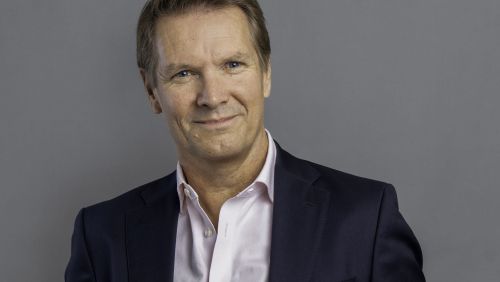
Kimberley Waldron, founder of Started Advisory Board
Opinions expressed by Entrepreneur contributors are their own.
You're reading Entrepreneur United Kingdom, an international franchise of Entrepreneur Media.
At Davos 2026, the European Commission President, Ursula von der Leyen confirmed the launch of EU Inc, a proposed “28th regime” designed to simplify how companies incorporate, operate and scale across Europe. The ambition is to reduce fragmentation, unlock cross-border growth and make Europe a more competitive, investable market. However, while the political signal is strong, questions remain around implementation, adoption and real-world impact. To explore what EU Inc could genuinely deliver for founders, investors and the wider ecosystem, Entrepreneur UK spoke with:
- Serhii Zakharov, CEO, PayDo
- Andrew Smith, CEO and founder, Sporta
- Justin Pike, CEO and founder of Burbank
- Kimberley Waldron, founder of Started Advisory Board
Let’s start simple, why does EU Inc matter?
Zakharov begins by saying, “EU Inc arrives at a moment when Europe is being forced to rethink what sovereignty really means in an increasingly unstable global environment. The message emerging from Davos a few weeks ago was not simply that geopolitical competition is intensifying, but that infrastructure coherence is becoming one of the defining determinants of long-term economic resilience.
In that context, EU Inc has the potential to become far more than a legal or corporate initiative. It could be a catalyst for structural reform across Europe’s financial and economic foundations. Today, sovereignty is no longer shaped only by diplomacy, defence or energy security. It is increasingly defined by control over the financial and data systems that underpin everyday economic life.”
Pike follows highlighting that the “EU Inc matters because, at its core, it is a trust project. Europe does not lack innovation, ambition or technical capability. What it often lacks is the level of structural clarity and consistency that makes it feel truly investable at scale. When founders and investors must navigate multiple regulatory regimes, corporate structures, tax systems and compliance frameworks, uncertainty becomes embedded in every growth decision.”
Waldron agrees. “That’s true. For too long, Europe has asked its most ambitious companies to scale in spite of its structures, not because of them. A unified European company regime could finally change that, enabling seamless cross-border growth and capital raising. Done well, this has the potential to unlock a new era of European competitiveness and global investment appeal. It feels like a really positive step forward.”
Smith adds; “I agree. EU Inc is a strong signal that Europe understands the urgency of scale, but the real test will be whether it meaningfully improves the conditions for founders at the very earliest stages. Today, building a company in Europe still means navigating 27 different regulatory regimes, tax systems, employment laws and investment frameworks. That fragmentation creates friction, slows execution and ultimately suppresses ambition.
That’s interesting, so what will EU Inc need to do to succeed?
Zakharov predicts that if EU Inc is to succeed, it must go beyond corporate harmonisation and legal simplification. “It needs to address the deeper structural challenge of infrastructure coherence. Europe requires a more unified financial stack that simplifies operational layers, embeds regulatory alignment directly into core systems, and reduces dependency on non-European infrastructure providers.”
Waldron says it comes down to whether it can deliver real simplicity, not just structural ambition. “EU Inc is a corporate law reform, not a rewrite of tax or employment regimes, so expectations need to be carefully managed. The real test will be implementation and adoption. If too few Member States opt in, the fragmentation founders face today will simply persist. Success depends on widespread participation, which isn’t a given.”
Smith agrees. “Kimberley is right. A big test will be if it genuinely drives harmonisation. If it does, it could be transformative, creating a far more coherent, founder-friendly starting point for entrepreneurs across the region. If Europe is serious about capital flowing more freely into EU-based businesses, then simplifying cross-border investment rules, reducing compliance burdens and creating genuine regulatory clarity must sit at the heart of this initiative.
Pike concludes the point saying “Let’s see if it can deliver a clear, predictable baseline that investors can underwrite with confidence. Not simply a new corporate label, but a practical operating framework that reduces friction, shortens time-to-scale, and creates more uniform standards of governance, compliance and reporting. That kind of coherence would materially lower perceived risk and improve the flow of capital into European businesses.”
Do you believe that EU Inc will help to drive more investment into Europe?
Smith thinks Europe has world-class talent and innovation, but capital remains fragmented and unevenly distributed. “If EU Inc helps Europe behave more like a coordinated economic bloc, we should see the emergence of deeper, pan-European capital pools and large-scale investment vehicles. That would allow greater volumes of capital to flow more consistently into both start-ups and scale-ups, reducing the funding cliff many businesses face as they try to grow beyond their home markets.”
Pike adds; “The way I see it, EU Inc is not just about attracting more investment, but better investment. Greater trust unlocks longer-term commitments, larger funding rounds and deeper strategic partnerships. It creates the conditions for patient capital, rather than short-term, risk-averse deployment. Capital commits when environments feel legible, stable and enforceable. The easier it is to understand how systems work, how disputes are resolved and how regulation is applied, the more confident investors become.”
What do you hope EU Inc ultimately unlocks for European businesses?
If EU Inc helps Europe behave more like a coordinated economic bloc, we should see the emergence of deeper, pan-European capital pools and large-scale investment vehicles, according to Smith. “That would allow greater volumes of capital to flow more consistently into both start-ups and scale-ups, reducing the funding cliff many businesses face as they try to grow beyond their home markets.”
This sentiment is echoed by Zakharov. “EU Inc must become a platform for deeper coordination across financial infrastructure. The next decade will not be defined solely by who builds the fastest applications or the most advanced payment products, but by who controls the underlying systems that move money, manage risk and connect markets. In that sense, infrastructure coherence is no longer an efficiency play. It is a strategic imperative.”
Waldron finishes with her aspiration for the future. “What I hope EU Inc ultimately unlocks is a genuine release of Europe’s growth potential. For years, Europe’s most ambitious companies have been held back by national silos that act like a structural handbrake. The Draghi Report made that reality impossible to ignore. If EU Inc can create a true gold standard for incorporation, similar to the Delaware C-Corp in the US, it would remove one of the biggest barriers to scale and allow European businesses to grow with confidence across the entire region.”
At Davos 2026, the European Commission President, Ursula von der Leyen confirmed the launch of EU Inc, a proposed “28th regime” designed to simplify how companies incorporate, operate and scale across Europe. The ambition is to reduce fragmentation, unlock cross-border growth and make Europe a more competitive, investable market. However, while the political signal is strong, questions remain around implementation, adoption and real-world impact. To explore what EU Inc could genuinely deliver for founders, investors and the wider ecosystem, Entrepreneur UK spoke with:
- Serhii Zakharov, CEO, PayDo
- Andrew Smith, CEO and founder, Sporta
- Justin Pike, CEO and founder of Burbank
- Kimberley Waldron, founder of Started Advisory Board
Let’s start simple, why does EU Inc matter?
Zakharov begins by saying, “EU Inc arrives at a moment when Europe is being forced to rethink what sovereignty really means in an increasingly unstable global environment. The message emerging from Davos a few weeks ago was not simply that geopolitical competition is intensifying, but that infrastructure coherence is becoming one of the defining determinants of long-term economic resilience.
In that context, EU Inc has the potential to become far more than a legal or corporate initiative. It could be a catalyst for structural reform across Europe’s financial and economic foundations. Today, sovereignty is no longer shaped only by diplomacy, defence or energy security. It is increasingly defined by control over the financial and data systems that underpin everyday economic life.”