Building a Multi-Million E-Commerce Business Without Paid Ads
Founder builds revenue system by mastering organic attention and distribution
Highlife Media
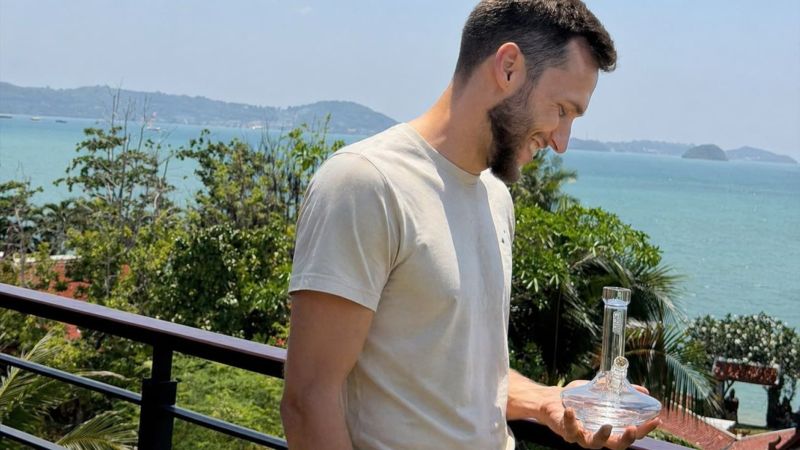
Marco Cadisch, founder, Highlife Media
Opinions expressed by Entrepreneur contributors are their own.
You're reading Entrepreneur United Kingdom, an international franchise of Entrepreneur Media.
In markets where paid ads are unreliable, one founder built a system that turns attention into revenue.
Building without relying on paid growth
Marco Cadisch did not start with a product. He started by learning how attention works when you cannot simply buy it. In 2016, he launched Highlife Media and began building digital platforms focused on organic growth. At a time when many businesses depended heavily on paid acquisition, Cadisch focused on understanding platform behaviour, content dynamics, and audience psychology. “I had to rely entirely on organic growth,” he says. “That forces you to understand what actually drives attention, not just how to pay for it.” That decision shaped the foundation of what would become a media network reaching more than 20m followers across platforms, with hundreds of millions of impressions generated over time.
Learning the market before owning it
Cadisch’s early strategy was not to sell, but to observe and execute. For five to six years, Highlife Media operated as a marketing and distribution partner, working with more than 100 brands across digital channels. This included social media, influencer collaborations, search engine optimisation, and affiliate systems. Rather than specialising in a single tactic, he focused on how these channels connect. That phase created something more valuable than short-term revenue. It built a deep understanding of how users behave, what captures attention, and what ultimately drives conversion. At a certain point, the shift became obvious. Instead of building growth for other companies, Cadisch moved to apply the same systems to his own ventures.
Execution backed by measurable results
The transition into e-commerce was not speculative. It was built on tested frameworks. Through ventures such as World of Bongs, Cadisch applied his distribution-first approach to build revenue-generating platforms. Across his e-commerce operations, more than 150,000 orders have been processed. One store alone generated over $1.2m in revenue within a six-month period between 2025 and 2026. This growth was achieved without relying on paid advertising.
Alongside building his companies, Cadisch also raised over $2m in funding before later reacquiring his shares, reinforcing his focus on long-term control and alignment. His ongoing work and insights are also shared through his digital presence, including platforms like Instagram where he documents parts of his journey and thinking.
A system built on distribution and conversion
At the core of Cadisch’s approach is a simple structure. First, build attention through content and distribution. Second, capture that attention through owned channels such as websites and email. Third, convert it through optimised e-commerce systems. “The biggest mistake is building a product without having a way to reach customers,” he says. “Attention is the most valuable asset.” Search plays a key role in this system. By focusing on high-intent queries, his platforms attract users who are already close to making a purchase decision. This reduces dependency on unstable channels and creates a more predictable revenue stream. It also shifts the focus from short-term tactics to long-term infrastructure.
Scaling an ecosystem, not just a business
Cadisch is now expanding beyond individual projects. His focus is on building an ecosystem that connects media, commerce, and product development into a repeatable model. The goal is not just to grow a single brand, but to create a system that can consistently launch and scale new ones. “The long-term vision is to build infrastructure that compounds,” he says. This includes strengthening owned distribution channels, expanding product lines, and refining conversion systems that can be applied across different markets. Rather than chasing rapid growth through external channels, the strategy remains grounded in control and sustainability.
Redefining what creates leverage
Many businesses still treat attention as a by-product. Cadisch treats it as the foundation. Because in environments where visibility cannot be bought on demand, distribution becomes the advantage. And those who build it early do not just grow faster. They operate on a different level entirely.
In markets where paid ads are unreliable, one founder built a system that turns attention into revenue.
Building without relying on paid growth
Marco Cadisch did not start with a product. He started by learning how attention works when you cannot simply buy it. In 2016, he launched Highlife Media and began building digital platforms focused on organic growth. At a time when many businesses depended heavily on paid acquisition, Cadisch focused on understanding platform behaviour, content dynamics, and audience psychology. “I had to rely entirely on organic growth,” he says. “That forces you to understand what actually drives attention, not just how to pay for it.” That decision shaped the foundation of what would become a media network reaching more than 20m followers across platforms, with hundreds of millions of impressions generated over time.
Learning the market before owning it
Cadisch’s early strategy was not to sell, but to observe and execute. For five to six years, Highlife Media operated as a marketing and distribution partner, working with more than 100 brands across digital channels. This included social media, influencer collaborations, search engine optimisation, and affiliate systems. Rather than specialising in a single tactic, he focused on how these channels connect. That phase created something more valuable than short-term revenue. It built a deep understanding of how users behave, what captures attention, and what ultimately drives conversion. At a certain point, the shift became obvious. Instead of building growth for other companies, Cadisch moved to apply the same systems to his own ventures.