What Founders Need to Know Before Raising Capital
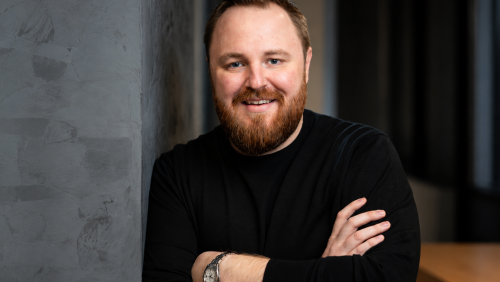
Thomas Cuvelier, Partner at RTP Global, offers his expert insights into the essential focus areas for founders raising their first round of funding, the traits that make a winning start-up team, and the exciting opportunities driven by AI in traditionally overlooked industries.
Opinions expressed by Entrepreneur contributors are their own.
You're reading Entrepreneur United Kingdom, an international franchise of Entrepreneur Media.
Raising capital is never easy, but with the right preparation, founders can increase their chances of securing funding. Thomas Cuvelier, Partner at RTP Global, shares the top three things every founder should focus on when preparing for their first round – refining your pitch, demonstrating company momentum, and proving founder-market fit. In this Entrepreneur UK interview, he also discusses what he looks for when evaluating early-stage start-ups, how founders should handle investor rejection, and why AI-driven disruption in highly regulated or niche industries is one of the most exciting trends he’s following.
What are the top three things founders should focus on when preparing to raise their first round of funding?
First, practice and refine your pitch until it clearly articulates your vision and market insight. You need to be able to communicate the “why now” behind your company with a deep understanding of the customer pain points you’re solving. Second, prepare strong evidence of your company’s momentum. At the early stages, this could include product usage, engagement metrics or a pipeline of pilot – anything with a quantitative edge that demonstrates there is real demand and need for your solution. Finally, demonstrate founder-market fit. Investors want to know why you’re the best team for the challenge, and what unique or unfair advantage you bring compared to your peers.
When evaluating early-stage start-ups, what key factors do you prioritise?
Team quality is the main driver. I look for the traits and qualities that give teams a competitive edge. Unique “special powers” with characteristics including grit, self-awareness and clarity of thoughts amount to a big draw. I also factor in the company’s competitive landscape and dig into how “painful” the problem they’re solving really is.
How should founders handle a “no” from an investor? What’s the best way to build long-term relationships, even if they don’t secure investment straight away?
A “no” isn’t always final, so don’t take it personally. I’ve passed on companies at the seed stage only to invest in their Series A or B. For a myriad of reasons, it’s often difficult to receive objective or honest feedback from VCs, so the best approach is to just keep pitching. If you’re coming up against repeated no’s, try pitching other founders or friends to identify whether the root of the problem is fixable (it could be the presentation of the pitch itself). It’s hard to build long-term relationships, but my advice is slightly contrarian: rather than sending regular updates to VCs, focus on building the business. Let the company speak for itself, and investors will come to you.
What start-up sector or trend excites you the most at the moment, and why?
We’re at the very beginning of a major wave of transformation of entire industries driven by AI. What excites me most is seeing promising companies tackling problems in large industries that have been overlooked by most entrepreneurs, either because they’re highly regulated (such as healthcare and financial services) or highly niche (including specialist US verticals). These areas are ripe for disruption and we’re actively looking for early-stage founders building these industry-defining solutions with an eye towards global scale and success.
Raising capital is never easy, but with the right preparation, founders can increase their chances of securing funding. Thomas Cuvelier, Partner at RTP Global, shares the top three things every founder should focus on when preparing for their first round – refining your pitch, demonstrating company momentum, and proving founder-market fit. In this Entrepreneur UK interview, he also discusses what he looks for when evaluating early-stage start-ups, how founders should handle investor rejection, and why AI-driven disruption in highly regulated or niche industries is one of the most exciting trends he’s following.
What are the top three things founders should focus on when preparing to raise their first round of funding?
First, practice and refine your pitch until it clearly articulates your vision and market insight. You need to be able to communicate the “why now” behind your company with a deep understanding of the customer pain points you’re solving. Second, prepare strong evidence of your company’s momentum. At the early stages, this could include product usage, engagement metrics or a pipeline of pilot – anything with a quantitative edge that demonstrates there is real demand and need for your solution. Finally, demonstrate founder-market fit. Investors want to know why you’re the best team for the challenge, and what unique or unfair advantage you bring compared to your peers.
When evaluating early-stage start-ups, what key factors do you prioritise?
Team quality is the main driver. I look for the traits and qualities that give teams a competitive edge. Unique “special powers” with characteristics including grit, self-awareness and clarity of thoughts amount to a big draw. I also factor in the company’s competitive landscape and dig into how “painful” the problem they’re solving really is.
How should founders handle a “no” from an investor? What’s the best way to build long-term relationships, even if they don’t secure investment straight away?
A “no” isn’t always final, so don’t take it personally. I’ve passed on companies at the seed stage only to invest in their Series A or B. For a myriad of reasons, it’s often difficult to receive objective or honest feedback from VCs, so the best approach is to just keep pitching. If you’re coming up against repeated no’s, try pitching other founders or friends to identify whether the root of the problem is fixable (it could be the presentation of the pitch itself). It’s hard to build long-term relationships, but my advice is slightly contrarian: rather than sending regular updates to VCs, focus on building the business. Let the company speak for itself, and investors will come to you.
What start-up sector or trend excites you the most at the moment, and why?
We’re at the very beginning of a major wave of transformation of entire industries driven by AI. What excites me most is seeing promising companies tackling problems in large industries that have been overlooked by most entrepreneurs, either because they’re highly regulated (such as healthcare and financial services) or highly niche (including specialist US verticals). These areas are ripe for disruption and we’re actively looking for early-stage founders building these industry-defining solutions with an eye towards global scale and success.