What We Miss When We Only Measure the Heart
David Loban explains why cardiac monitoring needs to move beyond snapshots.
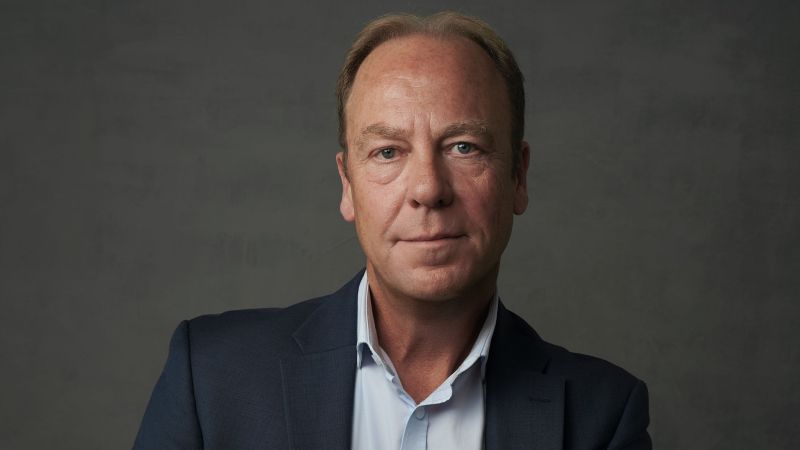
LLA Technologies
David Loban, CEO of LLA Technologies
Opinions expressed by Entrepreneur contributors are their own.
You're reading Entrepreneur United Kingdom, an international franchise of Entrepreneur Media.
David Loban, CEO of LLA Technologies talks to Entrepreneur UK about rethinking cardiac monitoring, the science behind Recordis and why the future of heart health may lie in understanding change before disease becomes visible.
What first convinced you that cardiac health could be monitored in a fundamentally different way?
I’ve always believed the heart is one of the clearest windows we have into our overall health.
Yet healthcare is still largely built around treating people once something has gone wrong. I felt there had to be a better way: one where we had the right tools to understand what was happening earlier, track how someone’s health was changing over time and in response to different experiences and lifestyles. That became particularly clear to me after years of exposure to the research behind seismocardiography, working alongside researchers and cardiologists. I kept coming back to the disconnect between how dynamic our health is and how often healthcare still relies on snapshot methods instead of a longitudinal view. At the same time, wearables were showing that people were willing to monitor themselves and take a more proactive role in their health. The question for me became: could we bring those two worlds together? Could we provide clinical-grade cardiac intelligence with the simplicity and repeatability people had come to expect from consumer technology? My background has always made me think in terms of risk: understanding it early, measuring it properly and acting before it becomes a crisis. Recordis grew naturally out of that thinking.
How did your journey from the British Army to healthtech shape the entrepreneur you are today?
The environments are obviously very different, but many of the principles are surprisingly similar. The Army taught me that you need a clear objective, a good plan and the discipline to execute it, but also the humility to change the plan when reality changes. You learn to assess risk without becoming paralysed by it, to take responsibility for the people around you, ask them to do the same for you and to understand that success is rarely an individual achievement. I’ve carried all of that into LLA Technologies. Building a medical technology company involves uncertainty almost every day: scientific, regulatory, commercial and financial—and you cannot eliminate all of it. Your job as a leader is to understand the risk, make the best decision you can with the information available and keep the team moving towards the objective.
What have you discovered from building one of the world’s largest mechanical cardiac datasets?
Probably the biggest lesson is just how responsive the heart is to the way we live. When you look beyond a single measurement and start following people over time, you begin to see patterns associated with stress, workload, recovery, fitness and lifestyle that a snapshot simply cannot show. We’ve also learned how different populations can be: different occupations, lifestyles and levels of fitness can produce very different cardiac profiles. Some people in our dataset have taken hundreds of consecutive recordings, giving us an unusually detailed picture of how an individual’s heart changes over time. That is where I think things become really interesting. When you can collect very high-fidelity information about how the heart is mechanically functioning, and do that consistently over time, you move beyond simply asking whether someone falls within a normal range today. You can start to understand what is normal for that individual, how their heart is responding to stress, recovery, lifestyle or treatment, and whether their trajectory is changing. That opens up a much richer picture of their health and, potentially, a much clearer understanding of what they can do to improve it.
Why do you believe cardiac health needs to be monitored differently, not just when someone has symptoms?
Healthcare is incredibly good at responding once something is clearly wrong. But there is a bigger opportunity to understand what is happening before we reach that point. Many cardiovascular conditions develop without being detected, and by the time symptoms appear, the disease may already be advanced. If we can give people and clinicians clinically meaningful and actionable information earlier, and then show how that information changes over time, we create an opportunity to intervene sooner. That might mean changing lifestyle, managing stress, investigating further or simply monitoring more closely. For me, prevention is only truly possible when it becomes measurable. Telling somebody to sleep better, exercise or reduce stress is one thing; showing them that their cardiac performance is actually responding to those actions, and that they have some control over their heart health, is far more powerful.
What’s the bigger vision for LLA Technologies over the next five years?
Over the next five years, we want to make understanding how well the heart is functioning a routine part of frontline healthcare, effectively creating a more heart-centred approach to care. That means giving GPs access to practical tools that help them assess the heart’s physical function there and then, in the consultation room. With an ageing population and growing demand for healthcare services, we need to help clinicians identify potential problems earlier. GPs often have to refer patients because they simply do not have the tools to investigate further themselves. We want to give them better information to guide those decisions, so patients can get the right care and specialist resources can be directed to where they are needed most. That’s the ambition behind Recordis: to make measuring the heart’s mechanical activity quick, non-invasive and accessible at the point of care. If we can make that possible in a clinic, a workplace, a rural community or eventually at home, we can expand access, help clinicians identify who needs further investigation and move more cardiovascular care upstream.
David Loban, CEO of LLA Technologies talks to Entrepreneur UK about rethinking cardiac monitoring, the science behind Recordis and why the future of heart health may lie in understanding change before disease becomes visible.
What first convinced you that cardiac health could be monitored in a fundamentally different way?
I’ve always believed the heart is one of the clearest windows we have into our overall health.
Yet healthcare is still largely built around treating people once something has gone wrong. I felt there had to be a better way: one where we had the right tools to understand what was happening earlier, track how someone’s health was changing over time and in response to different experiences and lifestyles. That became particularly clear to me after years of exposure to the research behind seismocardiography, working alongside researchers and cardiologists. I kept coming back to the disconnect between how dynamic our health is and how often healthcare still relies on snapshot methods instead of a longitudinal view. At the same time, wearables were showing that people were willing to monitor themselves and take a more proactive role in their health. The question for me became: could we bring those two worlds together? Could we provide clinical-grade cardiac intelligence with the simplicity and repeatability people had come to expect from consumer technology? My background has always made me think in terms of risk: understanding it early, measuring it properly and acting before it becomes a crisis. Recordis grew naturally out of that thinking.
How did your journey from the British Army to healthtech shape the entrepreneur you are today?
The environments are obviously very different, but many of the principles are surprisingly similar. The Army taught me that you need a clear objective, a good plan and the discipline to execute it, but also the humility to change the plan when reality changes. You learn to assess risk without becoming paralysed by it, to take responsibility for the people around you, ask them to do the same for you and to understand that success is rarely an individual achievement. I’ve carried all of that into LLA Technologies. Building a medical technology company involves uncertainty almost every day: scientific, regulatory, commercial and financial—and you cannot eliminate all of it. Your job as a leader is to understand the risk, make the best decision you can with the information available and keep the team moving towards the objective.

Patricia Cullen • Features Writer
Entrepreneur Staff