The Long Game
In modern sport, the true stakes extend far beyond the pitch.
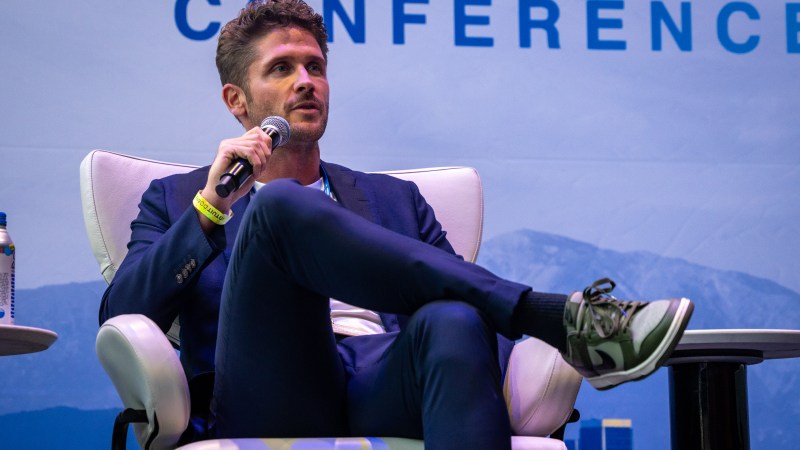
InStudio Ventures
Opinions expressed by Entrepreneur contributors are their own.
You're reading Entrepreneur United Kingdom, an international franchise of Entrepreneur Media.
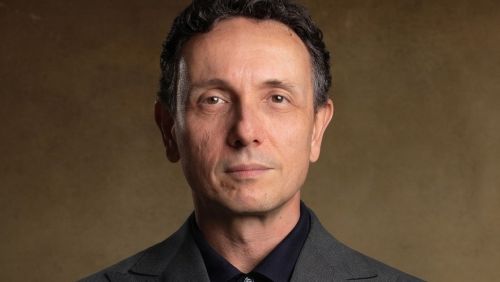
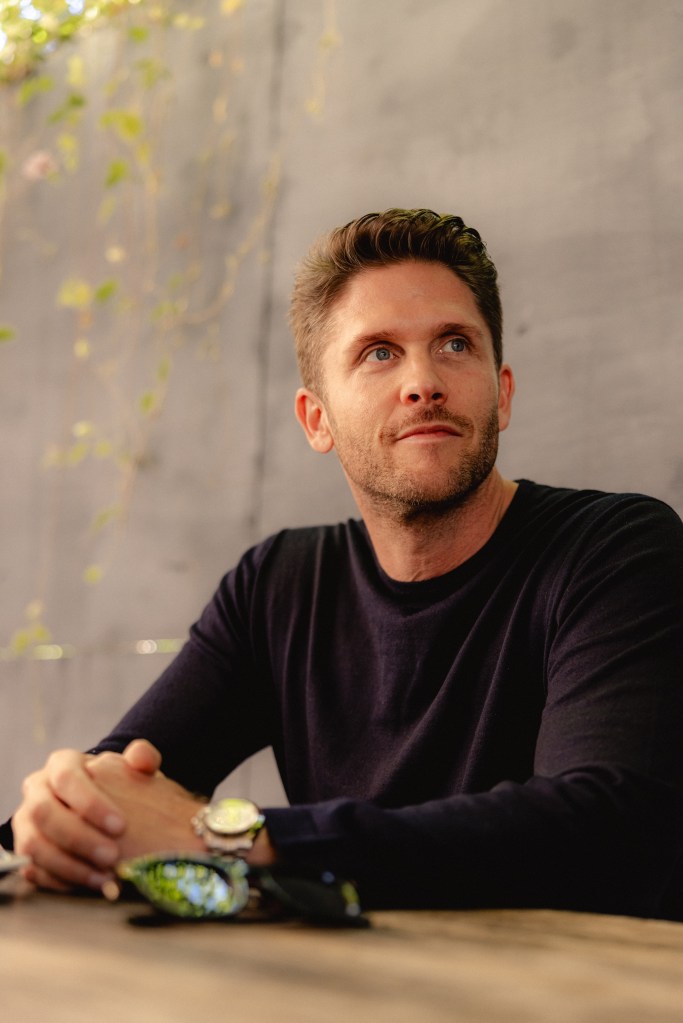
There is a calm that comes only from having watched plans unravel, deals collapse, and money vanish – and live to see what comes next. Danny Cortenraede learned it at a kitchen table in the Netherlands, listening while his father and grandfather debated contracts, payments, and what it meant to run a business. “I grew up in a very entrepreneurial family,” he says. “Sitting there, listening to those conversations, I was exposed to real entrepreneurship. It wasn’t glamorous. It was work. I saw how hard my family worked, how they built businesses. At the time, I thought it was normal. Later, it planted the entrepreneurial bug in me.”
Responsibility, Not Romance
Cortenraede, serial entrepreneur and founder of InStudio Ventures, an investment firm working with athletes and innovation, challenges the mythology of entrepreneurship: the hoodie-clad wunderkind, the overnight exit, the heroic burnout. “Building companies, thinking long term about how you are building real value – that’s important,” he says. “And taking responsibility. You don’t get your salary every month. It’s just a whole different game that we’re playing.” As a child, he saw both the stress and the freedom. “My family did a great job building the businesses – but I also saw when things were not working out. When the client went bankrupt.” That, more than the wins, shaped him. Seeing up close how obstacles were met, managed and overcome. “Are you thinking about it for 12 months and whining? Or are you looking at how we are pivoting? What can we do?” The answer, inherited and internalised, is simple: “A good mindset is both positive and realistic – but it also means taking responsibility for the outcomes. You are in charge and you need to make the right decisions and pivot where it’s necessary.” It sounds almost unfashionable in 2026 to talk about honesty as a differentiator, but Cortenraede returns to it again and again: over-deliver; don’t over-promise; build long-term value; think in decades, not quarters. “I believe if you’re doing good, good things will happen,” he says. “With a clear strategy and a defined North Star, consistently building your base and delivering with the right people and the right team, you can achieve a lot.”

The Corporate Detour
Unlike many of the start-up founders who dominate entrepreneurial folklore, Cortenraede did not leap straight from school into a venture. He spent nearly a decade in the corporate world. “I don’t regret that,” he says. “I think working for brands like Vodafone and Sony added so much structure and discipline.” He learned governance, strategic execution and the mechanics of closing huge deals. “I was working with big corporate clients, closing multimillion dollar deals and RFPs. I think working in organisations like that and having responsibility for such big amounts, you acquire the basics which you normally don’t learn as an entrepreneur if you just go straight into it.” It is an unfashionable position in some start- up circles, where corporate experience is sometimes dismissed as bureaucratic baggage. But for Cortenraede, it was foundational. “I combine my entrepreneurial instinct for building companies with the structure and discipline that I learned in the corporate world.” Only after that apprenticeship did he quit what he describes as a “relatively high paid corporate job” to build from scratch. First agencies. Then investments. Then, ultimately, InStudio Ventures.
Building InStudio Ventures
To understand InStudio Ventures, you have to understand the problem Cortenraede set out to solve. “Eighty percent of early stage companies are failing within the first five years,” he says. “You have super smart founders, great solutions, but they just don’t make it.” He had already scaled agencies working with global brands and clubs – from The Walt Disney Company to Nike, from FC Barcelona to Real Madrid. He had seen how difficult sustainable growth really is. “So I thought, what can I do differently? How can I help, specifically in sports, media and technology? Because that’s what we understand. That’s where we can add value.”
InStudio began by scaling companies from zero to Series A in what he describes as “a very structured way. Based on KPIs and milestones.” It worked with US start-ups and European companies expanding into America. Today, the model is more focused – and more selective. “We’re focusing on later stage companies. At least doing $1m in ARR. We have a proven business model. We know the financials. We know the CAC. If we see that’s working, then we go in with a bigger cheque size. Somewhere between $2m and $3m on average.” The sector focus is deliberate: sports, media and technology. And the thesis rests on one simple observation. “Sports is an asset class in its own right. It is a $500bn industry right now, and is set to grow upwards of $800bn.”
In a world of declining linear television and fragmented attention, live sport remains stubbornly resilient. “It’s the only thing that people are still watching live,” he says. The implications are enormous. Media rights escalate. Tech giants bid aggressively. Entire leagues become institutional investment vehicles. And InStudio positions itself across the spectrum. On one side: “premium assets” – franchises, leagues, institutional ownership stakes. On the other: emerging leagues and sports technology. Women’s sport, in particular, is central to the growth thesis, with leagues such as the WNBA and the Women’s Super League drawing increased capital and audience share. “It’s a barbell portfolio approach,” Cortenraede explains. “On the one side, institutional assets. On the other hand, early stage growth technology platforms.” The former offer durability and long-term appreciation. The latter offer asymmetric upside. “The NFL, for example, is outperforming the S&P 500 already for 20 years,” he says.
The Athlete Council
If the portfolio structure is one differentiator, the governance model is another. InStudio’s investors include professional athletes from NFL, NBA, MLB, premier league etc – not as passive cheque-writers, but as active participants. It has established what it calls an “athlete council”. “What we saw and still see is, these professional athletes spend their whole career playing at the highest level. They’re making an incredible amount of money, but sometimes they also end up with nothing or they just spend it in the wrong way.” The answer, in Cortenraede’s view, is education and ownership. “We involve the athletes in what we’re doing and why we’re doing it. So they really understand where they put their money to work. They join deal flow meetings.”
If InStudio is considering an investment in a wearable technology company, the athletes test it. If it is exploring a franchise stake, they interrogate the leadership. “This whole education about investing – that’s what we’re very keen on. And involving the athletes in this whole process.” The structural difference is equity. “The athletes are actually equity holders in all these different companies. So they are shareholders. It’s different if you put your money to work and you hold equity instead of short term endorsement deals.” In a market saturated with celebrity-backed funds that offer glossy quarterly updates but limited transparency, this participatory model is unusual. “If you put all these like-minded athletes in one room, there’s so much magic happening,” Cortenraede says. “And it’s something that’s really working.”
Access and Trust
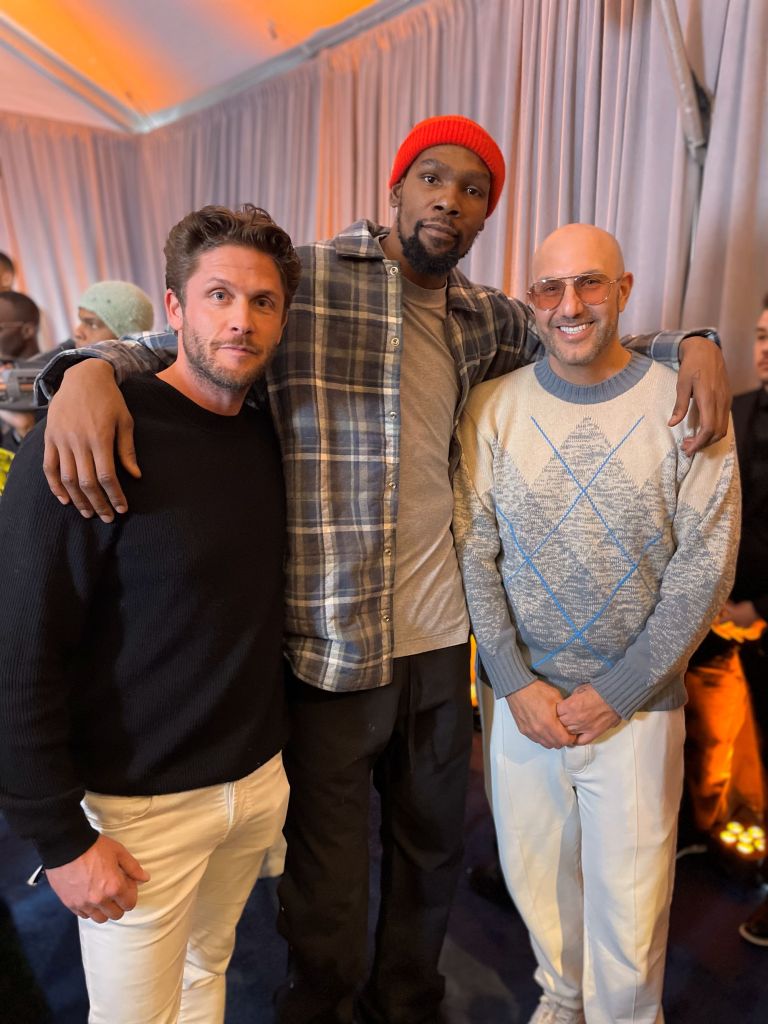
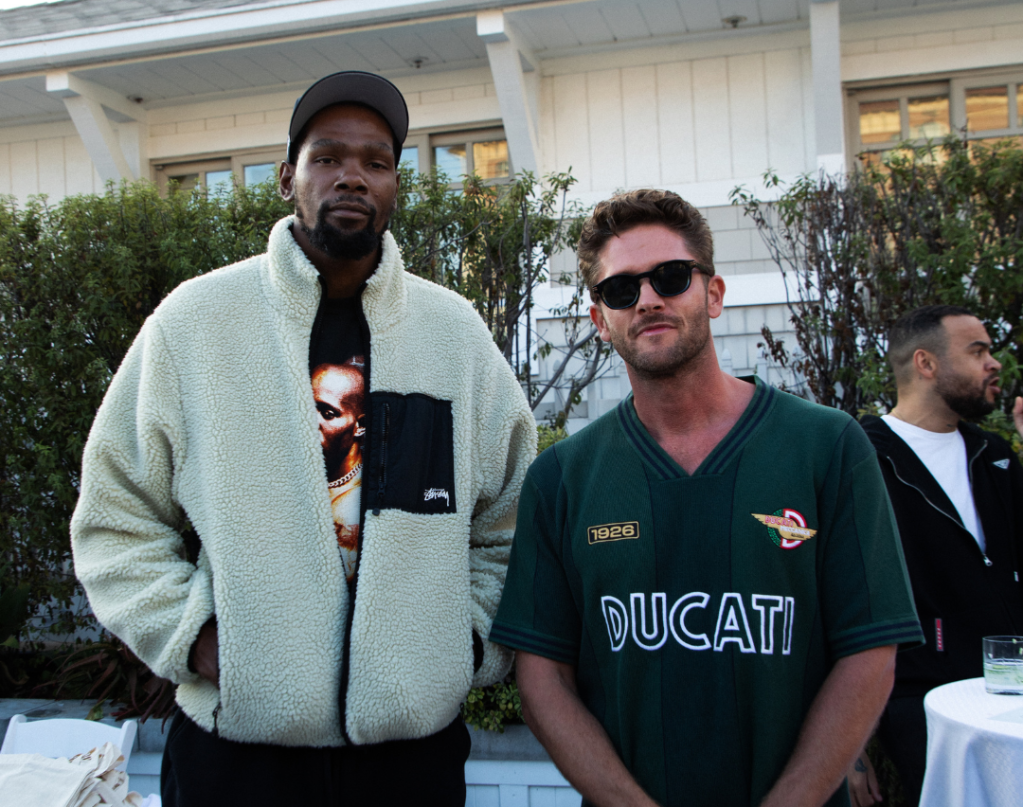
In venture capital, “deal flow” is a cliché. But access remains everything. “What’s unique about InStudio Ventures is definitely the access that we have and the investments we’re investing in,” Cortenraede says. He points to their position as lead investor in Boardroom, the media and investment company co-founded by Kevin Durant “For people that don’t know him, the only three National Basketball Association (NBA) athletes who have a lifetime deal with Nike are Michael Jordan, LeBron James, and Kevin Durant,” he says. Durant’s business partner is Rich Kleiman. Among the other investors is Michael Rubin, founder of Fanatics. “There is a great strategic partnership. It’s built on trust and positioning. There are no shortcuts in business. You need to work long term.”
That philosophy extends to institutional assets. InStudio has secured access to investments in top-tier US leagues and global motorsport – scarcity plays by any measure. In the NFL, only a small number of firms are permitted to invest, and ownership stakes are tightly regulated. “The NFL has much more demand than access,” he says. “There are only six big firms who can invest into the NFL.” Scarcity breeds value. But value is unlocked, in Cortenraede’s view, through networks. “It’s really about building these relationships over the years.”
Think Global, From Day One
Cortenraede moved from the Netherlands to New York and then to Los Angeles. He has lived in the US for nearly seven years. The move was strategic. “Fifty-three percent of sports technology investment is happening here in the United States,” he says. But his advice to UK founders is not to abandon Britain. It is to think globally. “What is working in your market doesn’t mean directly it’s also working in the US. It’s a different culture. Different things companies are looking for.” The solution? International ambition from the outset. “Think global from day one. Work with the right people locally. That will fast forward things.” And, crucially: “Focus on ownership and long-term value creation. Not short-term headlines or valuations.” It is a rebuke to a generation seduced by unicorn status and social media metrics.
The Future of Sports Tech
When asked what lies ahead, Cortenraede returns to data. “Sports technology was $13bn in 2021. In 2030, we will go to $103bn,” he says. “Forty-two percent of this money is going into fan engagement.” Fan engagement. Data intelligence. Direct-to-fan ecosystems. Athlete-led platforms. Institutional ownership structures. “The combination is something that we really believe in,” he says. “Having access and being minority owners in clubs and leagues gives us a very big advantage. We’re on the cap table there.”
The UK, he argues, is uniquely positioned. “It combines sports heritage with a strong technology ecosystem. If you’re talking about football, the Premier League is top.” Founders who combine innovation with strategic alignment, he says, “rather than just building in isolation, they will lead the next phase of global sports.” There is, inevitably, doom and gloom in the air – economic headwinds, regulatory shifts, political turbulence. Cortenraede acknowledges it. He hears the complaints from entrepreneurs in Europe. He understands why some relocate. But he remains stubbornly optimistic. “There are still opportunities if you’re focusing on the right things with the right people,” he says.

The Kitchen Table, Revisited
Cortenraede has two young sons. He hopes they are watching. “Hopefully I can lead by example,” he says. “They see me. I moved from the Netherlands to New York, to Los Angeles, building businesses here. I didn’t have somebody who was backing me up.” His eldest is already asking questions. “He loves sports. ‘How are you working with these athletes, daddy?’ And I’m trying to explain it. Don’t be transactional. Over-deliver. Build equity. Think long term. Be honest. Take responsibility.”
The same lessons that echoed around his childhood kitchen table years ago. The world of sports investment is glossier now. The stakes are larger. The deals are more complex. But the philosophy is the same. In an era obsessed with speed, scale and spectacle, it is a radical position: that value is built slowly; that trust compounds; that ownership matters; that sport – for all its glamour – is still, fundamentally, about people. And that the long game, played properly, still wins.
There is a calm that comes only from having watched plans unravel, deals collapse, and money vanish – and live to see what comes next. Danny Cortenraede learned it at a kitchen table in the Netherlands, listening while his father and grandfather debated contracts, payments, and what it meant to run a business. “I grew up in a very entrepreneurial family,” he says. “Sitting there, listening to those conversations, I was exposed to real entrepreneurship. It wasn’t glamorous. It was work. I saw how hard my family worked, how they built businesses. At the time, I thought it was normal. Later, it planted the entrepreneurial bug in me.”
Responsibility, Not Romance
Cortenraede, serial entrepreneur and founder of InStudio Ventures, an investment firm working with athletes and innovation, challenges the mythology of entrepreneurship: the hoodie-clad wunderkind, the overnight exit, the heroic burnout. “Building companies, thinking long term about how you are building real value – that’s important,” he says. “And taking responsibility. You don’t get your salary every month. It’s just a whole different game that we’re playing.” As a child, he saw both the stress and the freedom. “My family did a great job building the businesses – but I also saw when things were not working out. When the client went bankrupt.” That, more than the wins, shaped him. Seeing up close how obstacles were met, managed and overcome. “Are you thinking about it for 12 months and whining? Or are you looking at how we are pivoting? What can we do?” The answer, inherited and internalised, is simple: “A good mindset is both positive and realistic – but it also means taking responsibility for the outcomes. You are in charge and you need to make the right decisions and pivot where it’s necessary.” It sounds almost unfashionable in 2026 to talk about honesty as a differentiator, but Cortenraede returns to it again and again: over-deliver; don’t over-promise; build long-term value; think in decades, not quarters. “I believe if you’re doing good, good things will happen,” he says. “With a clear strategy and a defined North Star, consistently building your base and delivering with the right people and the right team, you can achieve a lot.”
The Corporate Detour
Unlike many of the start-up founders who dominate entrepreneurial folklore, Cortenraede did not leap straight from school into a venture. He spent nearly a decade in the corporate world. “I don’t regret that,” he says. “I think working for brands like Vodafone and Sony added so much structure and discipline.” He learned governance, strategic execution and the mechanics of closing huge deals. “I was working with big corporate clients, closing multimillion dollar deals and RFPs. I think working in organisations like that and having responsibility for such big amounts, you acquire the basics which you normally don’t learn as an entrepreneur if you just go straight into it.” It is an unfashionable position in some start- up circles, where corporate experience is sometimes dismissed as bureaucratic baggage. But for Cortenraede, it was foundational. “I combine my entrepreneurial instinct for building companies with the structure and discipline that I learned in the corporate world.” Only after that apprenticeship did he quit what he describes as a “relatively high paid corporate job” to build from scratch. First agencies. Then investments. Then, ultimately, InStudio Ventures.

Patricia Cullen • Features Writer
Entrepreneur Staff