Art of the Restart
Andrew Scott on rebuilding, resilience, and environment shaping business success.
Ascot Group
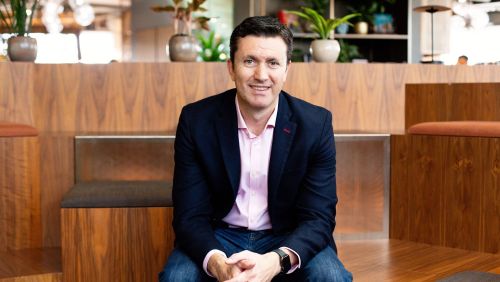
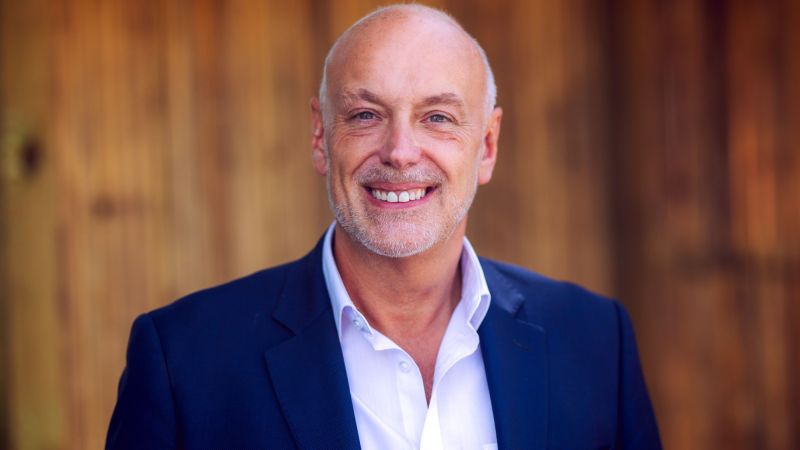
Andrew Scott is the founder of Ascot Group
Opinions expressed by Entrepreneur contributors are their own.
You're reading Entrepreneur United Kingdom, an international franchise of Entrepreneur Media.
Outside Andrew Scott’s office, an old BMW sits restored. Not a collector’s piece, nor a car that demands attention. It has been damaged, written off, rebuilt – and put back on the road. For Scott, it is a quiet reminder of a pattern he knows well: things break, sometimes completely, and can be built again, often stronger than before. He has built and lost companies, scaled others into a group spanning media, marketing, software and events, and later sold one of his best-known ventures, Business Leader, to Sir Richard Harpin. But he resists telling his story in terms of growth alone. Instead, he returns to something more fundamental: environment – and how it determines what survives.
Founder of Ascot Group, which spans marketing, software and property through Purplex and Insight Data, and Knightstone property, and previously owned Business Leader, Scott believes that the people, places and conditions around a person determine how far they can go. It is a principle that underpins both his approach to business and his view of life. He sees it reflected in his own journey: from growing up in Belfast during the Troubles, to building and scaling multiple companies, to losing everything in a failed acquisition – and rebuilding again from scratch.
Today, Scott runs a group of companies across media, marketing, data and events, built as an ecosystem where each part reinforces the others. But it is not the structure he returns to most often. It is the environments that shaped him – and the ones he has since learned to choose. Outside his office, an old BMW sits restored. Not pristine in the way of a collector’s car, but carrying a different kind of polish -one earned through damage, loss, repair and time. He doesn’t describe it as nostalgia. “It acts as a reminder that things get better, no matter how bad they seem at the time. Tomorrow’s a new day,” he says. For Scott, the car reflects a belief that runs through everything: environment shapes outcomes, failure is rarely final, and what breaks can be rebuilt – sometimes more than once.
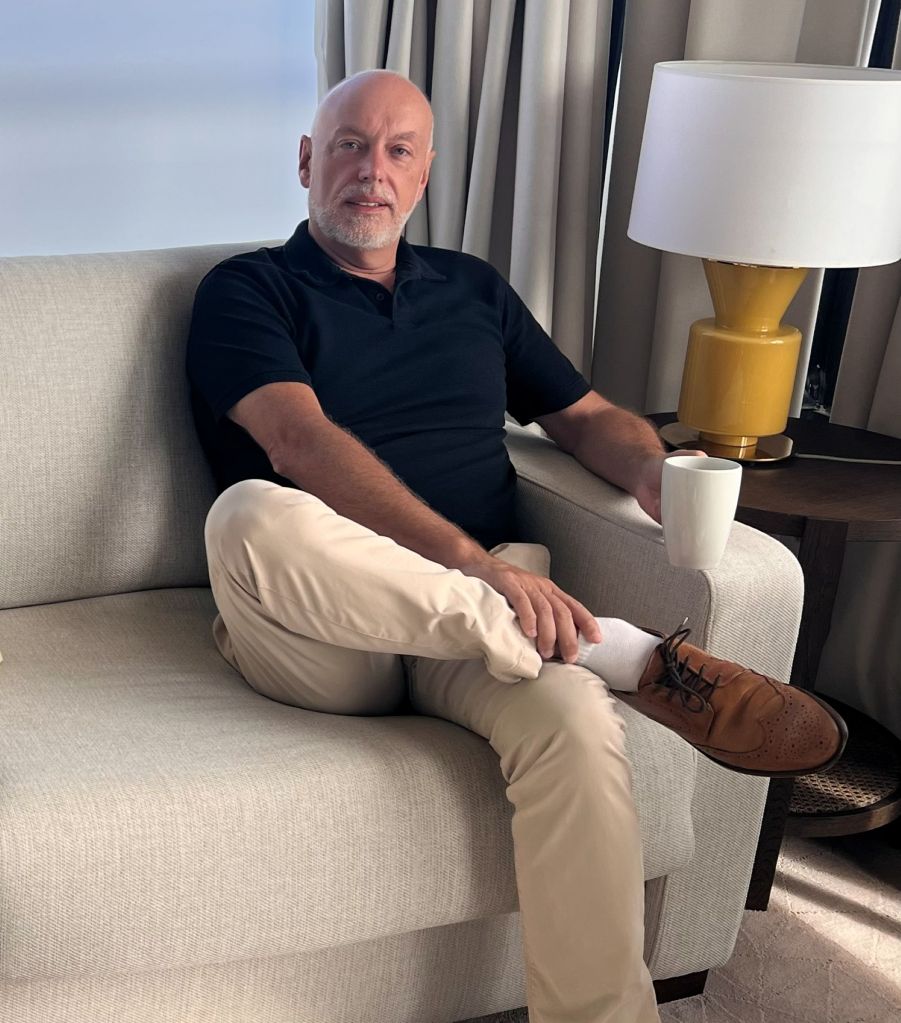
Scott grew up in Belfast during the Troubles, an experience that continues to shape how he understands outcomes. “My entire youth was defined really by violence and hatred,” he says. At four years old, he survived the Abercorn restaurant bombing – an event that left a lasting imprint on both the city and his early life. “I was four at the time… I was rebuilt over the next five years,” he says. He describes his childhood less as a continuous story than as a process of reconstruction. School, he says, did not suit him. He was introverted, disengaged, struggling to connect within traditional structures. The turning point came not through education, but through relocation. At 18, his mother made a decision that would alter the trajectory of his life. “She bought me a one-way ticket to England,” he says. “To London. When I was 18.” The move was not optional. It was an environmental shift – and the beginning of something different. “I didn’t know anybody. I had no money, no connections, no qualifications.” What he did have was a willingness to work – and to stay where others would step back. “I went door knocking until I got a job, until I found somewhere to live.” That period became the foundation of a belief that would later underpin his entrepreneurial thinking: environment is not background, but determinant. “I think for me, the defining moment was understanding how your environment shapes and influences what you do,” he says. From that principle, Scott has built both a business model and a philosophy.
The business model consists of a group of companies spanning media, publishing, events, marketing and data. Rather than operating as separate entities, he describes them as an interconnected system. “I’ve always had this vision for an ecosystem,” he says. The logic is deliberately interdependent. Each business reinforces the others. The marketing company Purplex supports the media arm. The data business improves targeting and audience intelligence. The media platform feeds visibility back into the rest of the group. “Each business fuelled the other,” he said of the structure. The benefit, in his view, is not only growth but resilience. “If one of them is having a bad month… the other businesses would pick up the slack,” he says. “It’s like a chair with four legs. If one of the legs gets knocked, it wobbles but doesn’t fall over.”
But the structure also introduced complexity. Running multiple businesses simultaneously required constant switching between roles and responsibilities. “As an entrepreneur you need to be able to swap hats,” he says. “When you run multiple companies, you’re doing that times two, times three, times four.” Still, he argues the trade-off is necessary. The alternative, he suggests, is fragility. “There’s a risk if you build one company and everything depends on it,” he says. “One bad period and everything’s at risk.” Scott’s thinking extends beyond structure into people and relationships into a philosophy he frames this through a concept he calls ‘weights and wings’. “There’s some people that will weigh you down,” he says. “And some people will give you wings to fly.” It is a binary worldview that he applies deliberately. “Everybody I meet will either give me wings to fly and help me on my journey or they’ll hold me back.” That thinking extends into how he mentors entrepreneurs today. Much of his mentoring, he says, is focused not on tactics, but on psychology and persistence. “Self-doubt has killed more businesses than cash flow every day,” he says. What he sees most often is not technical failure, but emotional retreat. “Some entrepreneurs give up too early,” he says. “Their self-doubt gets in the way.” Purpose, in his view, is what stabilises founders through uncertainty. “The founders who’ve got absolute purpose, they will overcome any challenges and any hurdles,” he says. “They will deviate, they’ll go around, they’ll go over, they’ll go under, they’ll go through – they’ll find a way.”
Scott’s own career has included both rapid scale and severe collapse. He recalls an early success in turning around a distressed business, growing it from around £1m to £12m annual revenue in three years, before it was sold to a US Fortune 500 company. But a later acquisition proved far more damaging. “Ego got in the way and I didn’t do enough due diligence,” he says. The acquisition was completed in May 2001. The timing could hardly have been worse. Within months, 9/11 occurred. “The whole world came to a standstill,” he says. The impact on the business was immediate and severe. “The phone stopped ringing,” he says. “What we needed was sales, and the tap went off.” The business eventually failed. The personal consequences were significant.
“I lost absolutely everything,” he says. “My home, my investments, the business, and I was over a hundred thousand pounds in credit card debt.” He describes a period of collapse marked by both financial and personal dislocation – but also a moment of decision.. “I remember sitting on the beach in Weston-super-Mare,” he says. “I had to make a decision.” He had two young children at the time. “I had to be a role model for them,” he says. “I had to provide for them.” He worked as a consultant, travelling constantly. His only vehicle was an old BMW. “That old BMW… I managed to rack up 250,000 miles driving around the country,” he says. “Until it eventually gave up the ghost.”
Years later, in an unexpected twist, the BMW reappeared – rebuilt by someone who had purchased it from a salvage yard and restored it. “I saw that car driving down the road,” he says. “I couldn’t believe it.” He eventually tracked down the owner and bought it back, restoring it fully. Today, it remains outside his office. He now uses the story as a teaching tool for distressed entrepreneurs. “We literally sit them in that car, tell the story,” he says. The message is not motivational in tone, but experiential: collapse is not always permanent. Across his work, Scott repeatedly returns to environment – physical, social and psychological – as the primary driver of outcomes. “It’s the rooms that you’re in,” he says. “The people you associate with.” His own approach is structured around time allocation. He spends one day per week in each business, one day on strategy, and the remainder on investment, mentoring and acquisitions. “I’m still very much hands on,” he says. “I always will be.”
Looking forward, Scott’s focus is on continuing to scale his group, expanding property investments, and increasing his work with young entrepreneurs. He also works with schools, introducing students to entrepreneurship early. “They don’t teach you about entrepreneurship in schools,” he says. That gap, he believes, shapes outcomes long before adulthood – reinforcing his wider view that environment plays a defining role in what people go on to build. And yet, for all the structure, systems and strategy, Scott returns most often to something simpler: persistence through change. The BMW remains outside his office – not as a symbol, but as a record. A reminder that environments can destroy or enable, that failure can be total and still reversible, and that what breaks does not always stay broken.
Outside Andrew Scott’s office, an old BMW sits restored. Not a collector’s piece, nor a car that demands attention. It has been damaged, written off, rebuilt – and put back on the road. For Scott, it is a quiet reminder of a pattern he knows well: things break, sometimes completely, and can be built again, often stronger than before. He has built and lost companies, scaled others into a group spanning media, marketing, software and events, and later sold one of his best-known ventures, Business Leader, to Sir Richard Harpin. But he resists telling his story in terms of growth alone. Instead, he returns to something more fundamental: environment – and how it determines what survives.
Founder of Ascot Group, which spans marketing, software and property through Purplex and Insight Data, and Knightstone property, and previously owned Business Leader, Scott believes that the people, places and conditions around a person determine how far they can go. It is a principle that underpins both his approach to business and his view of life. He sees it reflected in his own journey: from growing up in Belfast during the Troubles, to building and scaling multiple companies, to losing everything in a failed acquisition – and rebuilding again from scratch.
Today, Scott runs a group of companies across media, marketing, data and events, built as an ecosystem where each part reinforces the others. But it is not the structure he returns to most often. It is the environments that shaped him – and the ones he has since learned to choose. Outside his office, an old BMW sits restored. Not pristine in the way of a collector’s car, but carrying a different kind of polish -one earned through damage, loss, repair and time. He doesn’t describe it as nostalgia. “It acts as a reminder that things get better, no matter how bad they seem at the time. Tomorrow’s a new day,” he says. For Scott, the car reflects a belief that runs through everything: environment shapes outcomes, failure is rarely final, and what breaks can be rebuilt – sometimes more than once.

Patricia Cullen • Features Writer
Entrepreneur Staff