The Future of Medicine May Begin Before We Get Sick
Preventive longevity medicine could transform healthcare by identifying decline before disease.

HUM2N
Health & wellness club in London
Opinions expressed by Entrepreneur contributors are their own.
You're reading Entrepreneur United Kingdom, an international franchise of Entrepreneur Media.
For decades, healthcare has been built around treating disease once it appears. Dr Mohammed Enayat believes the next revolution will come from identifying decline before it becomes illness — shifting medicine from reaction to prevention. There is a paradox at the centre of modern medicine. We have never been better at treating disease, yet much of healthcare still begins at the moment something has already gone wrong. A patient arrives with high blood pressure that has been building for years. Blood sugar has gradually drifted upwards. Muscle mass has declined, sleep has deteriorated, energy has faded and metabolic health has slowly changed – often long before a formal diagnosis is made. Medicine is remarkably effective at responding to these events. But increasingly, a different question is emerging: what if healthcare could intervene before the disease begins?
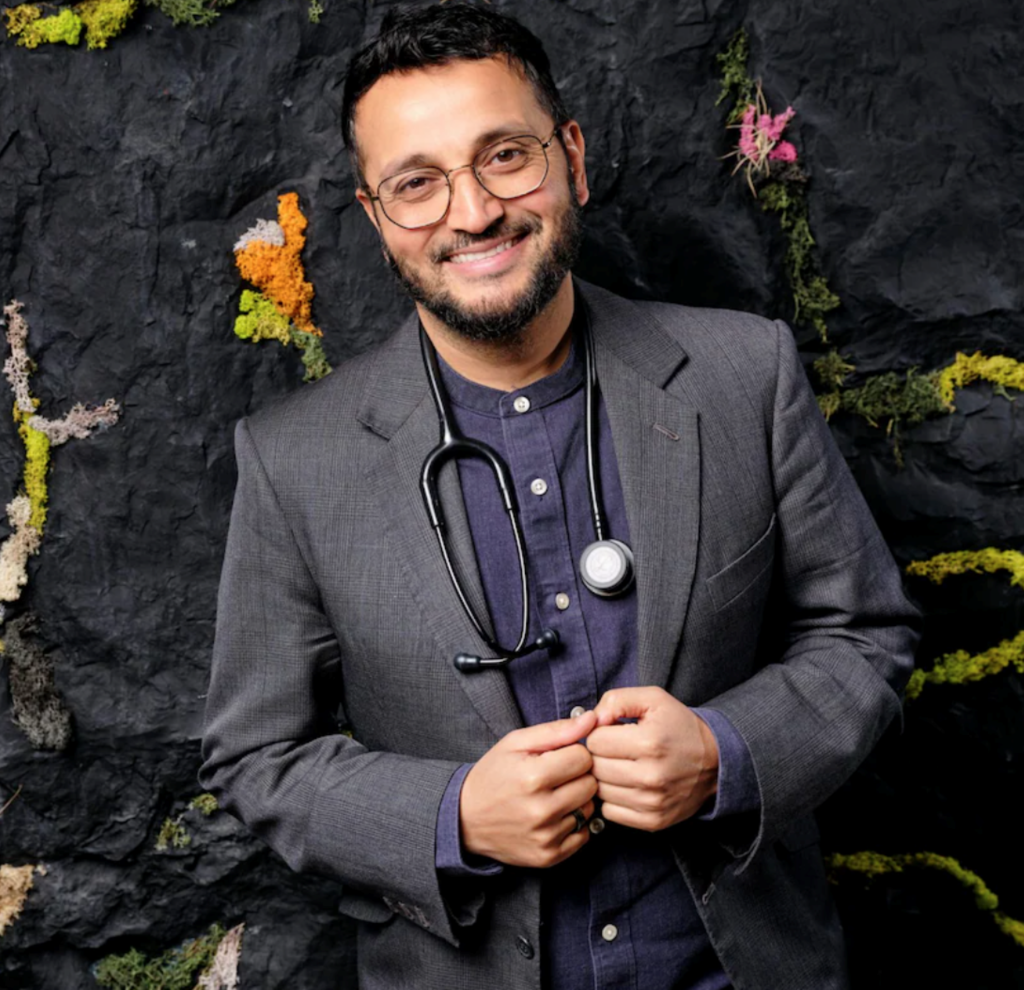
For Dr Mohammed Enayat, a GP, longevity medicine specialist and founder of HUM2N, a next-generation longevity clinic in London, that question became impossible to ignore during his years in general practice. “After years in general practice, I became increasingly aware that so much of what we were doing was reactive,” he says. “Patients would come in once symptoms had already appeared, once blood pressure was already high, once blood sugar had already crept up, or once energy, sleep, hormones or mood had been declining for years.”
General practice, he stresses, remains one of the most important parts of healthcare. But the pressures placed on modern health systems often leave little room to explore the deeper causes behind declining health. “General practice is incredibly important, but the system often does not allow enough time to ask why something is happening in the first place,” he says. That realisation shifted his focus towards longevity medicine – a field that has attracted both excitement and scepticism in equal measure. For some, longevity is associated with extreme interventions, expensive treatments and the pursuit of living forever. For others, it represents something far more practical: extending the years people spend living independently and in good health. Enayat is firmly in the latter camp. “Longevity medicine felt like a more proactive way of practising medicine,” he says. “It is not about chasing youth or trying to live forever. It is about helping people stay well, strong, independent and metabolically healthy for as long as possible.”
The distinction between lifespan and healthspan is becoming increasingly important. Living longer does not automatically mean living better. The challenge facing ageing societies is not simply adding years to life, but ensuring those years are productive, active and free from preventable disease. Modern medicine, Enayat argues, has historically focused on managing the consequences of ageing rather than understanding its underlying biology. “In many ways, modern medicine is still largely managing the consequences of ageing rather than ageing itself,” he says. “We are very good at treating disease once it has declared itself, but less good at identifying the biological processes that are driving decline years before a diagnosis is made.”
Ageing is the greatest risk factor for many of the conditions placing pressure on healthcare systems worldwide, including cardiovascular disease, type 2 diabetes, dementia, frailty and some cancers. Yet these illnesses are often treated separately rather than as connected outcomes of shared biological changes. “Ageing is the biggest risk factor for many chronic diseases,” Enayat says. “Yet clinically, we often treat these as separate conditions rather than looking at the shared underlying drivers such as inflammation, insulin resistance, loss of muscle mass, poor sleep, stress, hormonal change and declining mitochondrial function.” The emerging opportunity lies in detecting those changes earlier.
Advances in diagnostics, wearable technology, imaging and biomarker testing are creating a more detailed picture of individual health than was previously possible. Instead of waiting for a patient to cross a diagnostic threshold, clinicians can increasingly identify patterns of risk. “We now have better diagnostics, wearable data, biomarker testing and imaging, which means we can understand a person’s risk profile much earlier,” says Enayat. “The opportunity now is to use that information responsibly and translate it into meaningful, evidence-based action.” Yet despite these advances, healthcare systems have been slow to embrace predictive and preventative medicine. The reason, Enayat believes, is structural. “The biggest reason is that healthcare systems are built around acute care,” he says. “They are designed to respond to illness, not necessarily to prevent it.”
That approach works well for emergencies – infections, trauma, heart attacks and serious disease. But chronic illness develops differently. It often emerges gradually over decades, shaped by genetics, lifestyle, environment and social factors. Prevention requires time and continuity. “It means looking at nutrition, movement, sleep, stress, hormones, metabolic health, family history and lifestyle,” Enayat says. “Those conversations do not fit easily into a ten-minute appointment.” There is also a financial challenge. Prevention requires investment today for benefits that may only become visible years later – something that does not always align with short-term healthcare pressures. “It can be difficult for systems to invest in prevention when the financial benefits may not appear for years,” he says. “But clinically, it is one of the most important shifts we can make.”
As healthcare systems around the world face rising costs and ageing populations, the argument for prevention is increasingly moving beyond medicine and into economics. Keeping people healthier for longer has implications for workforce participation, productivity and public spending. The question is whether healthcare can move from a model of treating illness to one of maintaining health. “I think we are moving in that direction,” Enayat says. “There will always be acute illness, and there will always be conditions we cannot predict or prevent. But for many chronic diseases, waiting until someone is unwell before acting is becoming harder to justify.” The ability to identify risk earlier changes the relationship between doctor and patient. “If we can see that someone is developing insulin resistance, losing muscle mass, carrying high levels of visceral fat, becoming hypertensive or showing early cardiovascular risk, then we should not be waiting for a major event before taking action.”
For Enayat, the future of healthcare is about helping people understand their own health trajectory. “The future of medicine should be about identifying risk earlier, intervening earlier and helping people understand their own health trajectory before disease becomes established.” Despite the excitement around longevity, he believes the biggest misconceptions are often the simplest. “The biggest myth is that longevity is about expensive treatments, extreme biohacking or trying to reverse ageing overnight,” he says. “In reality, the foundations are often very simple, but they require consistency.” Those foundations are familiar: exercise, nutrition, sleep, stress management and social connection. “Strength training, good metabolic health, adequate protein, restorative sleep, stress regulation, sunlight, social connection and not smoking will outperform most trends,” he says. “The basics are not glamorous, but they are powerful.”
One of those basics – muscle – is an area where he believes healthcare needs to change its thinking. “I would also make strength and muscle a much bigger part of medical conversations,” he says. “Muscle is one of the most important organs of longevity, yet it is still under-discussed in routine healthcare.” For the UK, the challenge is balancing innovation with accessibility. The NHS provides a unique platform for population-level prevention, but increasing demand and limited capacity make transformation difficult. “The UK has some real strengths,” Enayat says. “The NHS gives us population-level reach, strong primary care infrastructure and the ability to deliver prevention at scale if the model is supported properly.” However, he warns that pressure on services can push prevention down the agenda. “The system is under enormous pressure, and when services are stretched, prevention can easily be pushed aside in favour of immediate demand. That is understandable, but it is also part of the problem.”
The future, he believes, lies in finding a balance between innovation and evidence – embracing new tools without allowing longevity medicine to become exclusive or driven by hype. “That caution can be a strength when it protects patients from over-testing or unsupported claims, but it can also slow innovation,” he says. “The ideal future is a balance: evidence-based longevity medicine that is not elitist, not trend-led and not reserved only for those who can pay privately. Prevention should be part of mainstream healthcare, not a luxury add-on.” For more than a century, medicine has measured success by its ability to fight disease. The next era may be defined by something different: the ability to preserve health before disease takes hold. The greatest transformation in healthcare may not come from discovering a cure after illness arrives. It may come from changing the moment at which medicine begins.
For decades, healthcare has been built around treating disease once it appears. Dr Mohammed Enayat believes the next revolution will come from identifying decline before it becomes illness — shifting medicine from reaction to prevention. There is a paradox at the centre of modern medicine. We have never been better at treating disease, yet much of healthcare still begins at the moment something has already gone wrong. A patient arrives with high blood pressure that has been building for years. Blood sugar has gradually drifted upwards. Muscle mass has declined, sleep has deteriorated, energy has faded and metabolic health has slowly changed – often long before a formal diagnosis is made. Medicine is remarkably effective at responding to these events. But increasingly, a different question is emerging: what if healthcare could intervene before the disease begins?
For Dr Mohammed Enayat, a GP, longevity medicine specialist and founder of HUM2N, a next-generation longevity clinic in London, that question became impossible to ignore during his years in general practice. “After years in general practice, I became increasingly aware that so much of what we were doing was reactive,” he says. “Patients would come in once symptoms had already appeared, once blood pressure was already high, once blood sugar had already crept up, or once energy, sleep, hormones or mood had been declining for years.”
General practice, he stresses, remains one of the most important parts of healthcare. But the pressures placed on modern health systems often leave little room to explore the deeper causes behind declining health. “General practice is incredibly important, but the system often does not allow enough time to ask why something is happening in the first place,” he says. That realisation shifted his focus towards longevity medicine – a field that has attracted both excitement and scepticism in equal measure. For some, longevity is associated with extreme interventions, expensive treatments and the pursuit of living forever. For others, it represents something far more practical: extending the years people spend living independently and in good health. Enayat is firmly in the latter camp. “Longevity medicine felt like a more proactive way of practising medicine,” he says. “It is not about chasing youth or trying to live forever. It is about helping people stay well, strong, independent and metabolically healthy for as long as possible.”

Patricia Cullen • Features Writer
Entrepreneur Staff